Wings Of Elegance: Hand-Colored 1849 Lithograph Of Exotic Butterflies
$123
1st Dibs
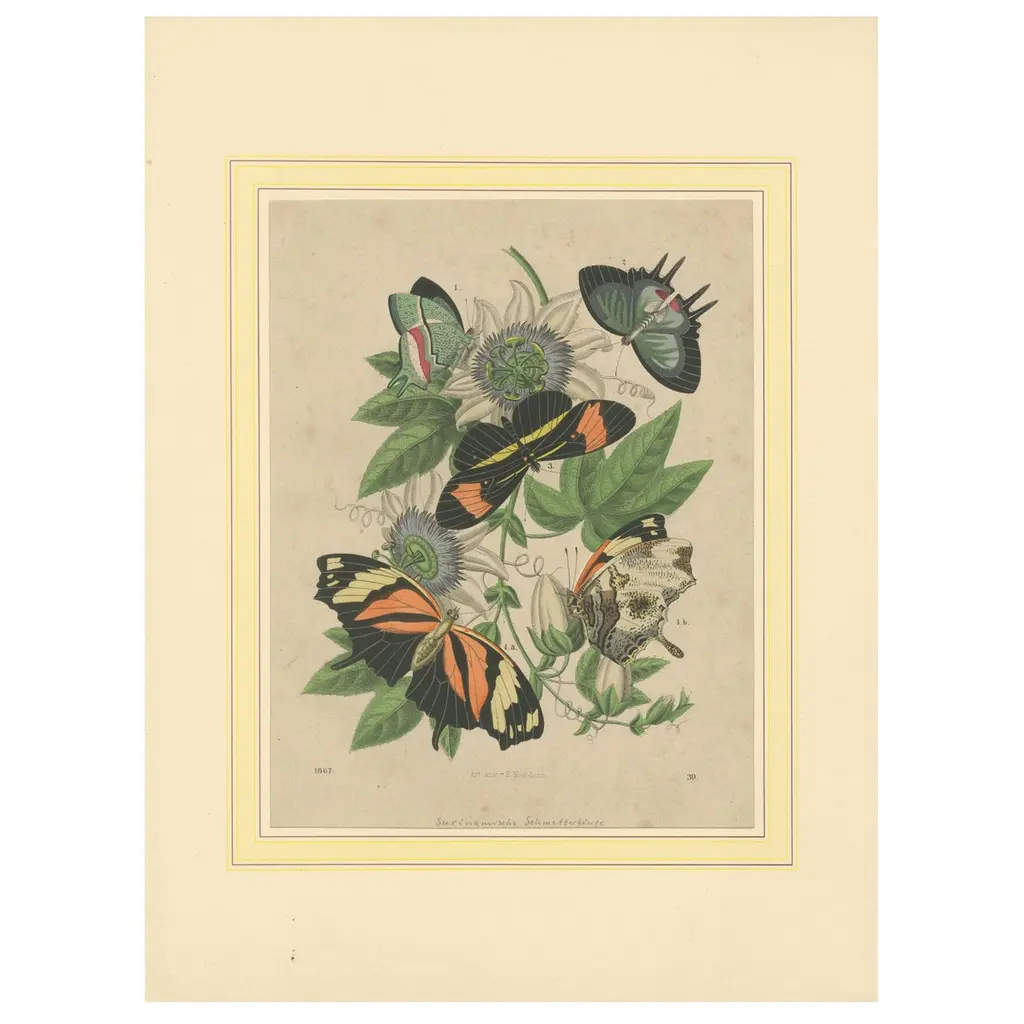
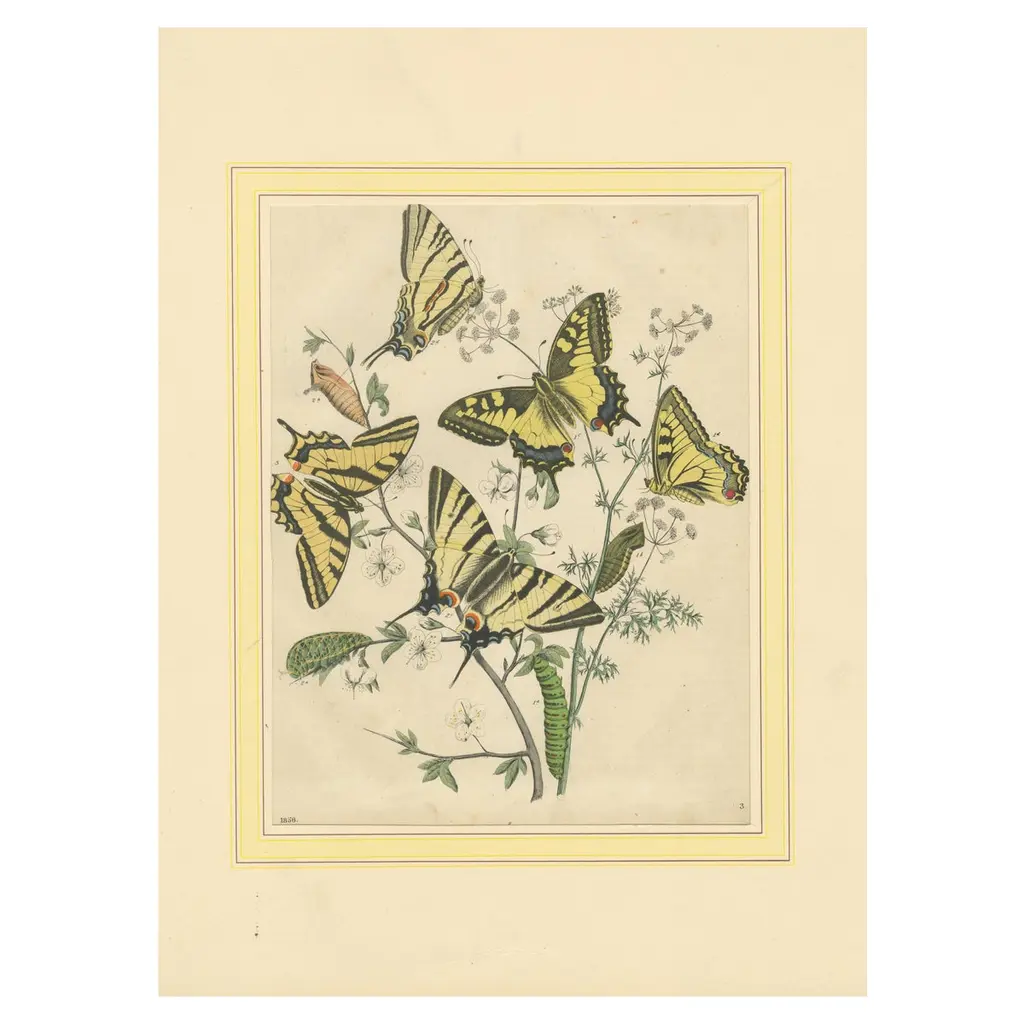
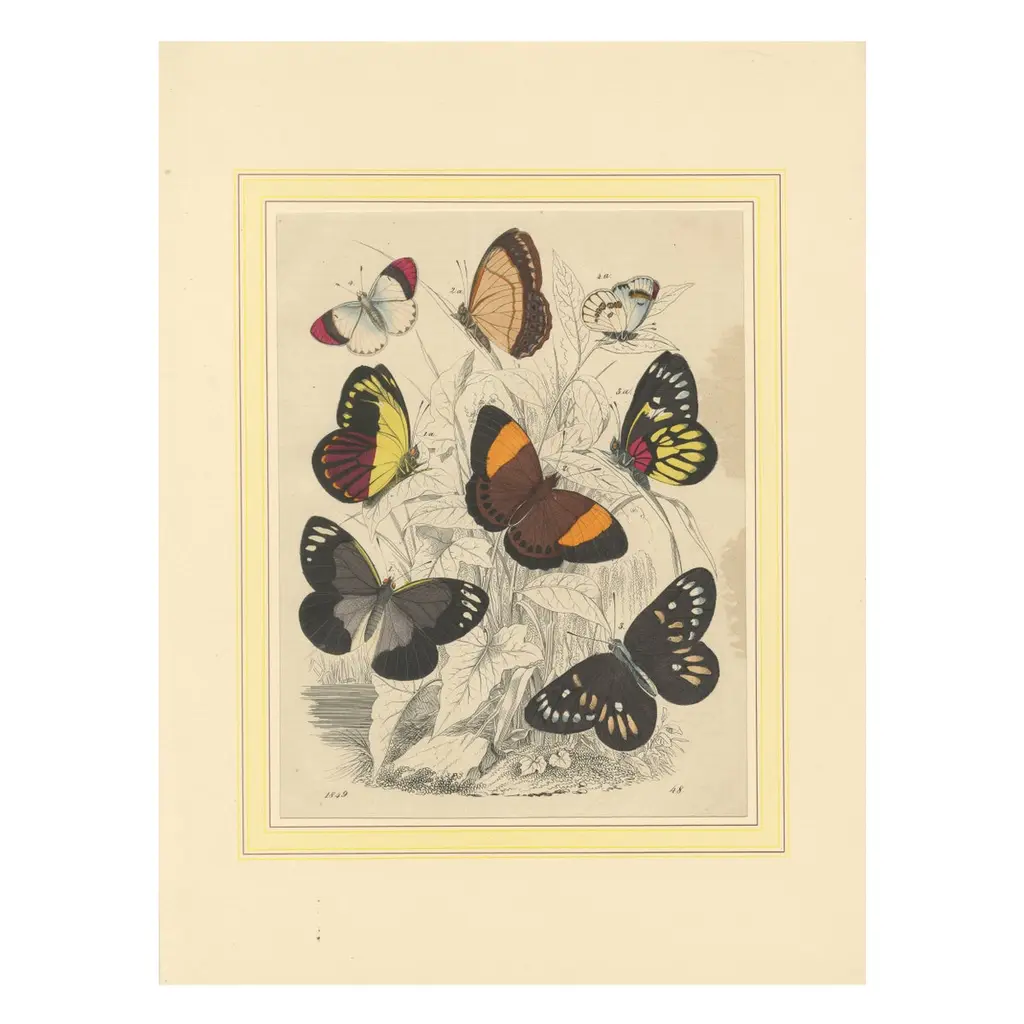
Wings of Elegance: Hand-Colored 1849 Lithograph of Exotic Butterflies from Carl Hoffmann’s 'Book of the World'This captivating hand-colored lithograph from Carl Hoffmann’s 'Book of the World', published in Stuttgart in 1849, beautifully showcases some of the world’s most striking butterflies. A masterpiece of 19th-century natural history illustration, the print combines scientific precision with artistic refinement, bringing to life the delicate patterns and vivid colors of these exotic species. Set against a finely engraved botanical backdrop, the butterflies are meticulously arranged to highlight their intricate wing patterns and natural beauty. The contrast between the monochrome background and the hand-applied coloring enhances their vibrancy, making each species appear almost lifelike. Butterfly Descriptions: 1. Common Jezebel (Delias eucharis, formerly Papilio hyparete) – A dazzling butterfly with bright yellow underwings accented by bold black, white, and red markings. Its striking coloration serves as a warning to predators. 2. Papilio lampedia – A richly toned brown butterfly with intricate patterns that give it an elegant and understated presence in the composition. 3. Redbase Jezebel (Delias pasithoe, formerly Papilio porsenna) – With its bold red, black, and yellow markings, this butterfly commands attention and adds a dramatic contrast to the scene. 4. Crimson Tip Butterfly (Colotis eborea, formerly Papilio eborea) – A delicate species with soft white wings and subtle crimson tips, providing a graceful and refined contrast to its more vividly colored counterparts. Attribution and Date: This lithograph was produced as part of Carl Hoffmann’s 'Book of the World, a 19th-century work known for its highly detailed and beautifully hand-colored natural history illustrations. Created in 1849 using the lithographic process, each print was meticulously colored by hand, making every piece unique. Condition Summary: The print is in very good condition for its age, with minor age toning and light foxing along the margins. The hand-coloring remains vivid and well-preserved, retaining its original depth and clarity. A decorative border has been added to enhance its presentation. Framing Tips: For optimal preservation and display, consider using UV-protective glass to prevent fading. A classic gold or neutral-tone frame will complement the print’s vintage charm, while acid-free matting will protect the paper from deterioration. A floating mount can add depth and highlight the fine details of the composition. This rare and exquisitely detailed lithograph is a must-have for collectors of antique natural history prints, entomology enthusiasts, or those who appreciate the artistry of 19th-century scientific illustration.
Similar Items