Chromatic Splendor: The Copper, Argus, And Blue Of Morris's 1890 Lepidoptera
$170
1st Dibs
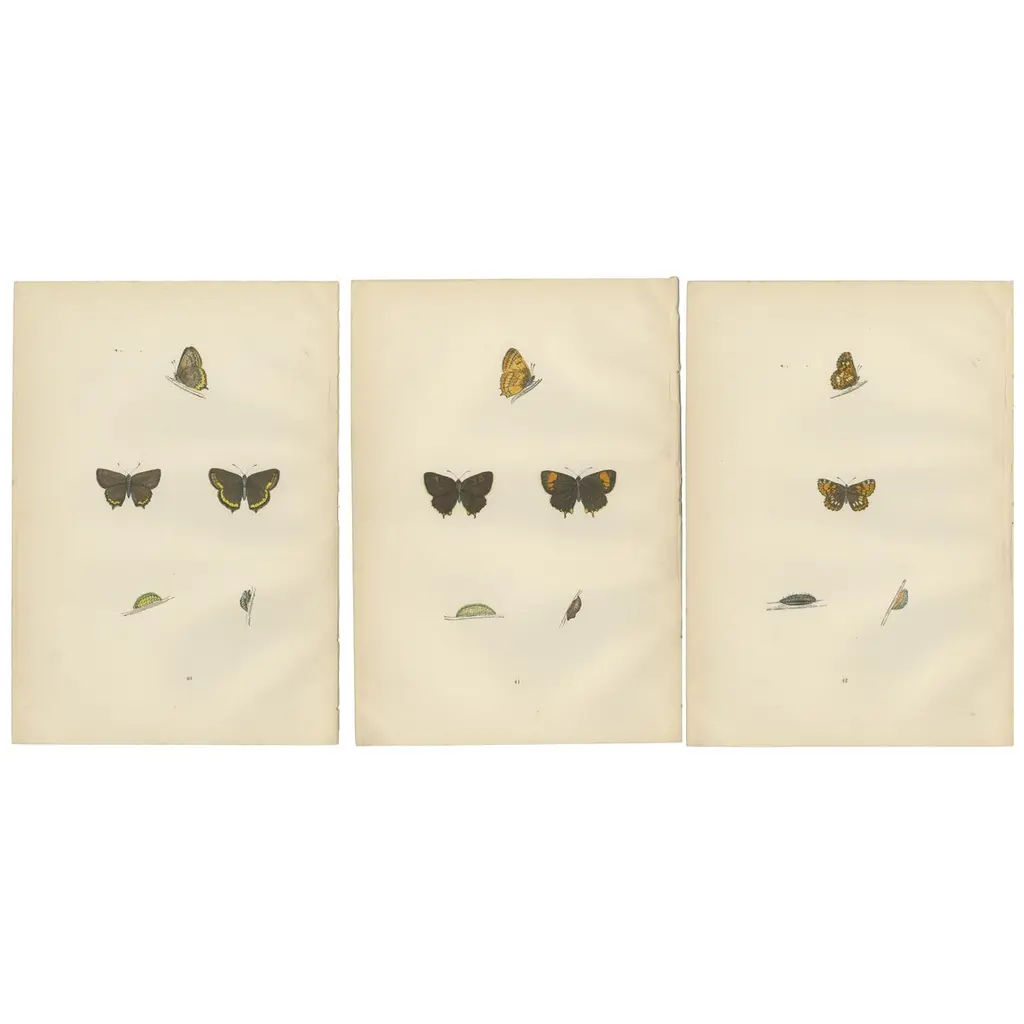
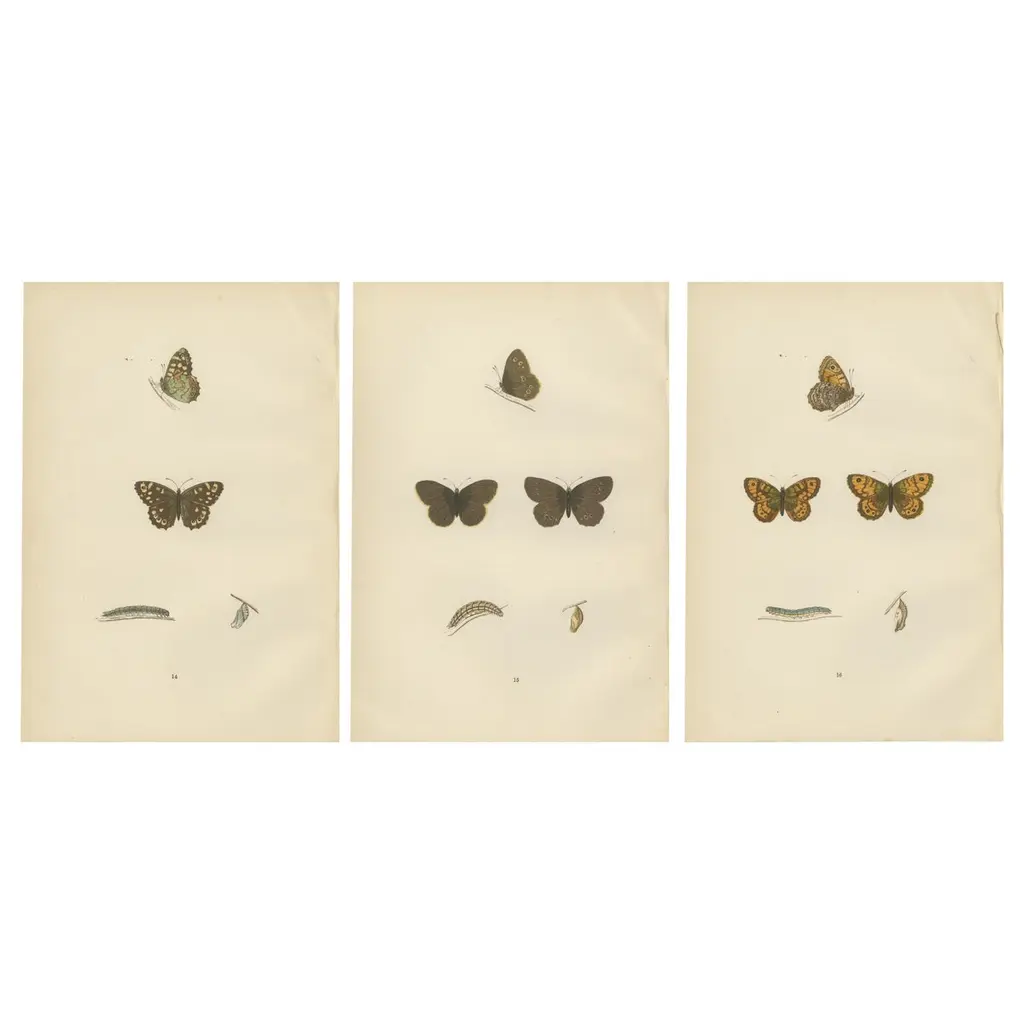
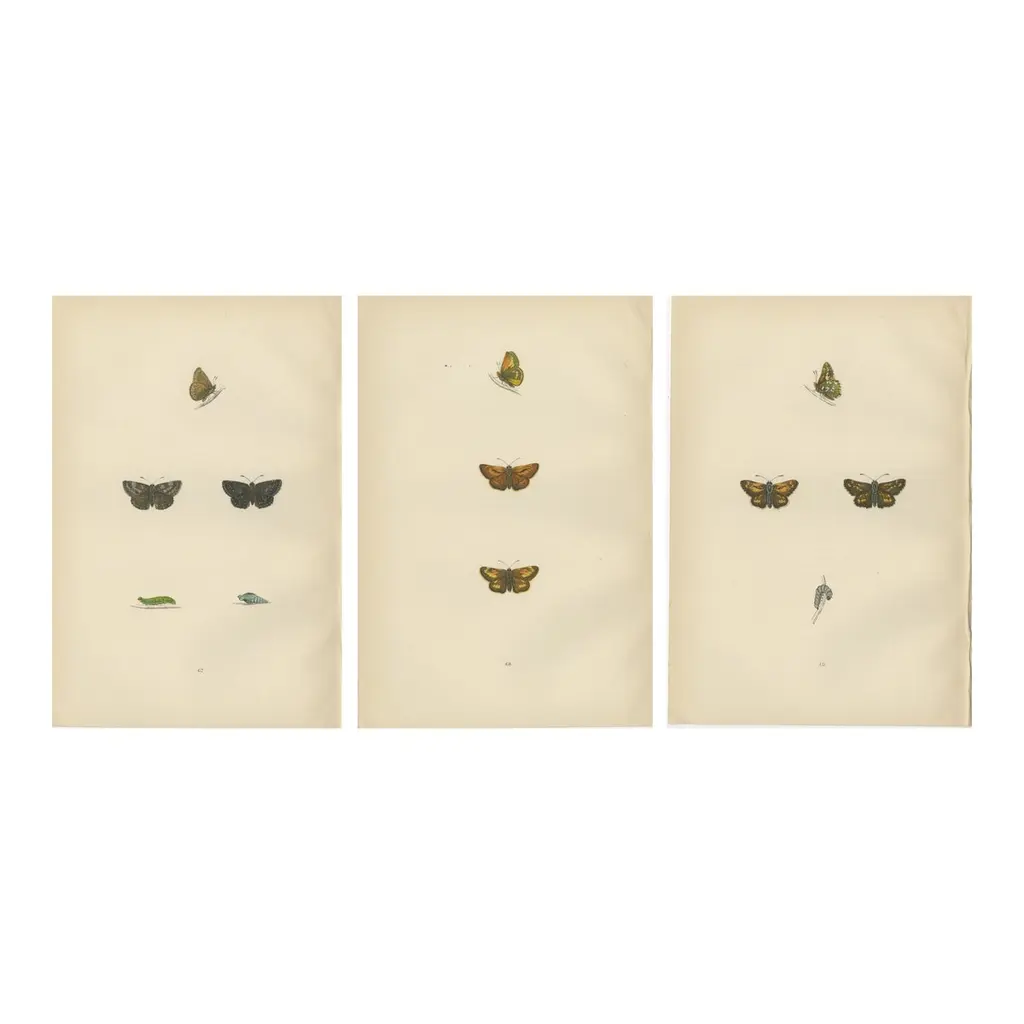
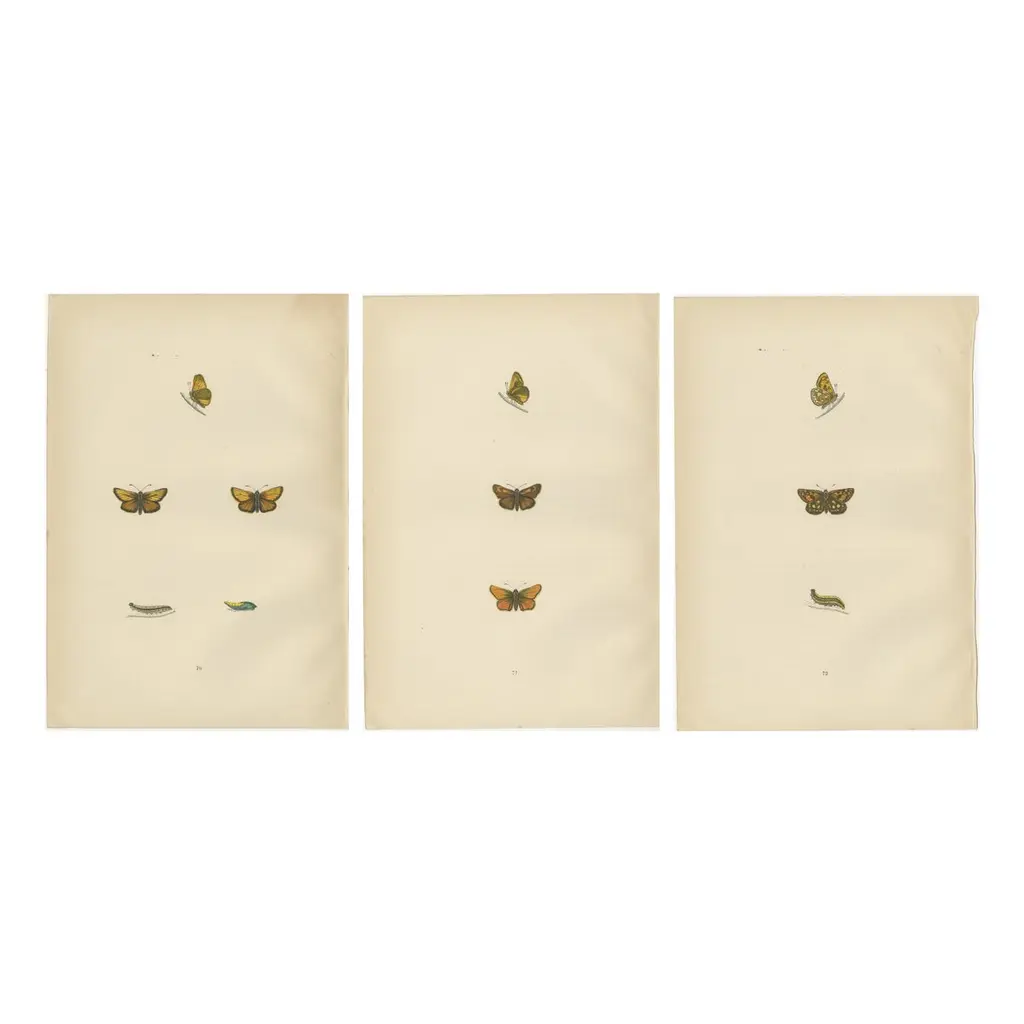
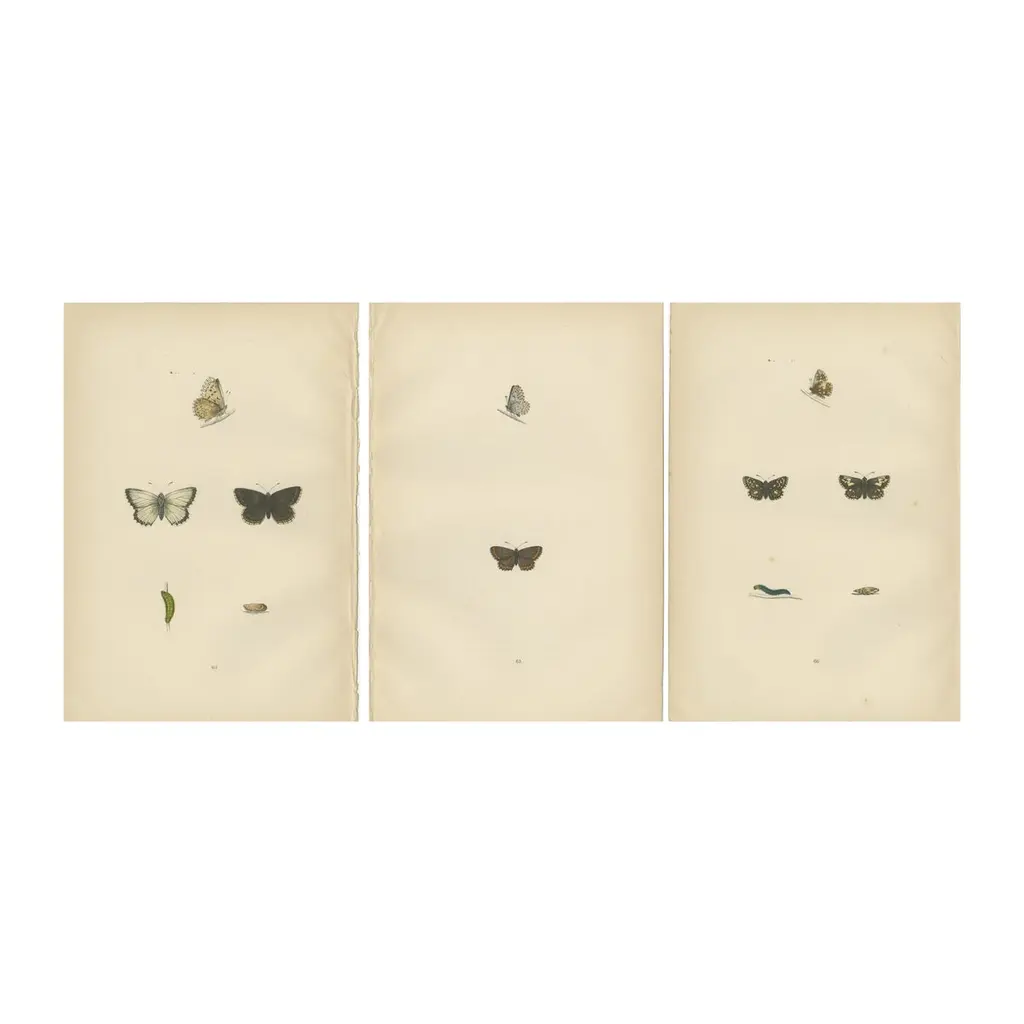
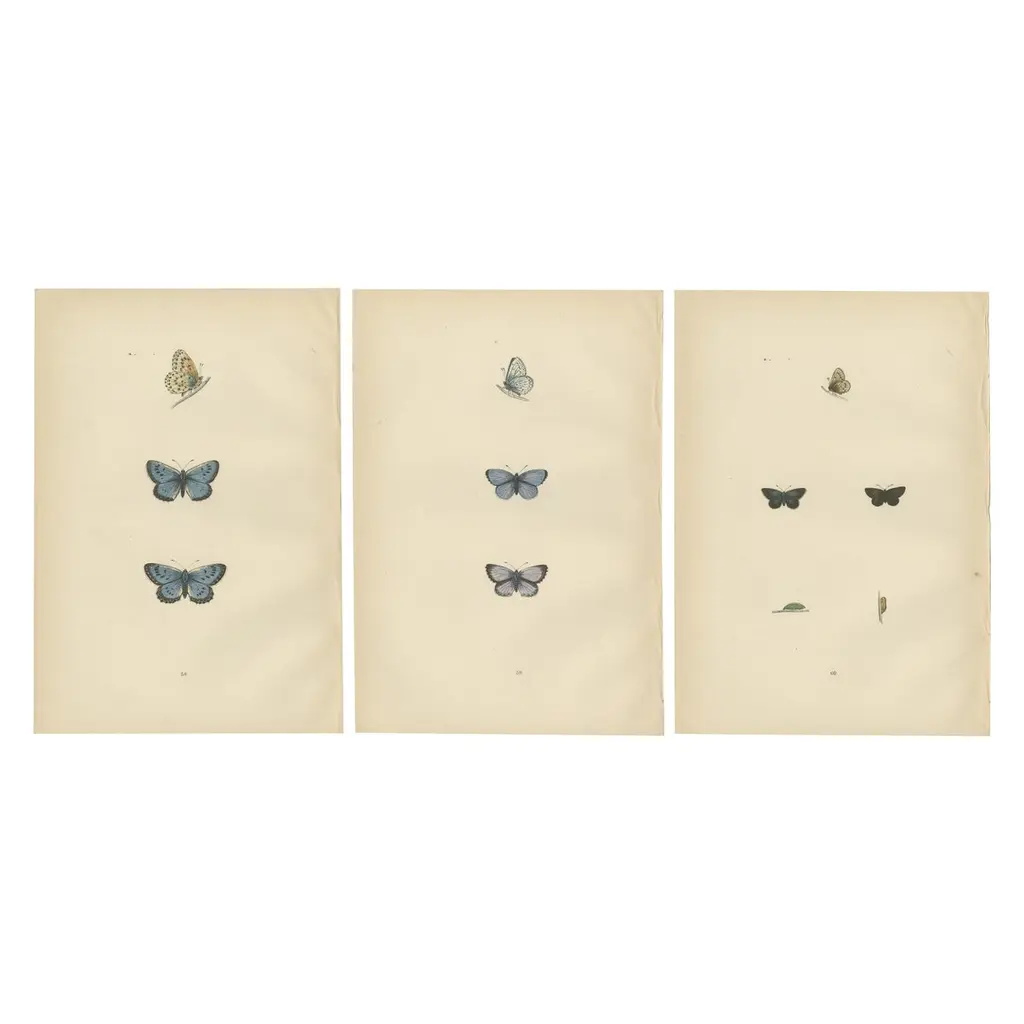
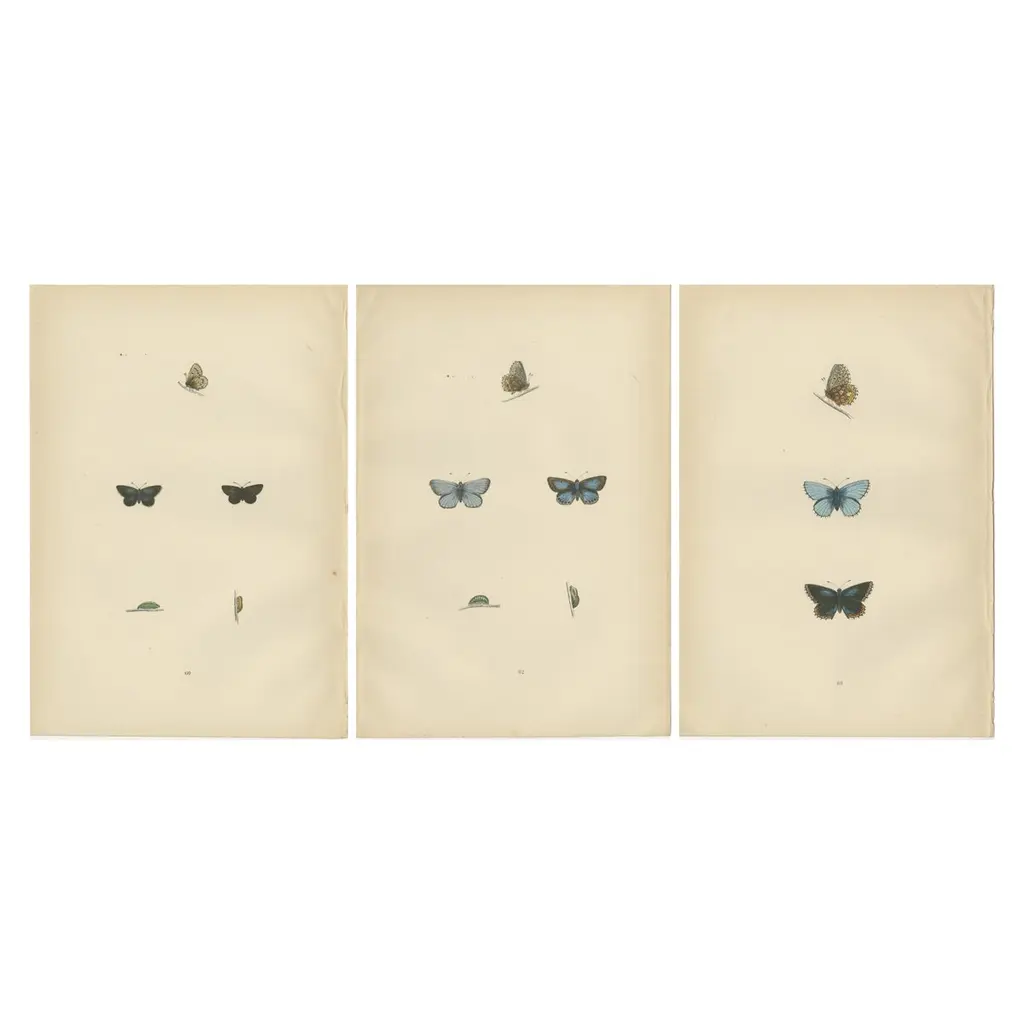
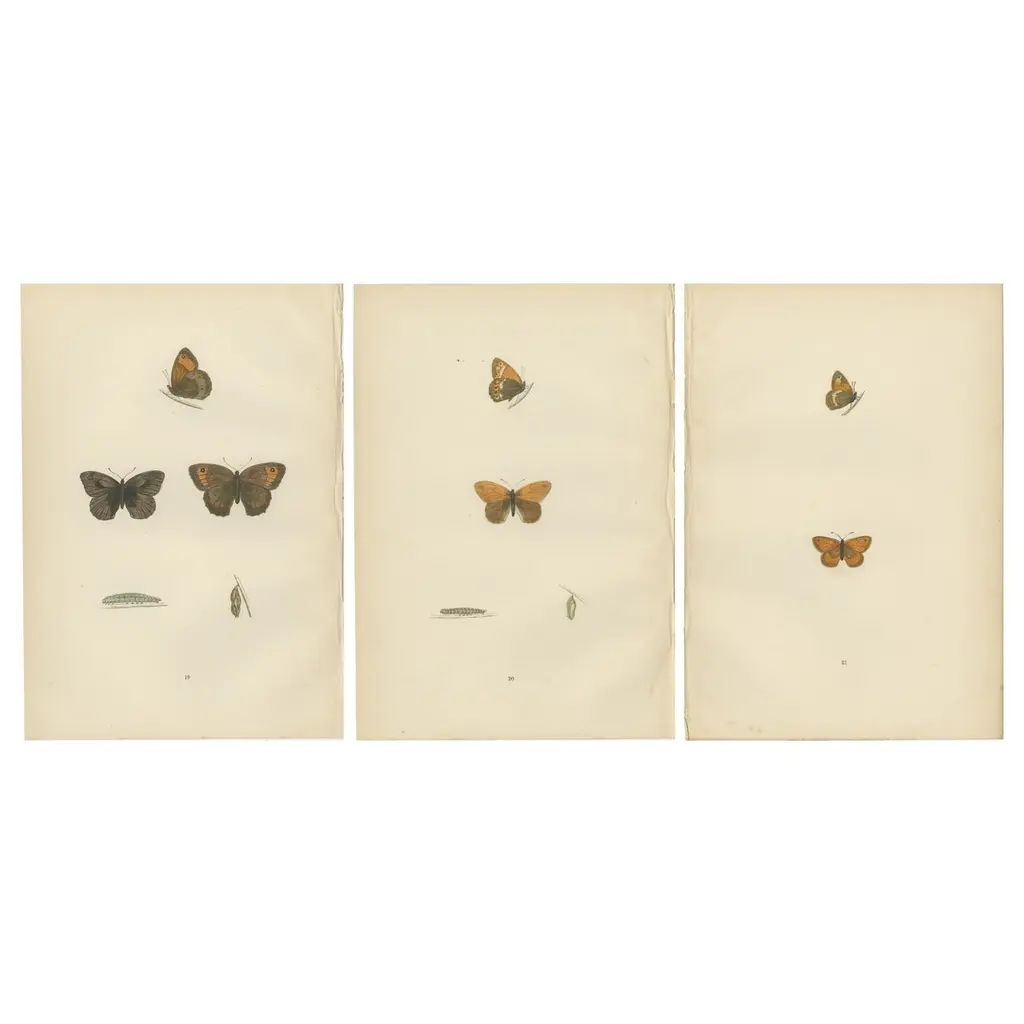
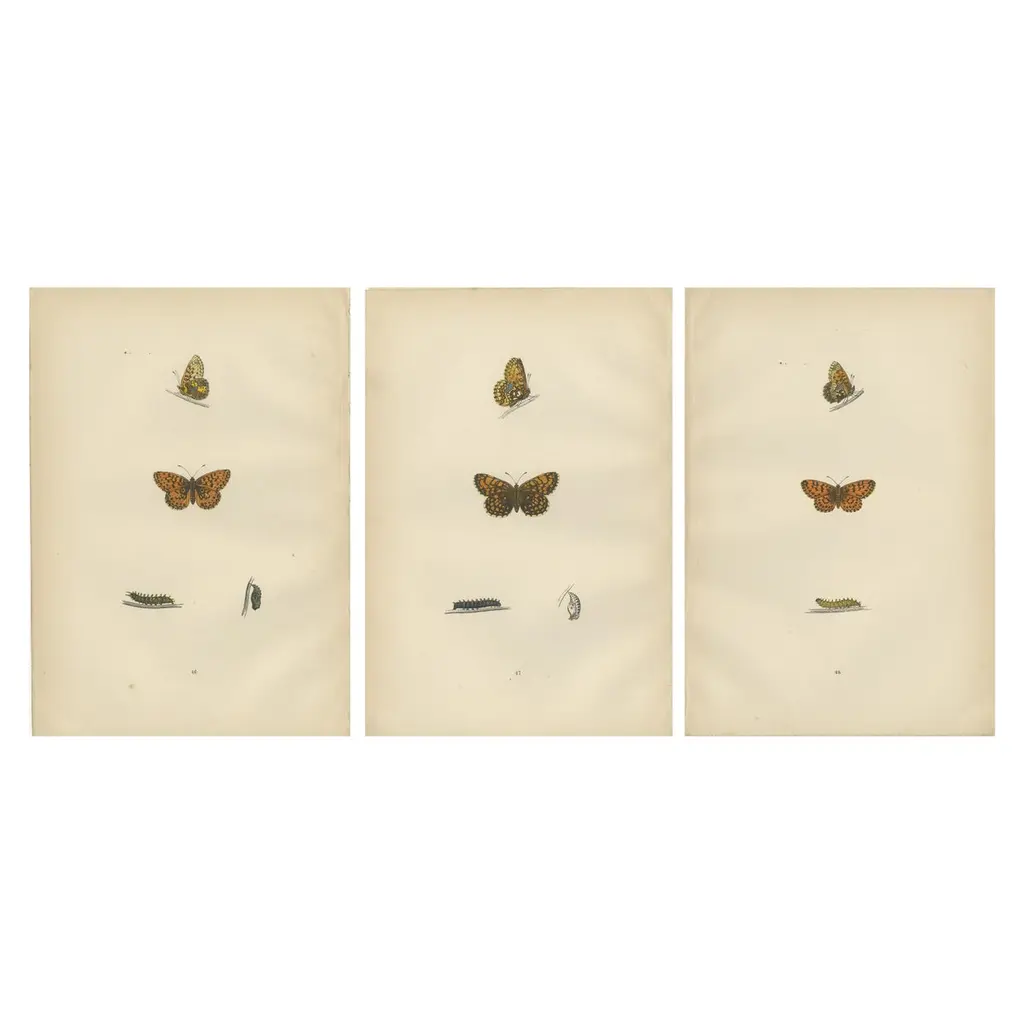
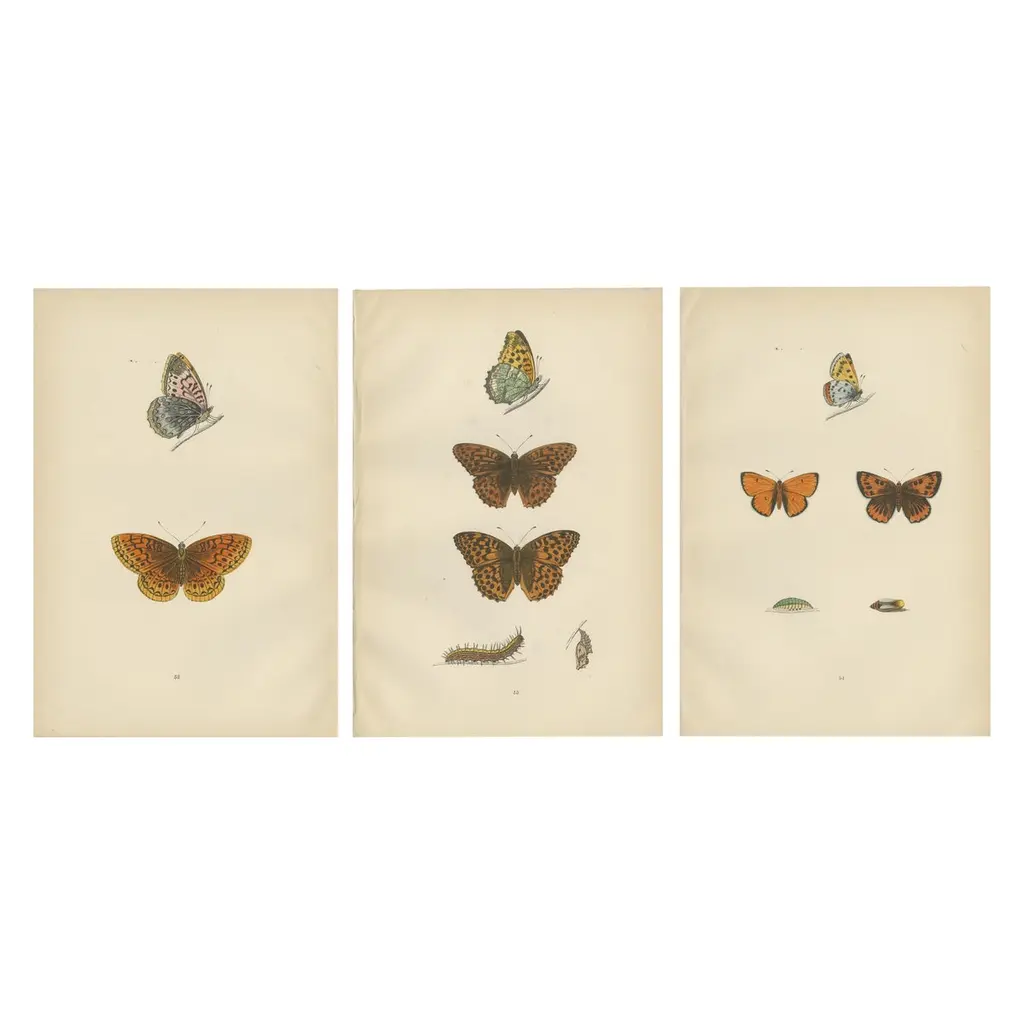
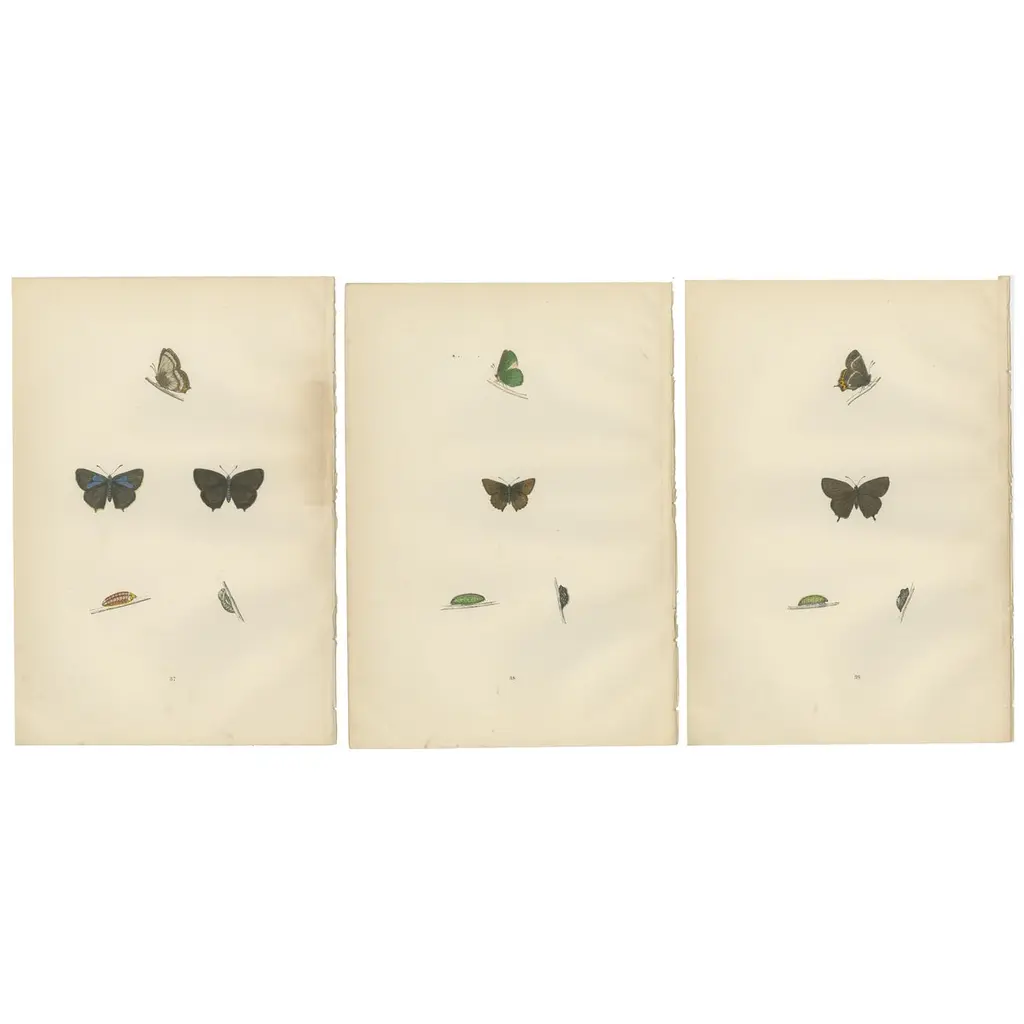
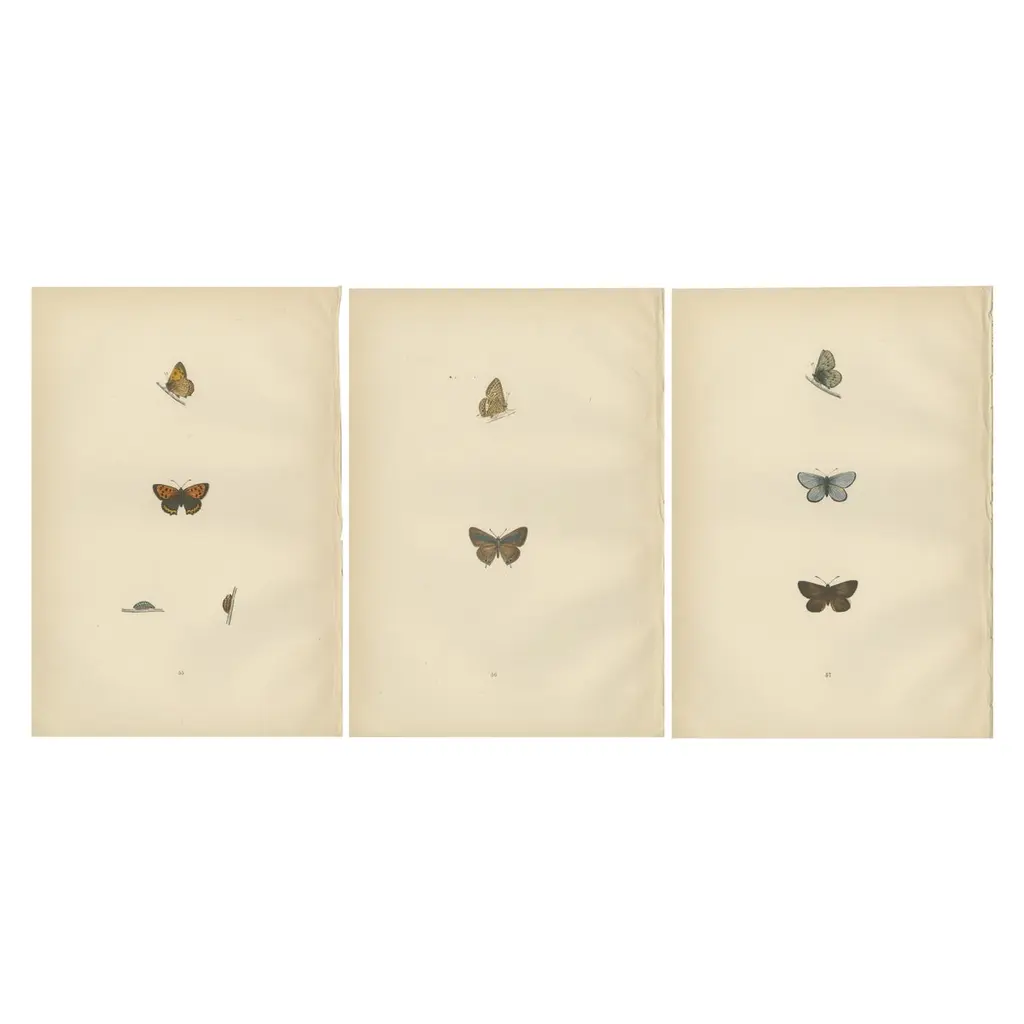
Beautiful hand-colored antique prints of butterflies. They are from a work by Morris, published in 1890.The butterflies from these plates are known for their distinct appearances and behaviors:1. Small Copper (Lycaena phlaeas): The Small Copper is a small, dynamic butterfly that is a treat to spot due to its bright copper wings with dark brown spots and margins. An interesting fact about this species is its territorial nature, with males often seen perching on a leaf or stone, ready to take flight and chase away intruders. They have multiple generations a year and can be found in a variety of habitats, including heathlands, grasslands, and even urban gardens.2. Brighton Argus (Aricia agestis), also known as Brown Argus: This small butterfly is notable for its brown upper wings with orange spots near the edges. Unlike other blues which are often tied to specific plant species, the Brown Argus's caterpillars feed on a variety of plants, which makes the species quite adaptable to different habitats. What makes them special is their ability to survive in a range of conditions, from coastal dunes to dry grasslands.3. Mazarine Blue (Cyaniris semiargus): This butterfly has beautiful deep blue upper wings edged with a black margin, while females have broader black borders. They are unique among the blues in not having any orange markings on the upper side. The Mazarine Blue is interesting for its enigmatic presence in Britain; it was thought to be extinct in the late 19th century, reappeared, and then vanished again. Its conservation status remains a point of interest and concern.Each of these species represents the incredible diversity of British butterflies and the intricacies of their life cycles and habitats. They are not only important pollinators but also indicators of the health of the environment. The hand-colored plates that depict them serve as both scientific documentation and historical art, capturing the beauty of these insects for posterity.
Similar Items