Swift Shadows And Gilded Wings: The Art Of Morris's Skippers From Britain, 1890
$179
1st Dibs
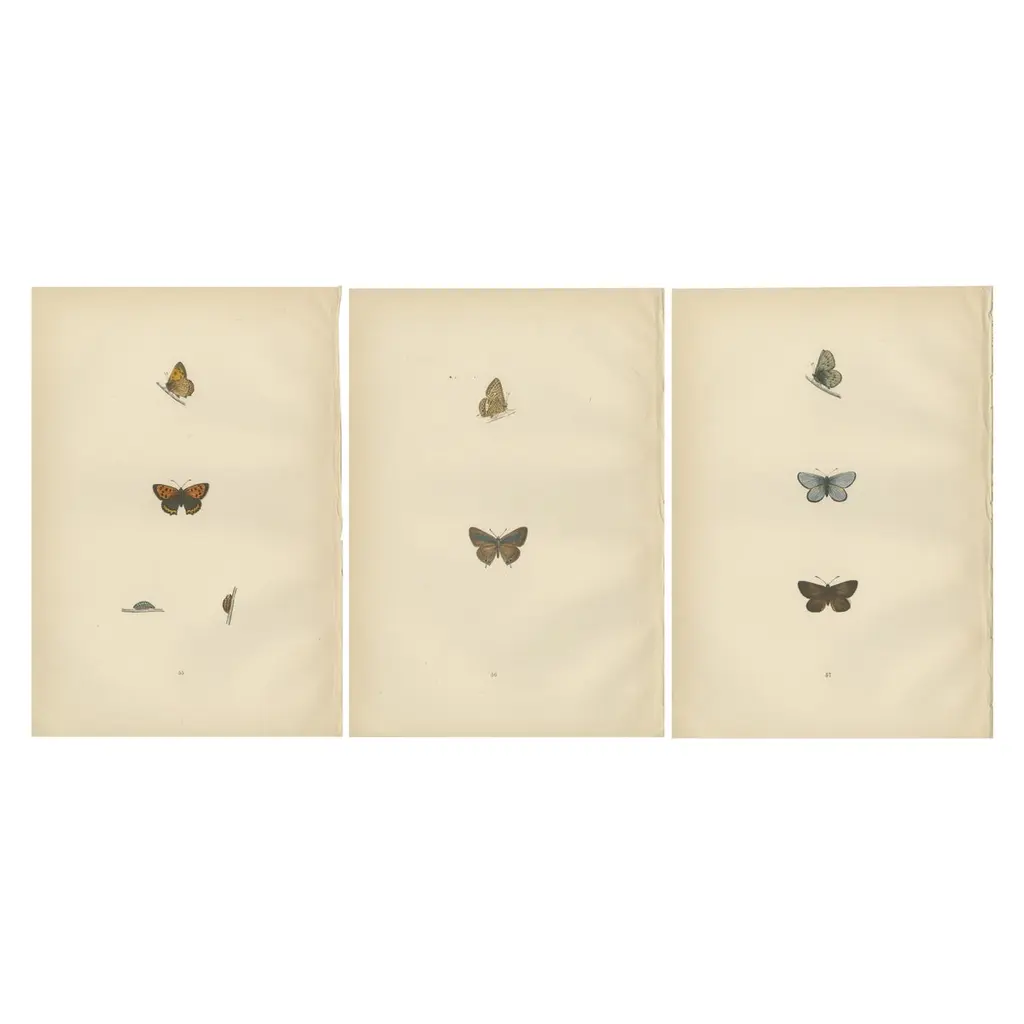
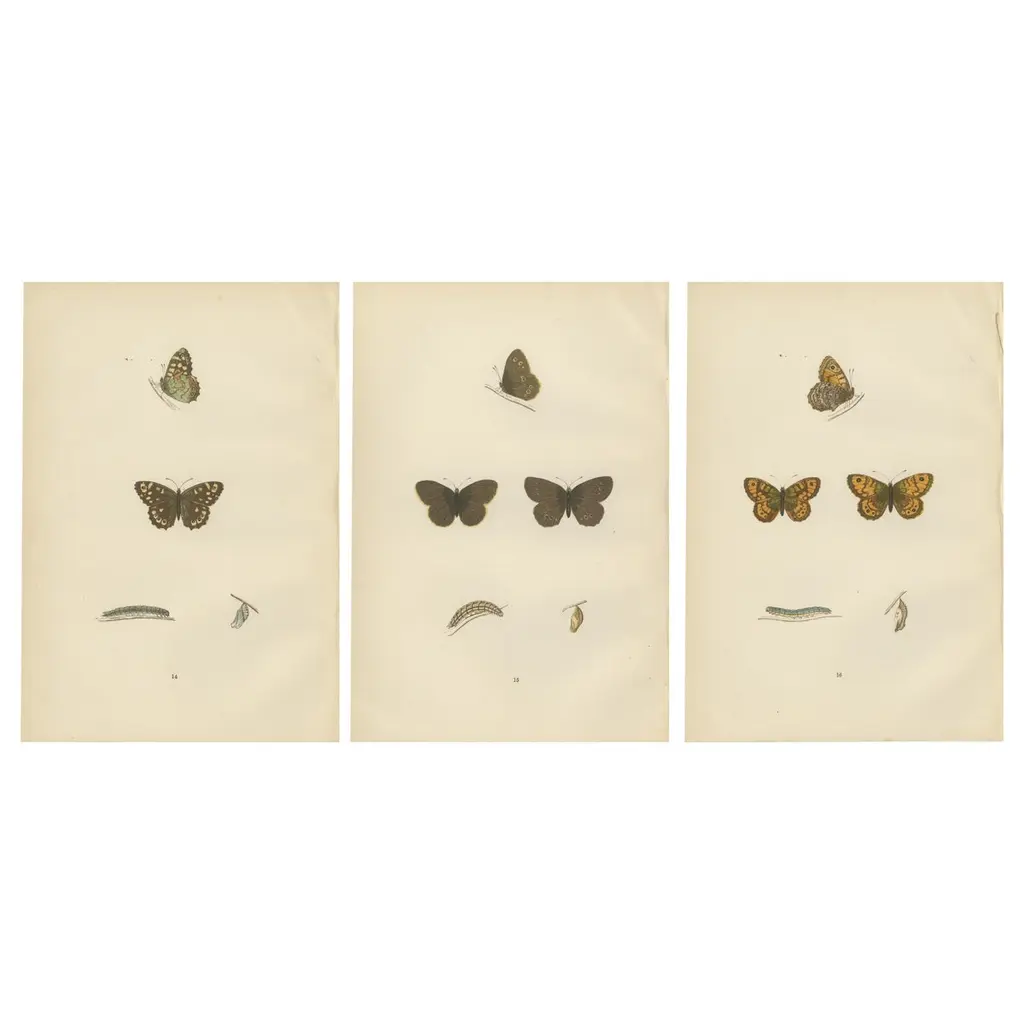
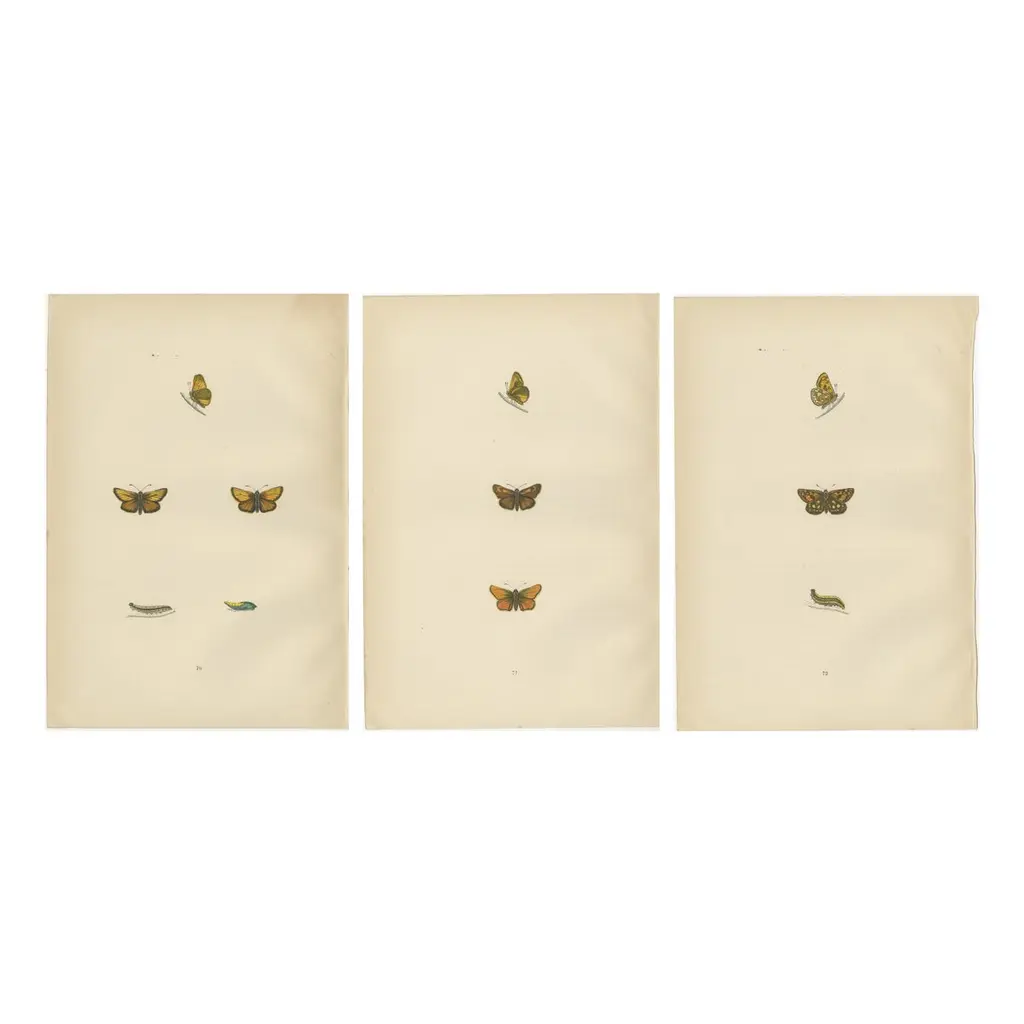
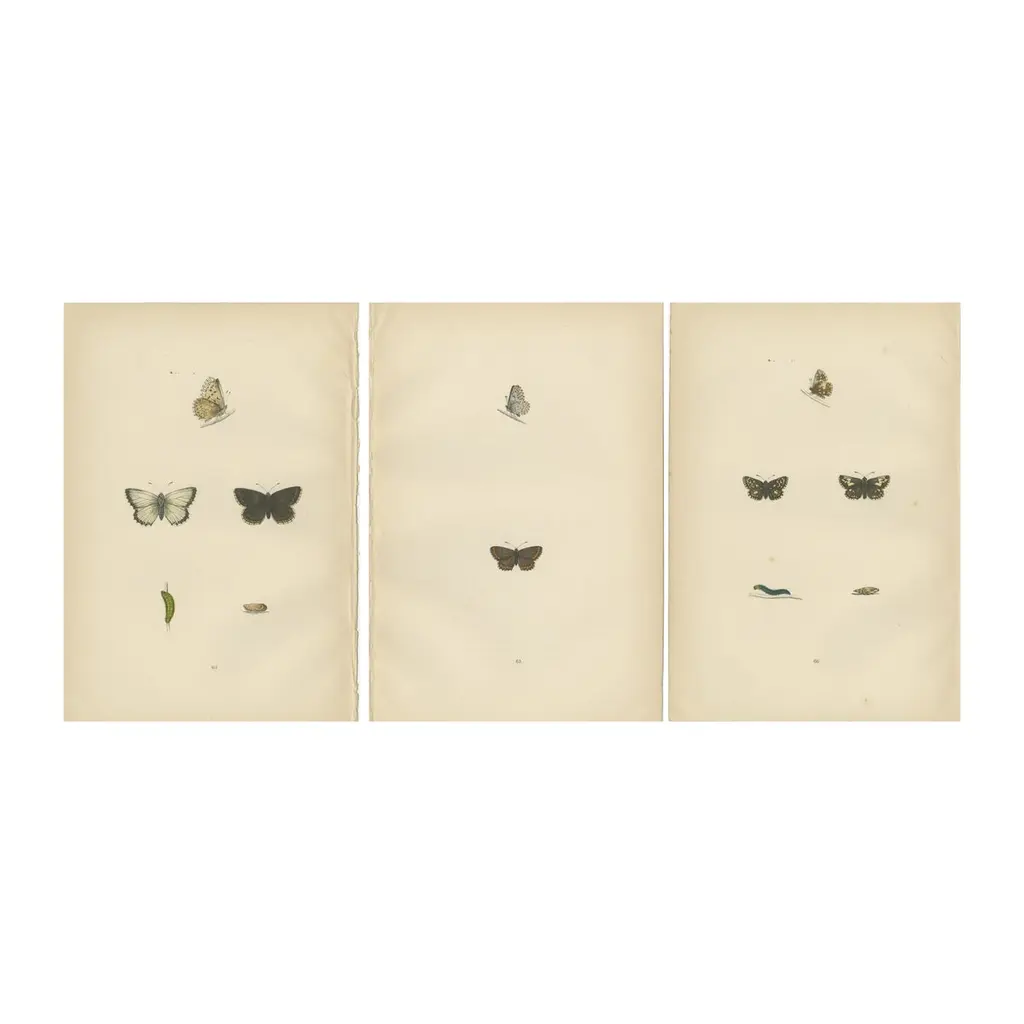
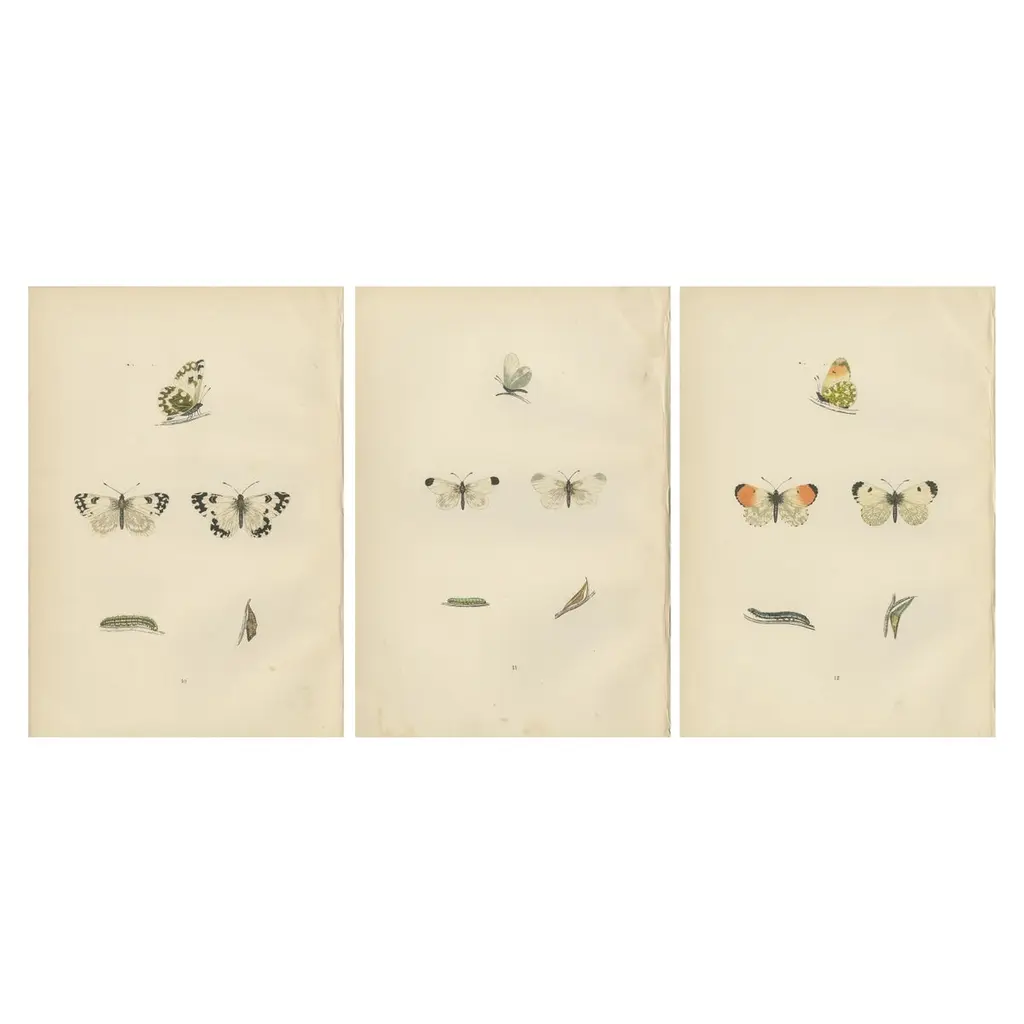
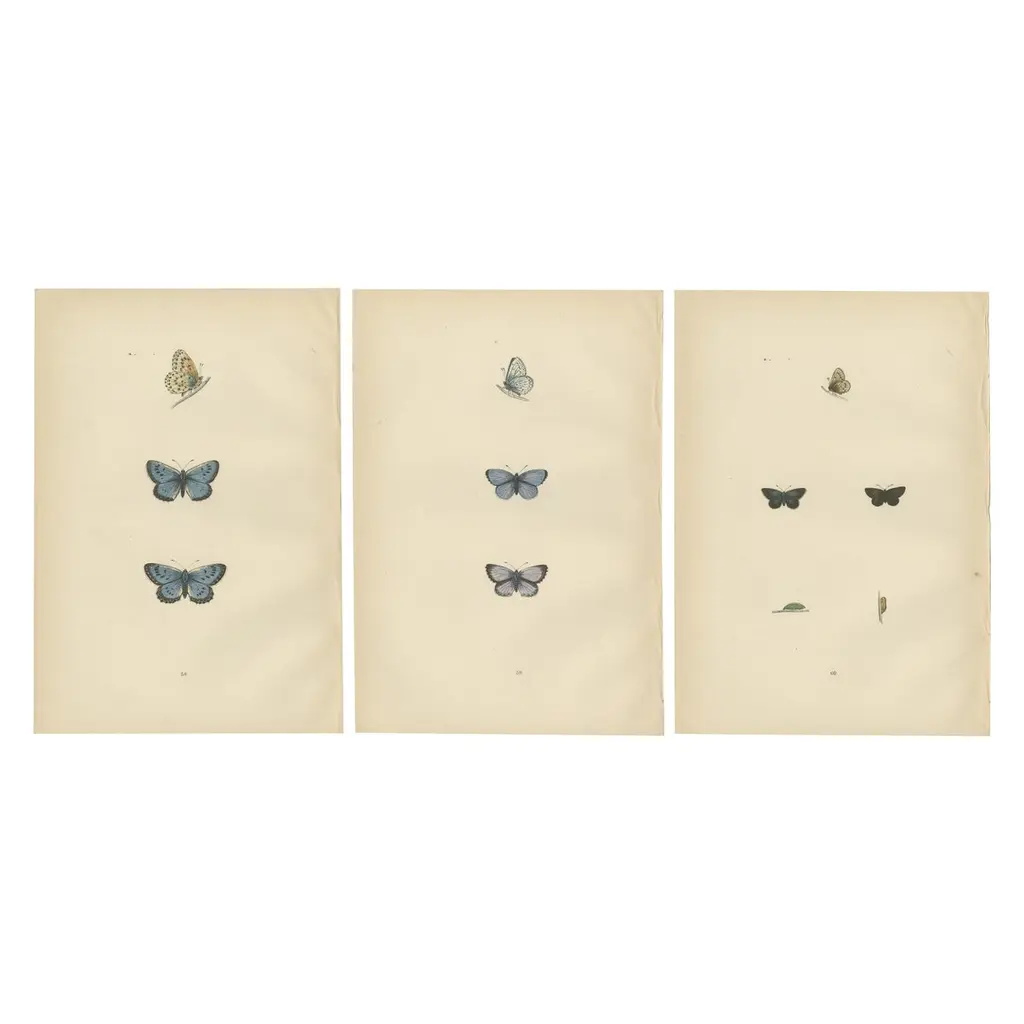
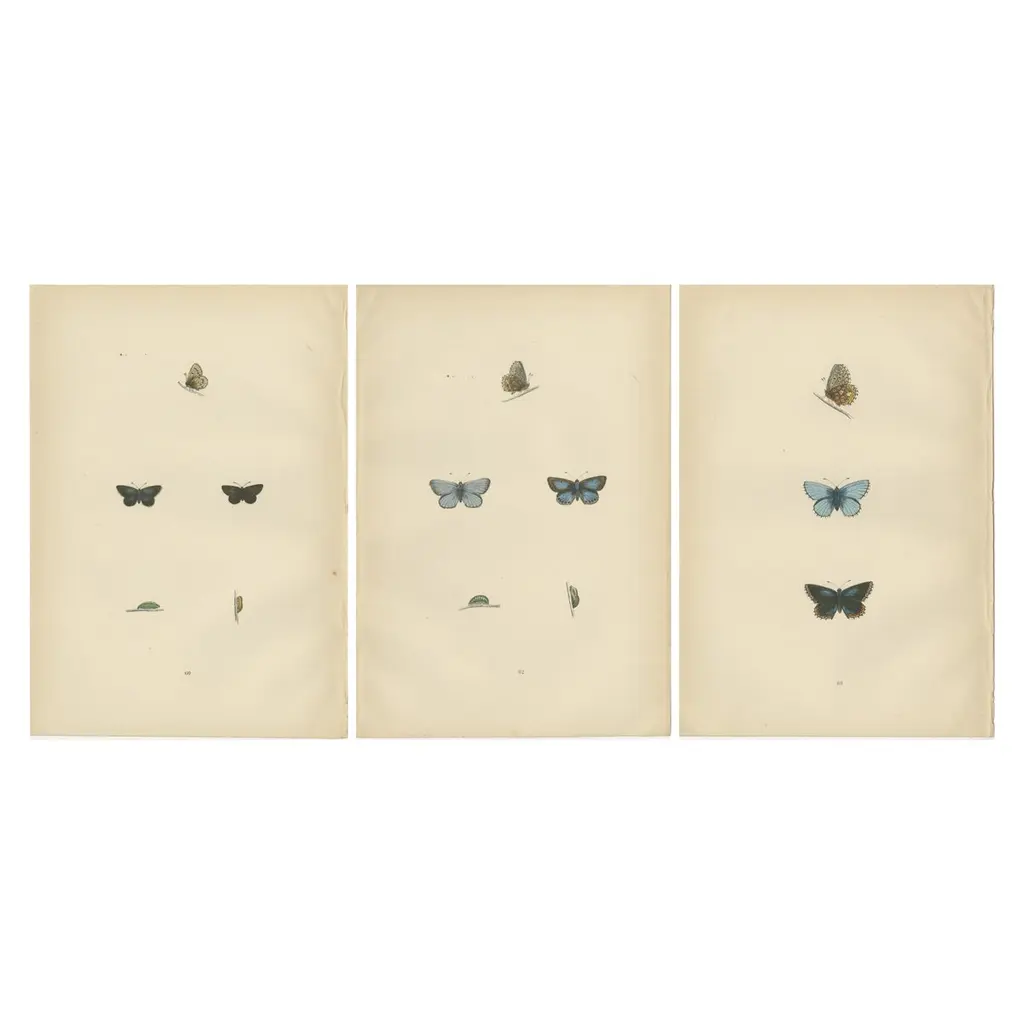
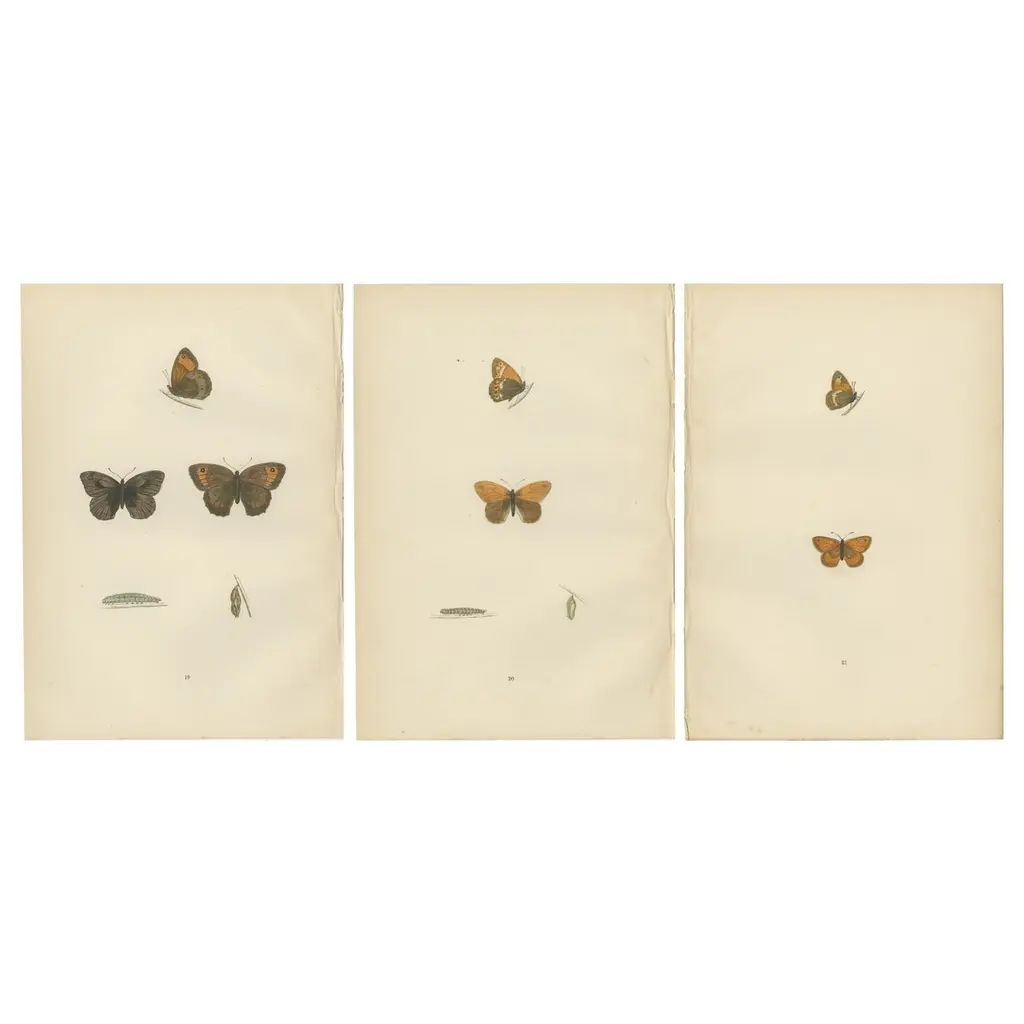
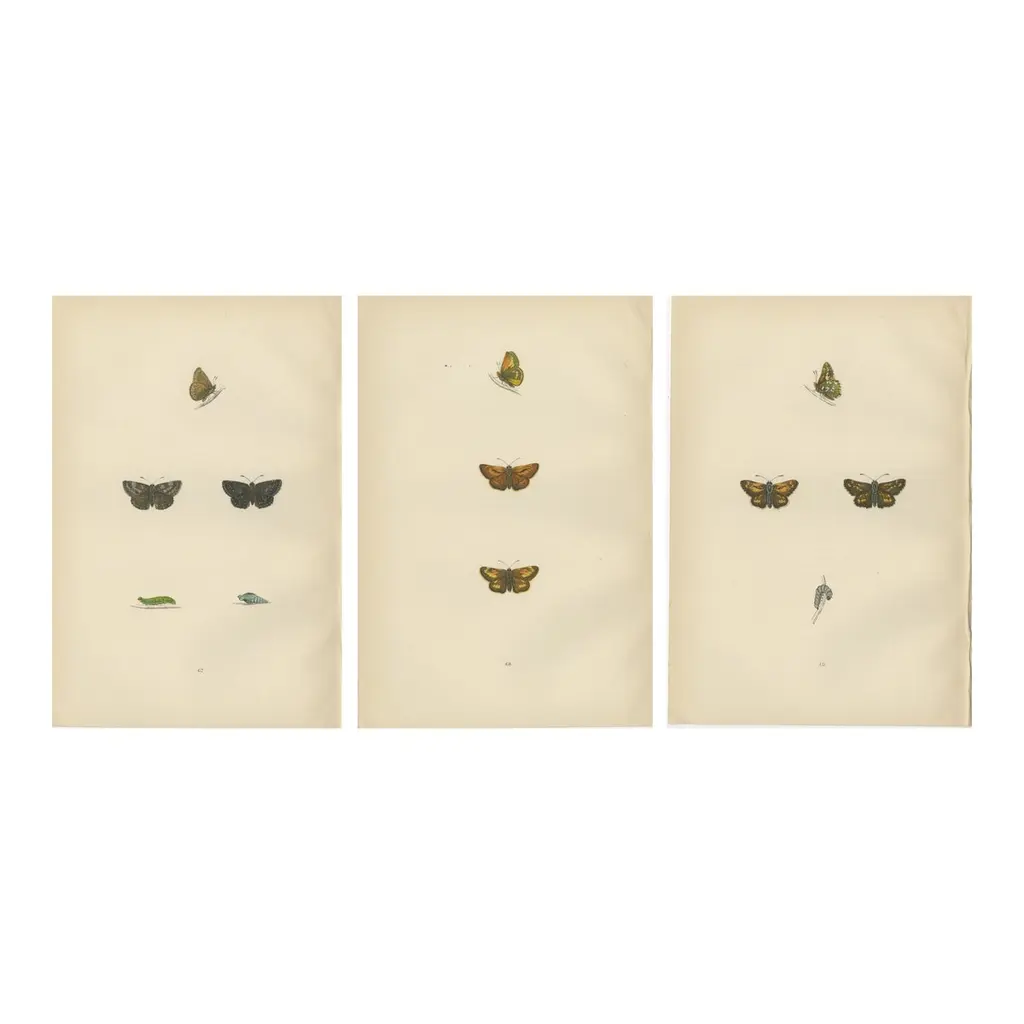
Detailed hand-colored illustrations from Morris's "A History of British Butterflies. Original antique plates, published in 1890.The plates illustrate the following butterfly species:1. Dingy Skipper (Erynnis tages): This butterfly often has a camouflaged appearance with a complex pattern of brown, cream, and orange markings, resembling the texture of the earth and dry leaves. It's a fast-flying butterfly that is often found in open, sunny locations where its larval food plants, such as bird's-foot trefoil, are abundant. The Dingy Skipper is interesting because of its behavior of basking on bare ground or stones to absorb warmth, which is somewhat unusual for butterflies.2. Large Skipper (Ochlodes sylvanus): The Large Skipper has a robust appearance with bright orange wings edged with a brown border and brown patches on the upper wings. It is distinguishable from other skippers by the hook-shaped tips of its antennae. The Large Skipper is known for its powerful, darting flight and is commonly found in grassy habitats. An interesting fact about the Large Skipper is that it is one of the first skippers to emerge in the year, typically at the beginning of summer.3. Silver-Spotted Skipper (Hesperia comma): Characterized by its brown wings with a row of yellowish spots and distinctive silver-white spots on the underside of the hindwings, the Silver-Spotted Skipper is a visually striking butterfly. These silver spots reflect sunlight, which may help in thermal regulation or deter predators. The butterfly is found in warm, chalky grasslands and is interesting for its selective feeding on certain grasses, such as sheep's fescue. The Silver-Spotted Skipper has a strong, rapid flight and is known for its territorial behavior, often returning to the same perch after chasing away an intruder.These butterflies are not only key species in their respective habitats but also serve as indicators of environmental change. The detailed hand-colored illustrations in Morris's "A History of British Butterflies" provide invaluable historical records of these species and offer a window into the artistry and scientific observation of the Victorian era.
Similar Items