Winged Jewels Of The Victorian Era: Hand-Colored Butterfly Masterpieces, 1890
$180
1st Dibs
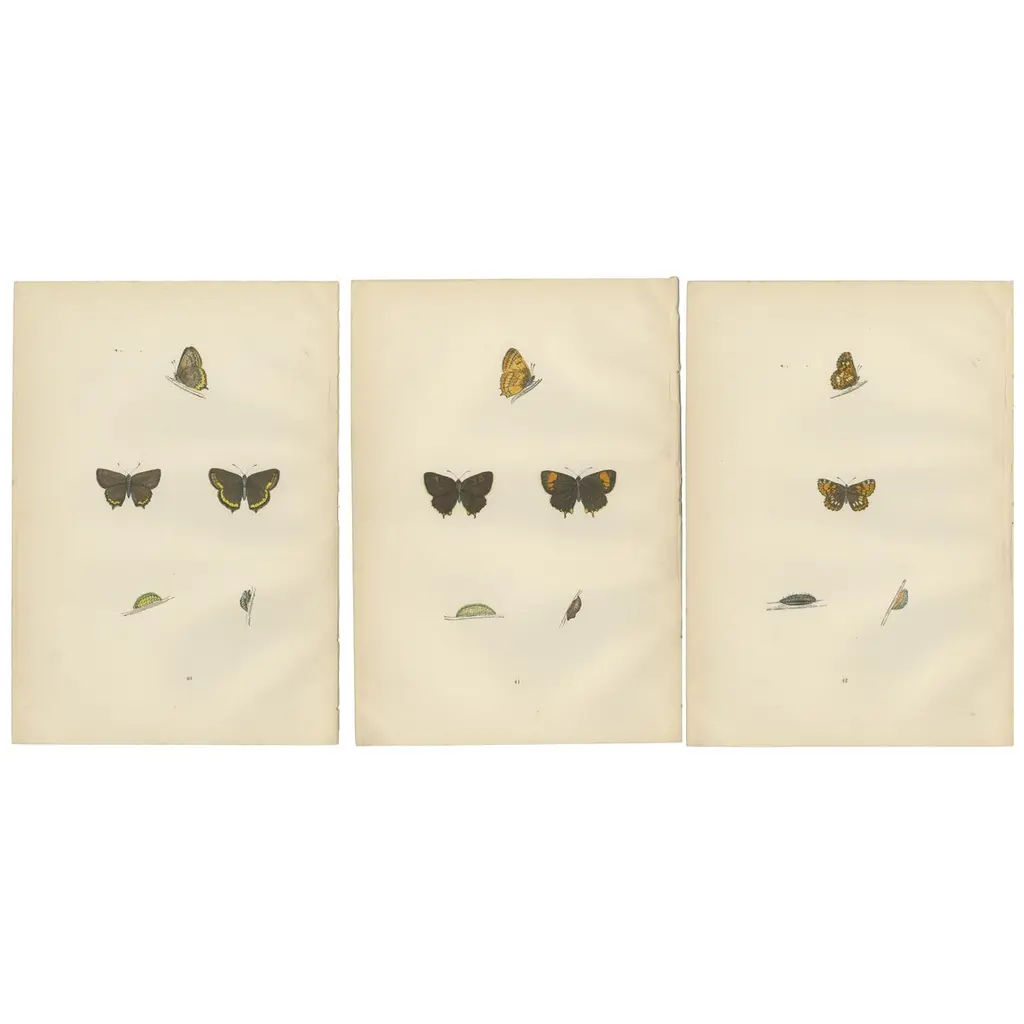
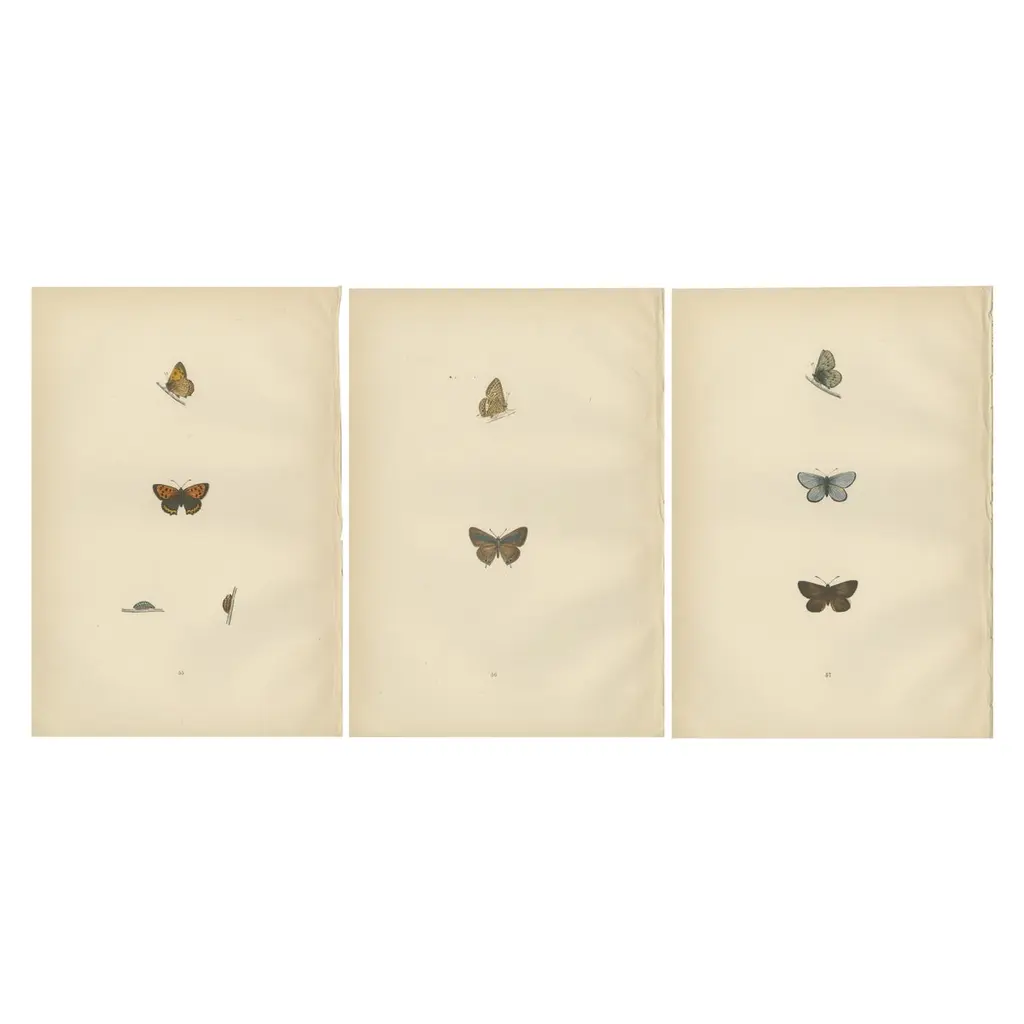
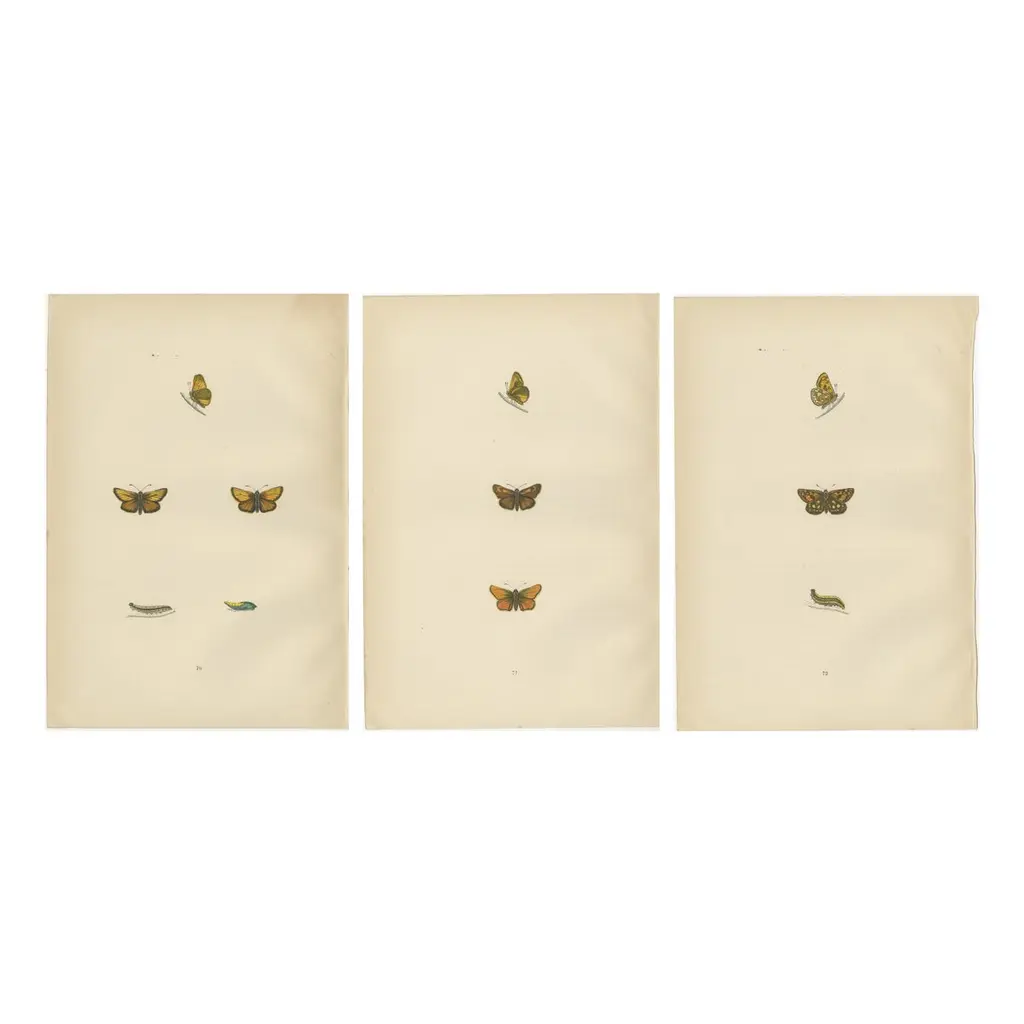
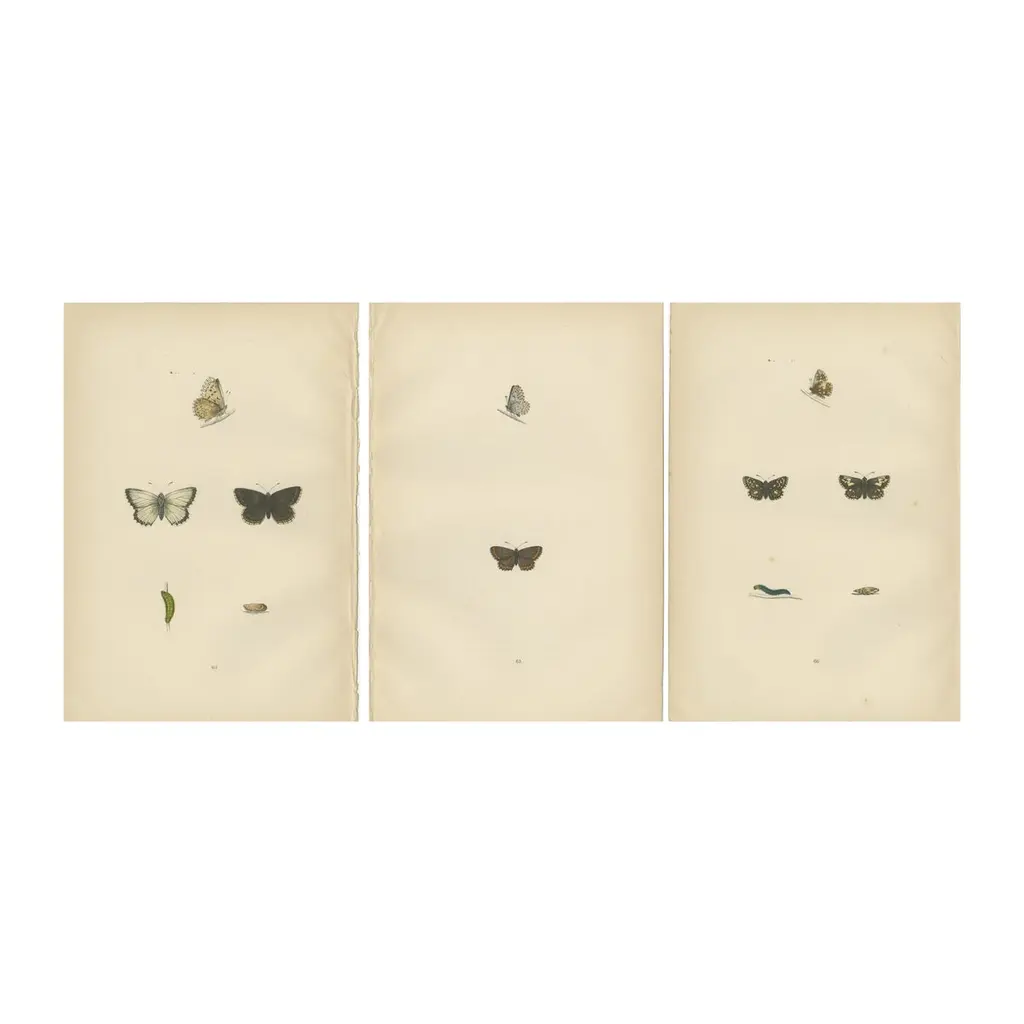
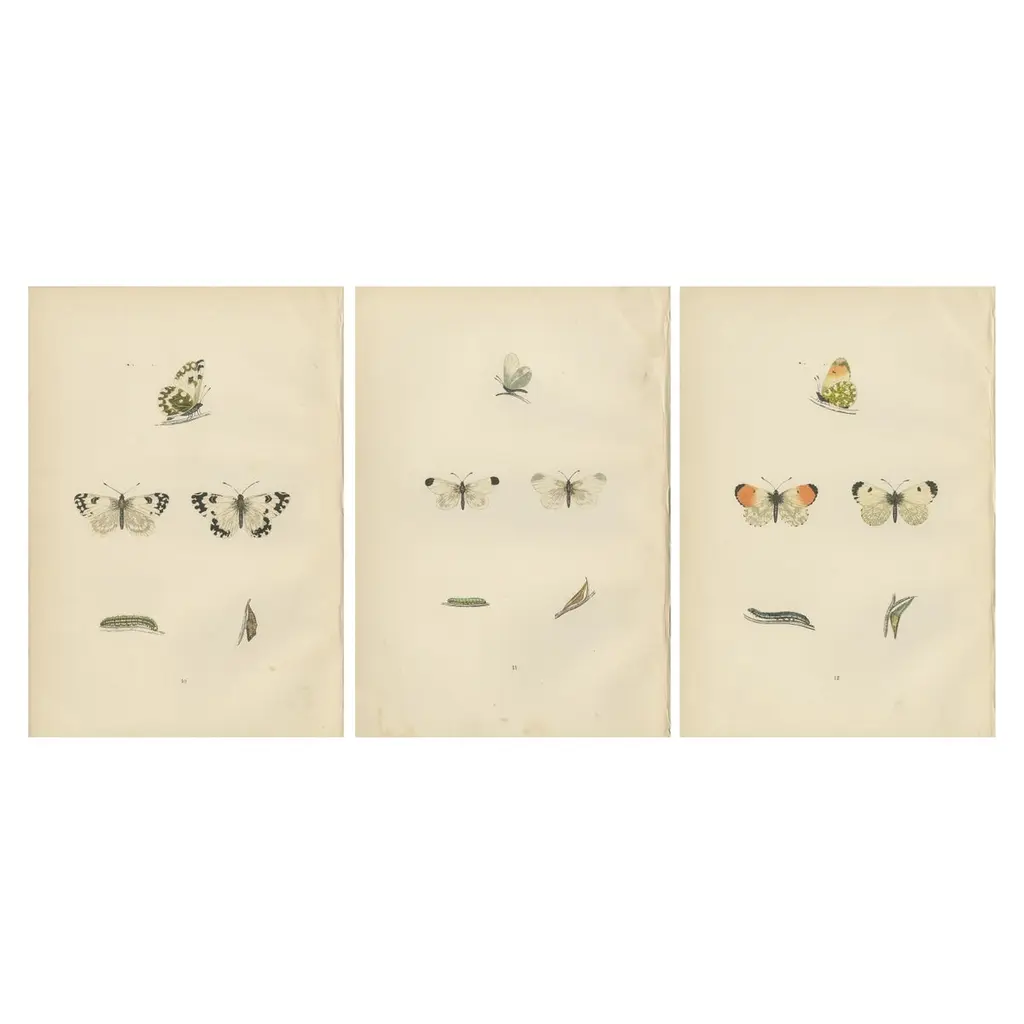
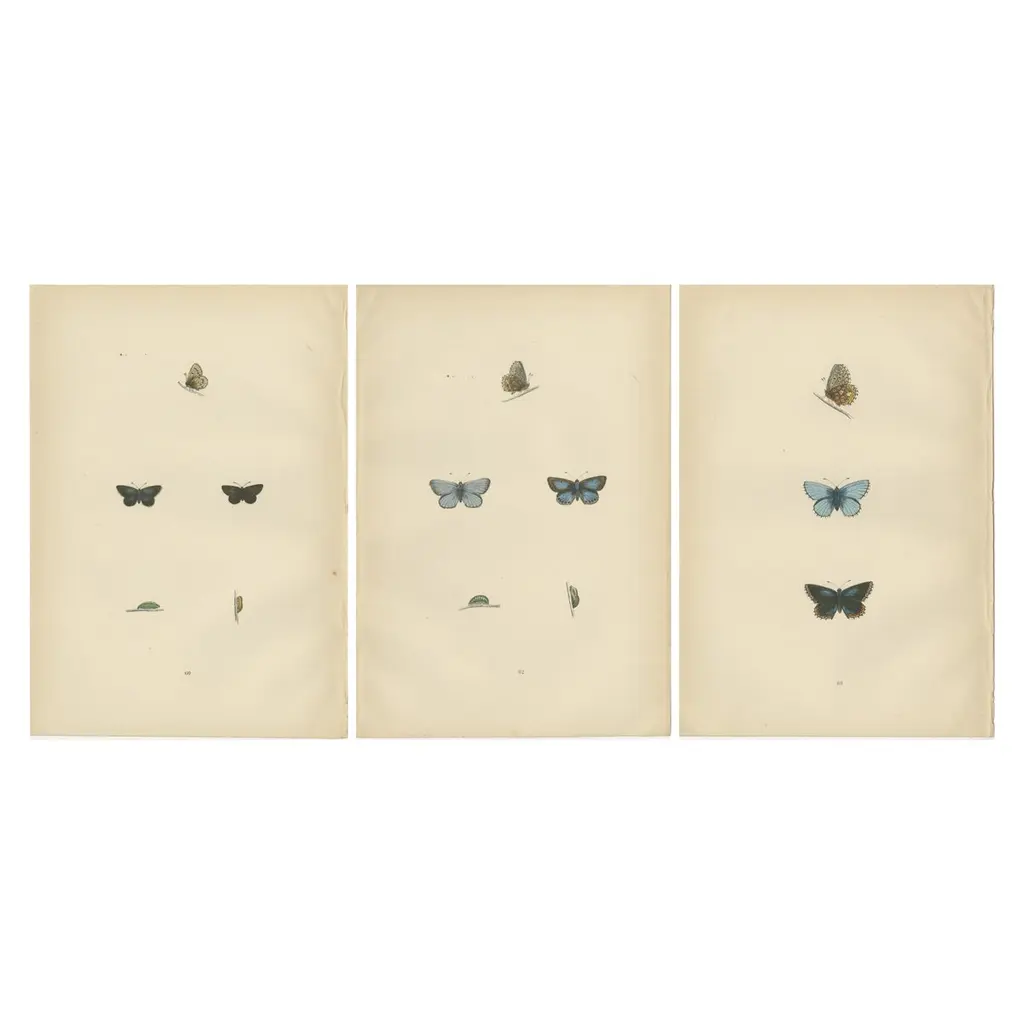
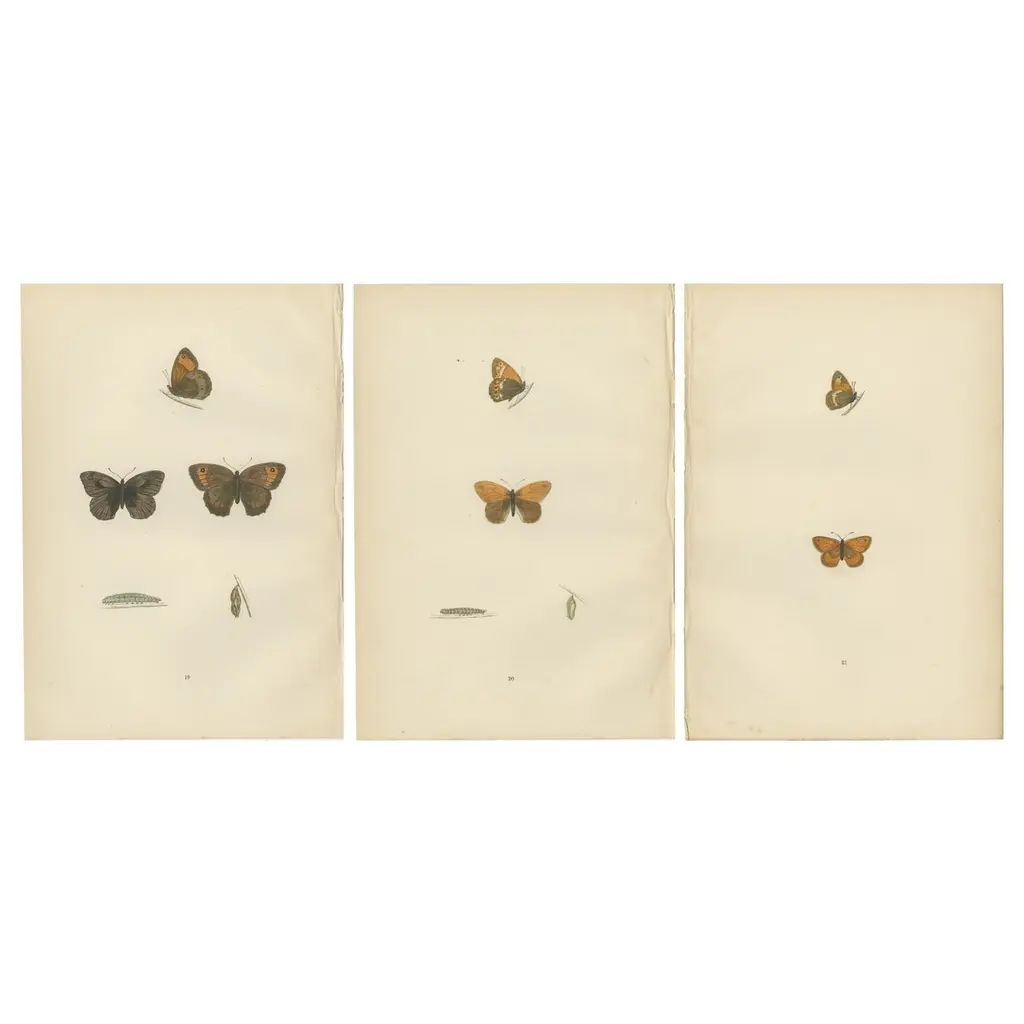
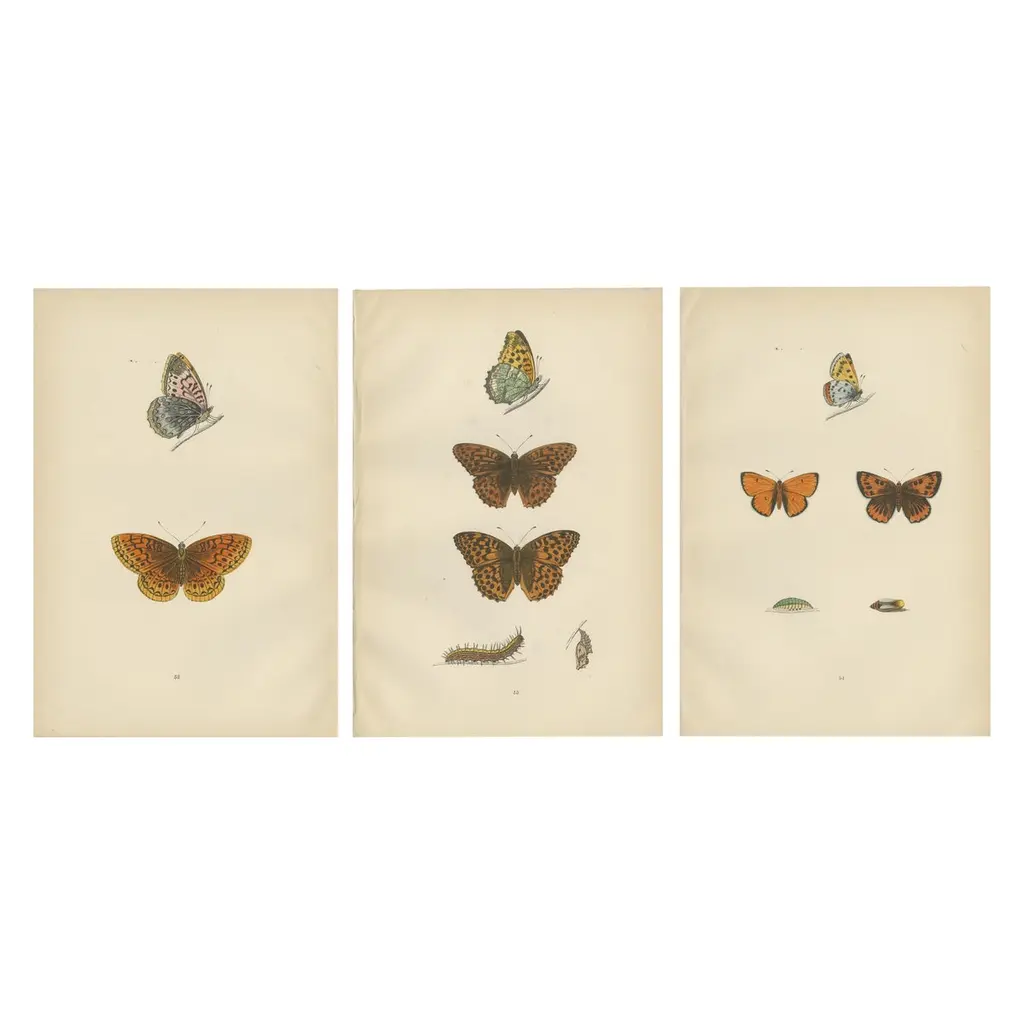
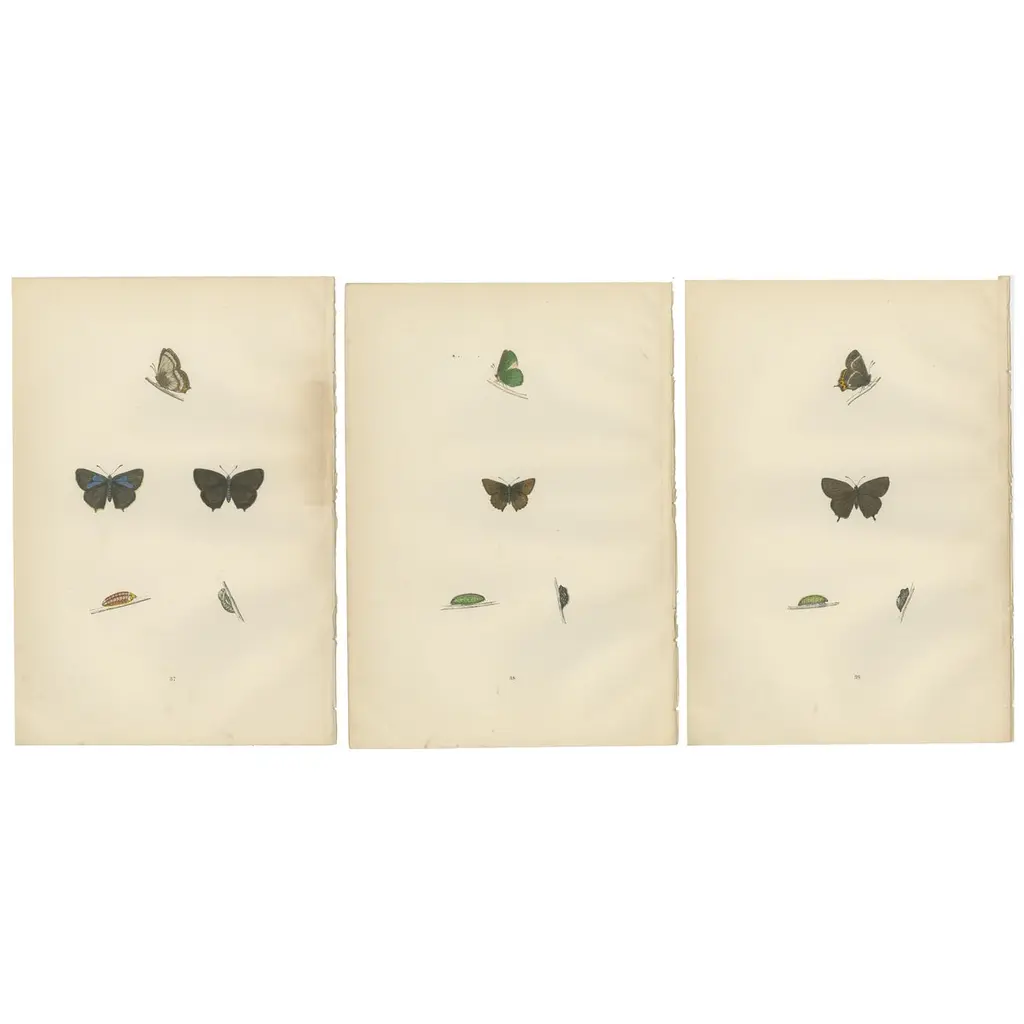
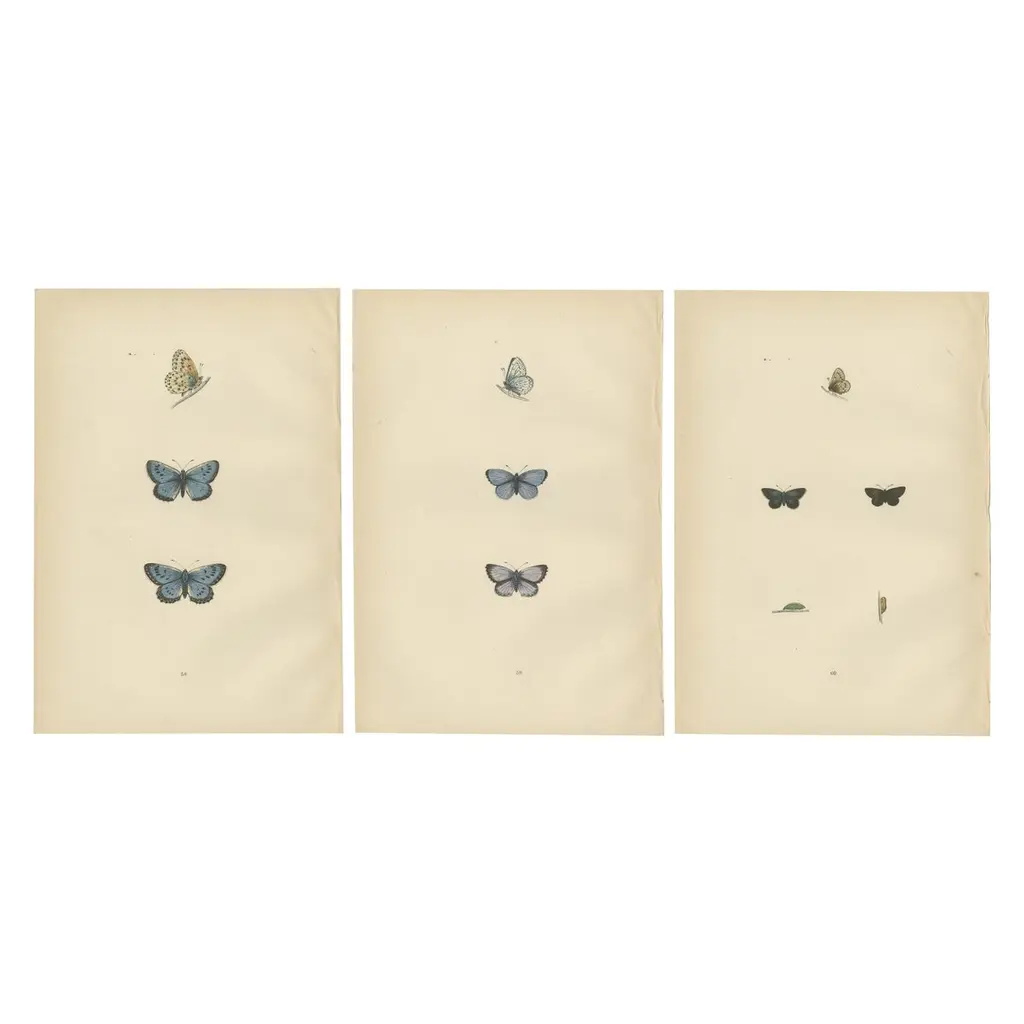
The three butterfly species depicted in the original hand-colored plates from the sixth edition of "A History of British Butterflies" by Morris, published in 1890, are a fascinating subject for both entomologists and art enthusiasts. The butterflies in more detail:1. Large Blue (Maculinea arion): The Large Blue, which is likely represented in the first plate, is renowned for its vibrant blue wings, bordered by a black margin and adorned with black spots across the forewings. What makes the Large Blue particularly interesting is its complex life cycle and dependence on a specific species of red ant (Myrmica ants). The caterpillars are adopted by the ants and live within the ant nest, where they are fed by the ants until they pupate. This unique parasitic relationship has garnered significant interest and led to conservation efforts, especially as the Large Blue has faced extinction threats in the past.2. Holly Blue (Celastrina argiolus): Often depicted with a bright azure blue on the upper wings with thin black margins, the Holly Blue can be distinguished by its pale silver-blue underwings with small black spots. This butterfly is usually found in woodland areas, gardens, and hedgerows. The Holly Blue has two broods a year, with caterpillars that feed on different host plants depending on the season: holly in the spring and ivy in the autumn. This adaptation to different seasonal plants is quite unique among butterflies.3. Little Blue (Cupido minimus or Plebejus argus): While "Little Blue" is not a standard common name and could refer to a variety of small blue butterflies, it could possibly refer to Cupido minimus, also known as the Small Blue, or Plebejus argus, the Silver-studded Blue. The Small Blue is the UK's smallest butterfly and has dusky blue wings with unobtrusive black spots. Alternatively, the Silver-studded Blue has blue-tinted wings with a row of black spots encircled with white and orange lunules near the margins of the hindwings. These butterflies are interesting due to their diminutive size and the specific habitats they require, often associated with specific plant species such as kidney vetch for the Small Blue or heathland for the Silver-studded Blue.These illustrations from Morris' "A History of British Butterflies" not only serve as a documentation of biodiversity but also highlight the intersection of art and science during the Victorian era. The meticulous hand-coloring adds to the historical value of the plates, providing a glimpse into the dedication and attention to detail involved in 19th-century scientific illustration.
Similar Items