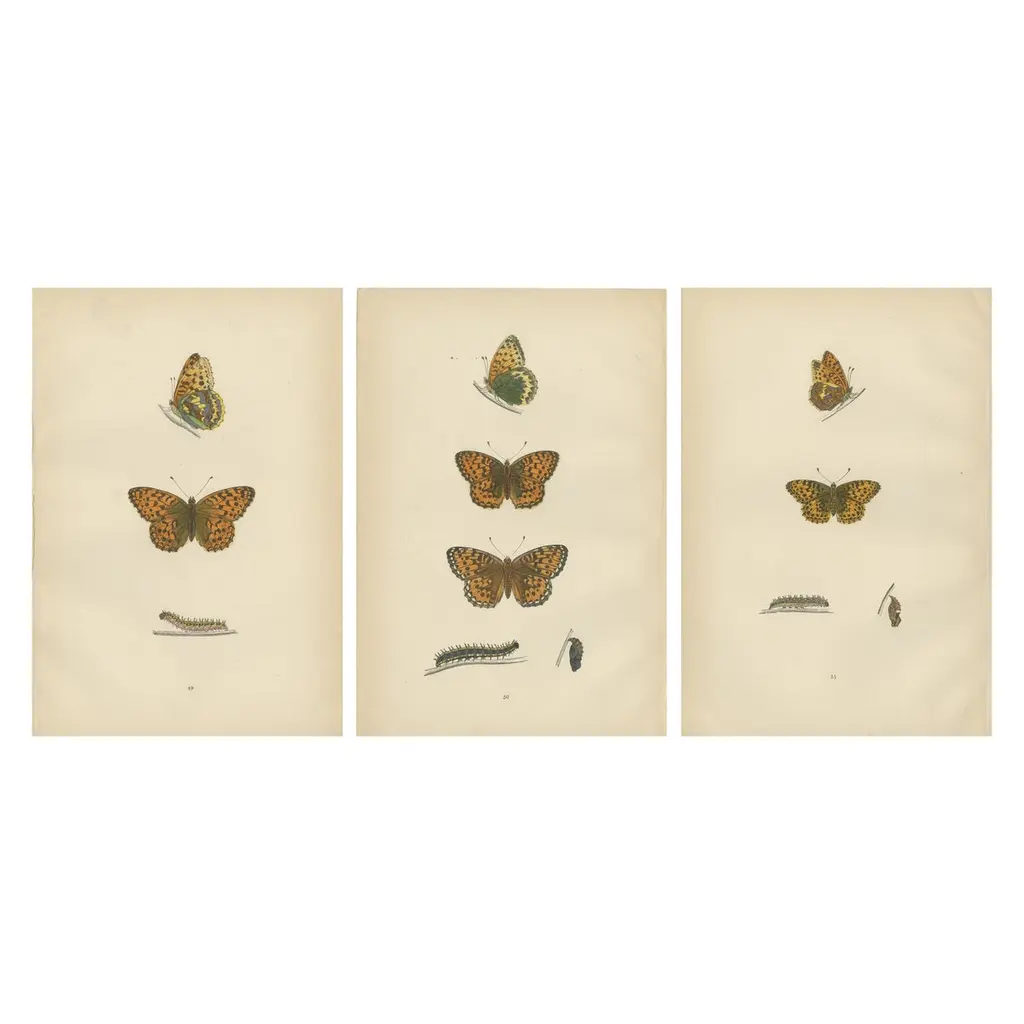
Fluttering Jewels Of The Meadow: Morris's 1890 Masterpieces Of Fritillaries
$180
1st Dibs
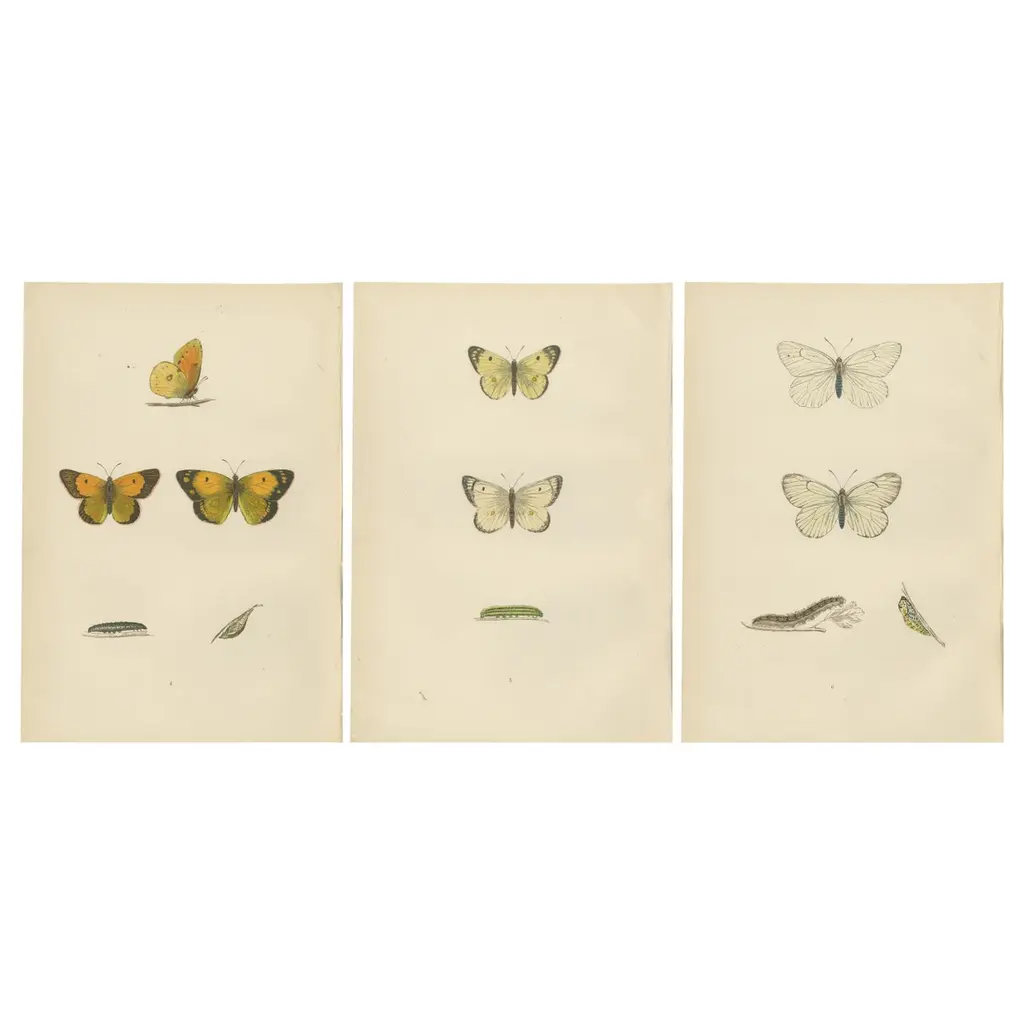
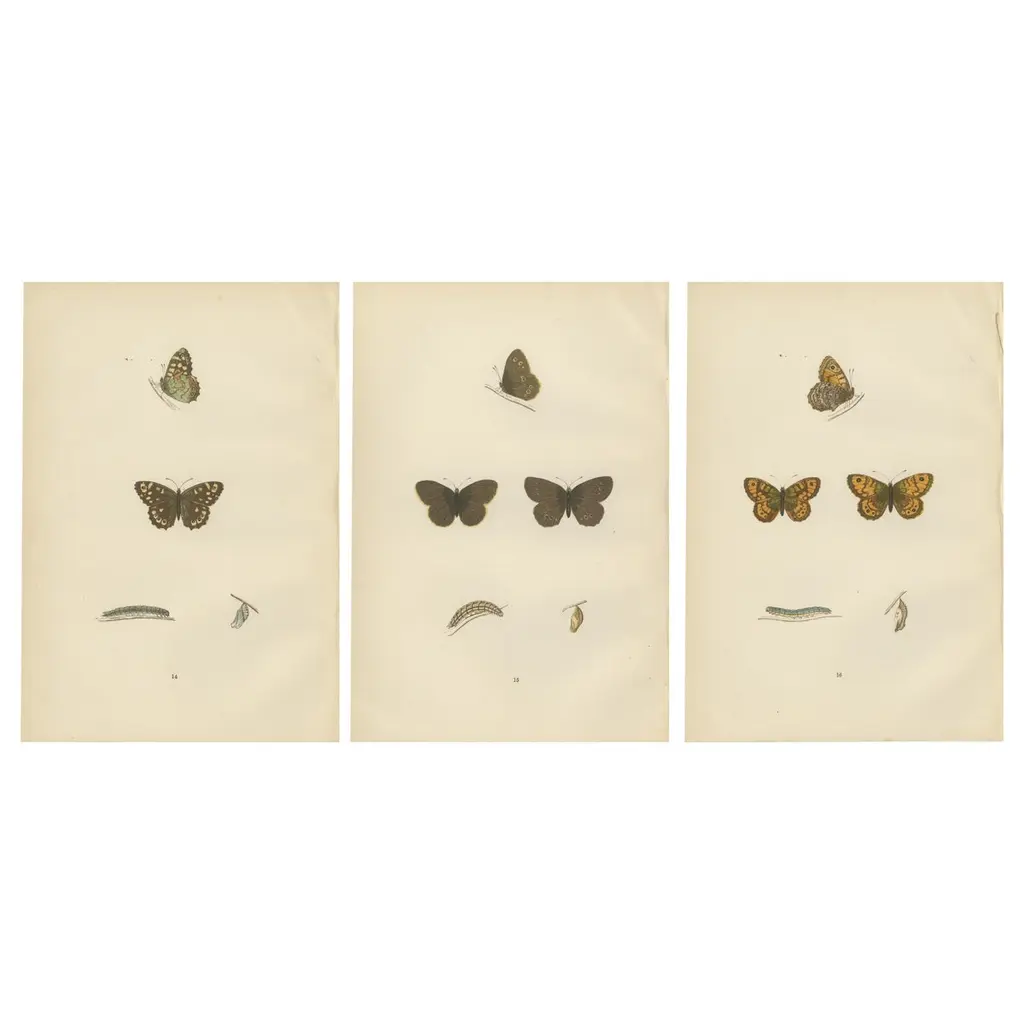
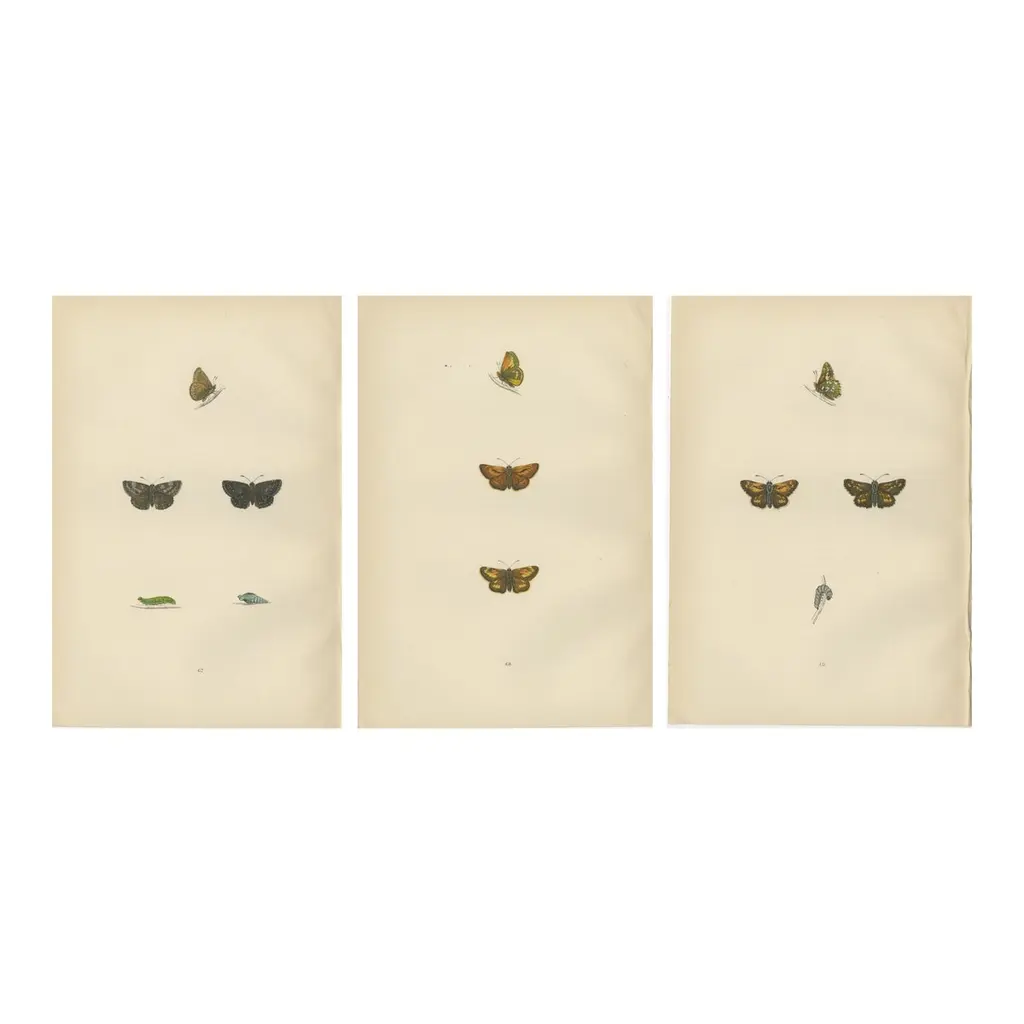
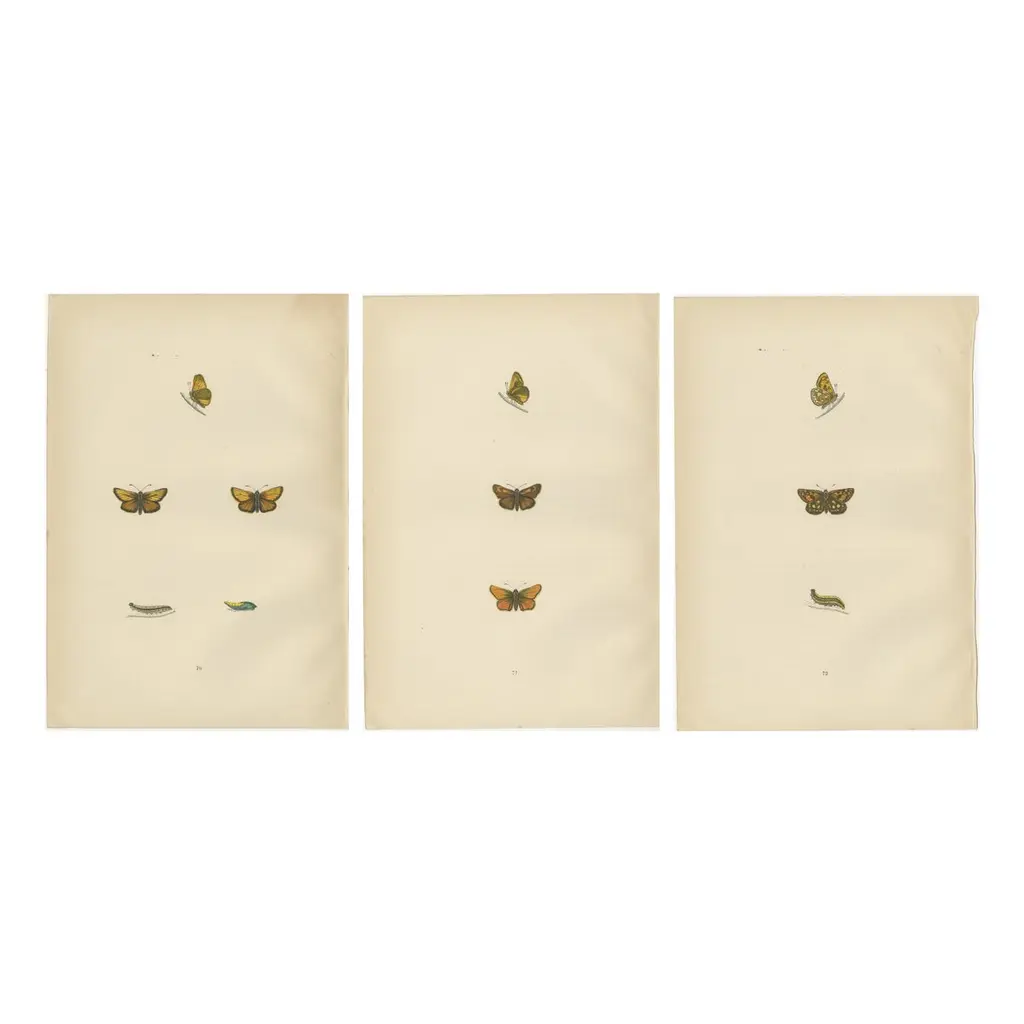
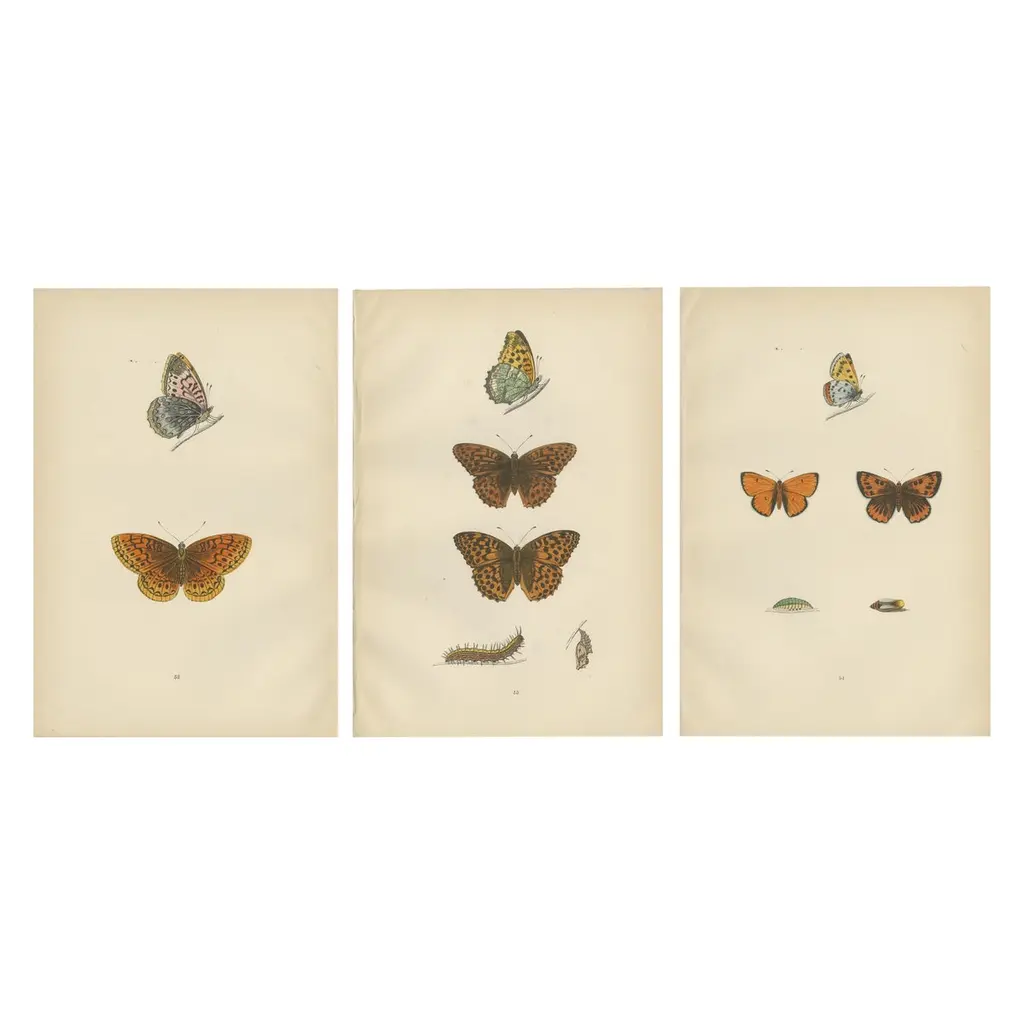
The butterflies depicted in the original antique plates are all hand-colored and they are part of the Fritillary family, known for their beautiful, checkered patterns.1. High-Brown Fritillary (Argynnis adippe): This butterfly has a wingspan that ranges typically from 65 to 75 mm. It can be identified by its distinctive orange-brown color with dark spots and lines. What makes the High-Brown Fritillary interesting is its rarity and preference for habitats with violet-rich flora, making conservation efforts for this species quite specific and challenging.2. Dark-Green Fritillary (Argynnis aglaja): It is known for the dark green hue on the underside of its wings, which are marked with silver spots. It’s a strong flyer and is often seen gliding over tall grasses. The coloration of the Dark-Green Fritillary provides a fantastic example of the adaptive camouflage in butterflies, blending in with its grassland habitats.3. Queen of Spain Fritillary (Issoria lathonia): This is a medium-sized butterfly with a wingspan of 38–46 mm. The upper side of the wings is tawny orange with black spots, while the underside is pale with large silvery spots, giving it a distinct appearance. What’s fascinating about the Queen of Spain Fritillary is its migratory behavior and its larval adaptation to survive on different species of violets.These plates are significant as they not only illustrate the aesthetic beauty of these species but also serve as historical documentation of the British butterfly fauna from the late 19th century. The hand-coloring technique used in these plates adds a unique touch to each illustration, making them not just scientific records but also works of art.
Similar Items