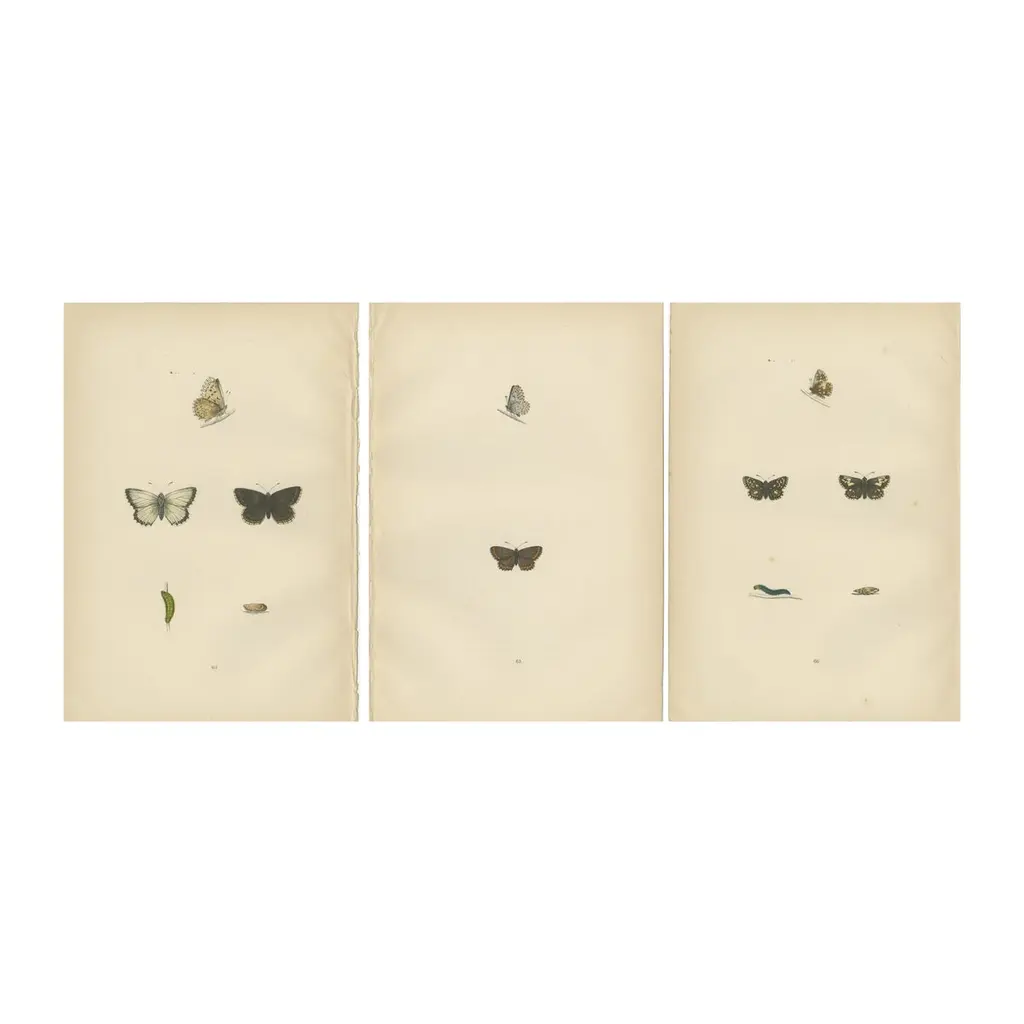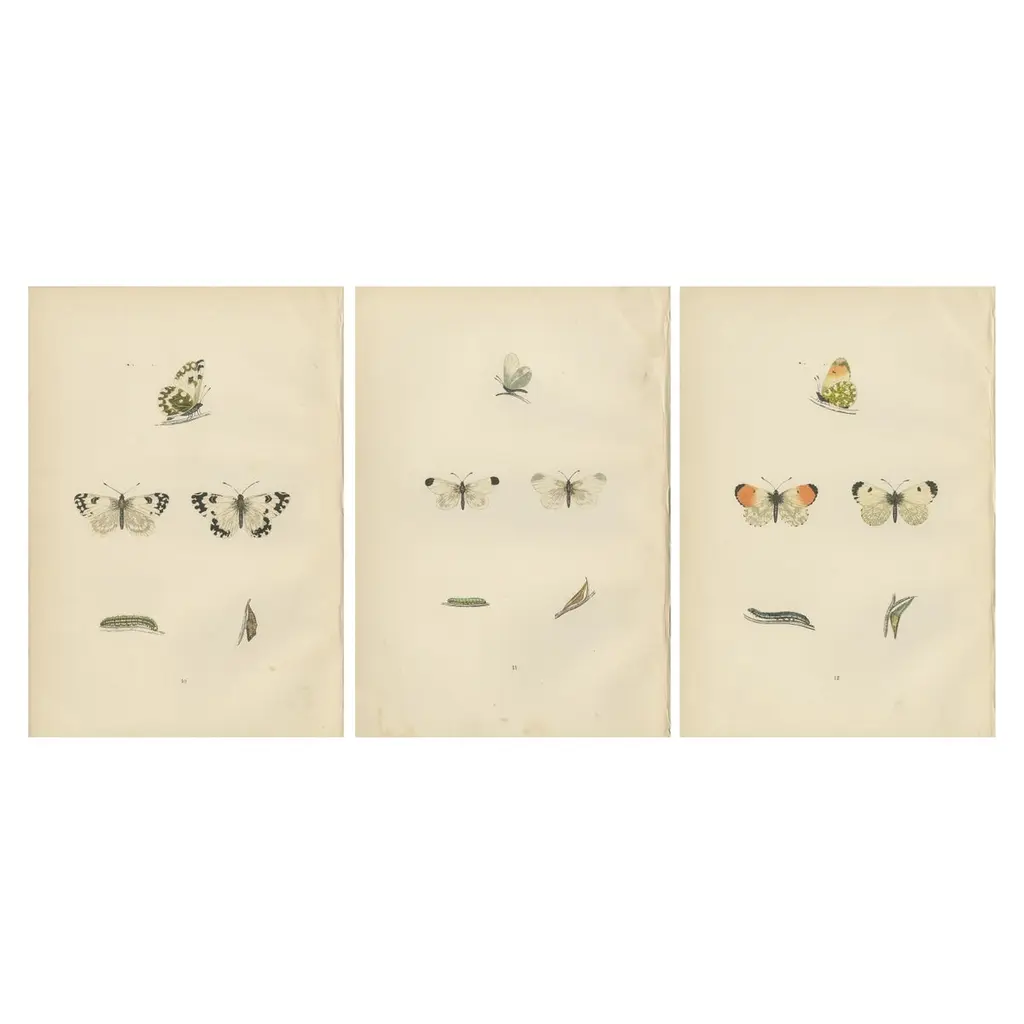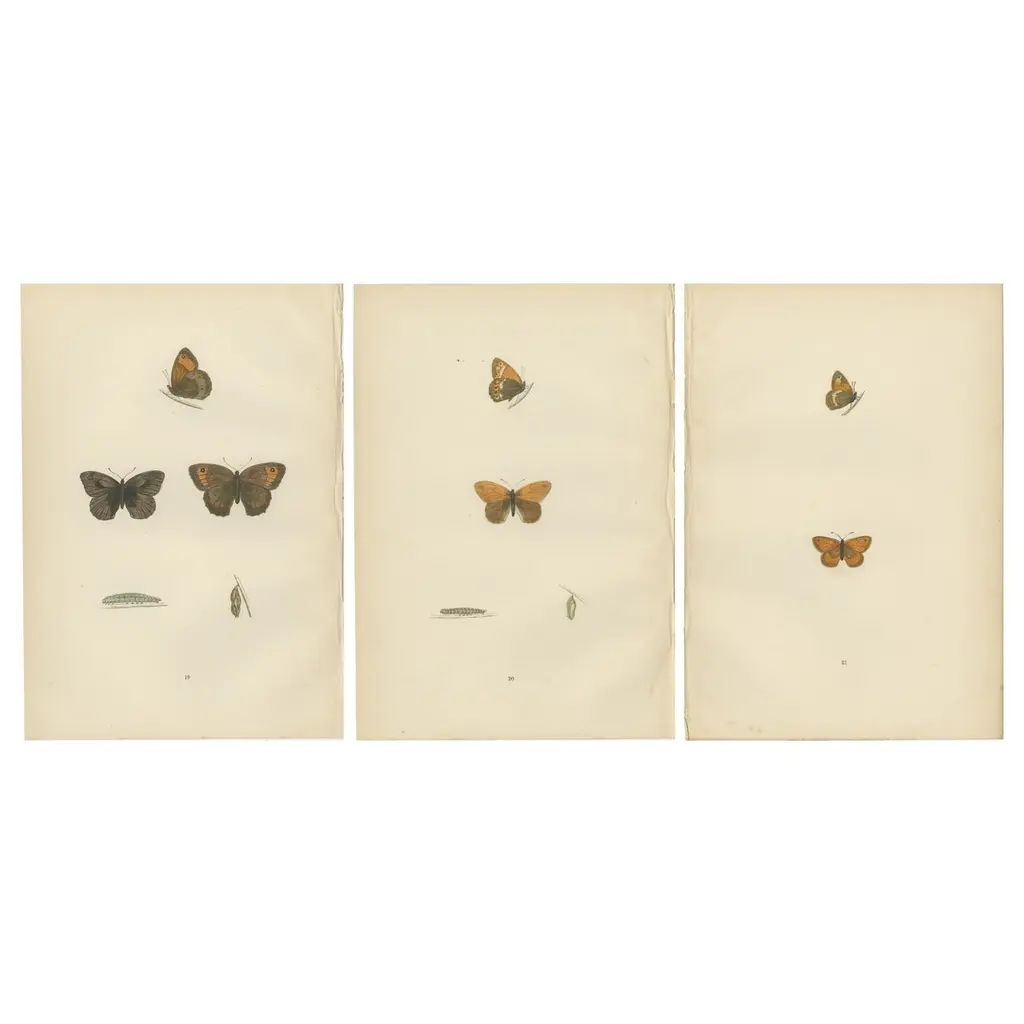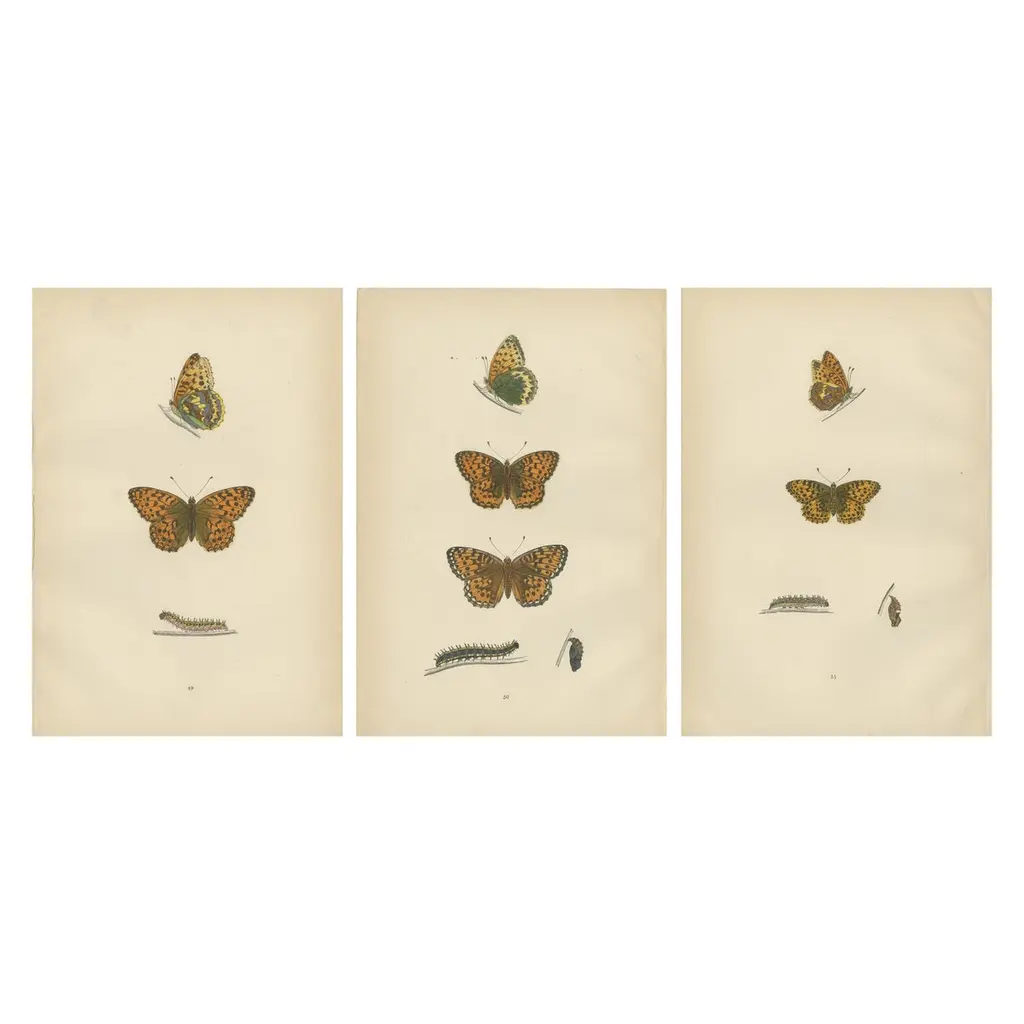
Metamorphosis Montage: The Life Stages Of A Butterfly, 1890
$180
1st Dibs
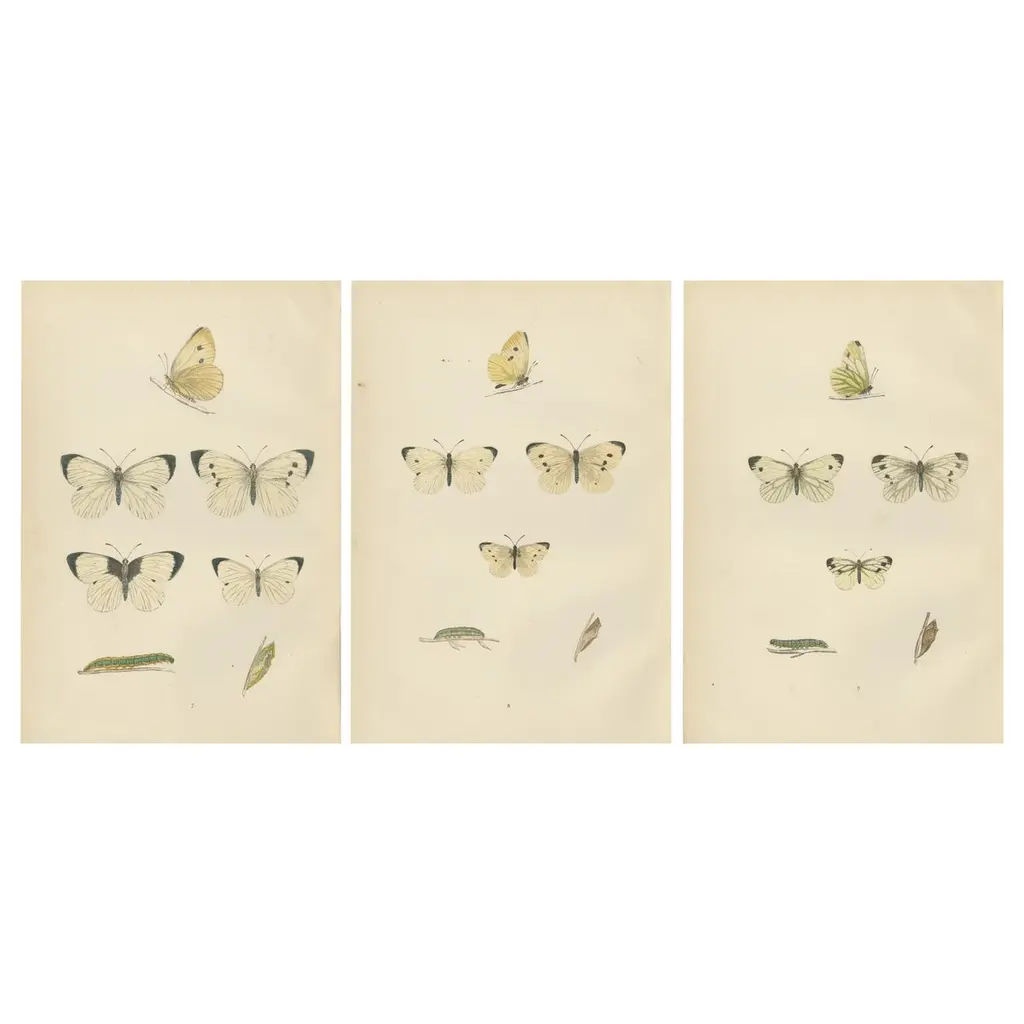
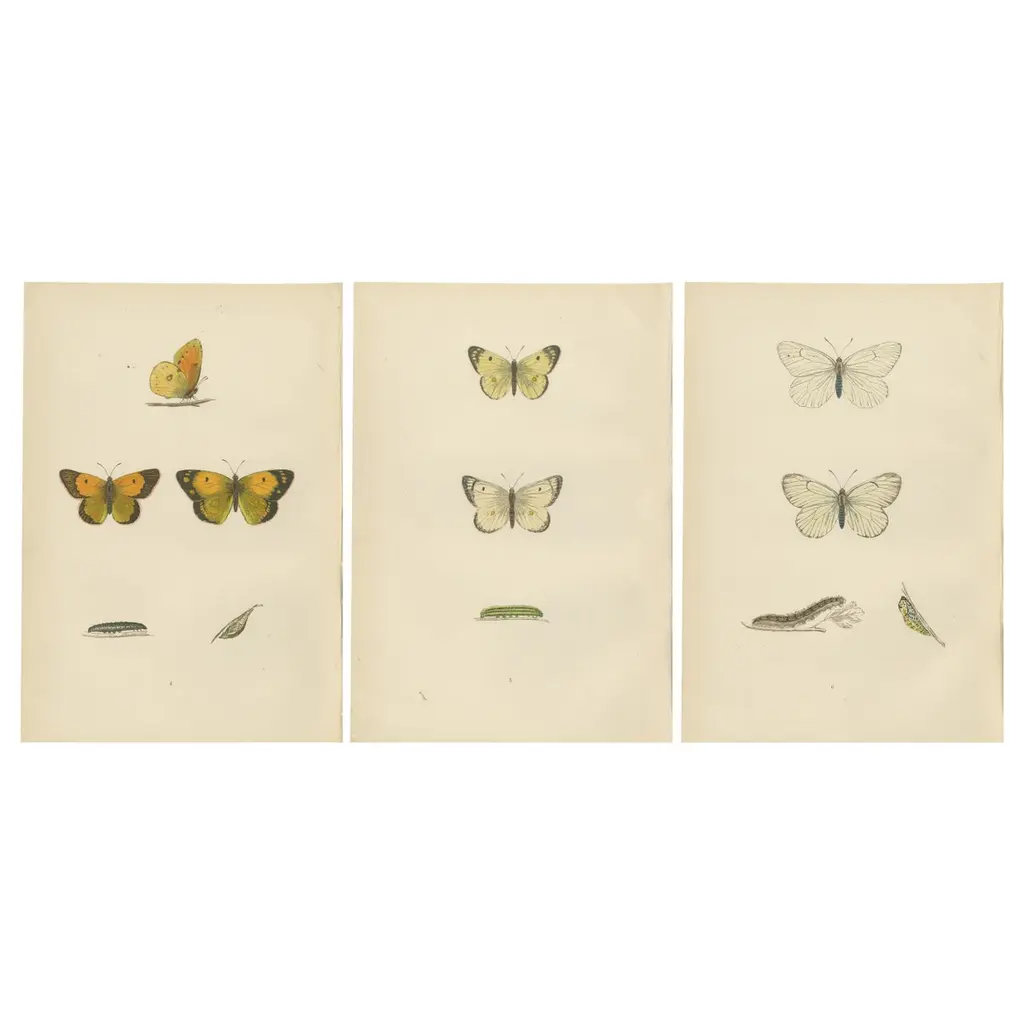
The images are hand-colored plates from "A History of British Butterflies" by Morris, showcasing three distinct butterfly species: the Clouded Yellow, the Pale Clouded Yellow, and the Black-veined White.1. Clouded Yellow (Colias croceus): This butterfly is easily recognizable by its bright yellow wings with solid black borders. Males typically have a sharper yellow color, while females may be paler with more extensive black borders. They are migrants to Britain and can be seen in a variety of habitats, including chalk grasslands and clover fields. Their striking color is not just for show; it plays a role in thermoregulation and mate attraction.2. Pale Clouded Yellow (Colias hyale): Closely related to the Clouded Yellow, the Pale Clouded Yellow has lighter, lemon-yellow wings with narrower black borders. This species is less common and is also a migrant, arriving in varying numbers each year. These butterflies are interesting because their appearance in Britain can be quite unpredictable, with some years seeing large influxes, known as 'Clouded Yellow years'.3. Black-veined White (Aporia crataegi): As the name suggests, this butterfly's wings are predominantly white with pronounced black veins running throughout. Unlike the other two, this species was once widespread in Britain but sadly became extinct around the early 20th century, primarily due to changes in woodland management that reduced the availability of its larval food plants. Their presence on these plates serves as a historical record of the biodiversity that was once found in the UK.What makes these butterflies particularly interesting is their varied migration patterns and their adaptations to their environments. The Clouded Yellows are noted for their sometimes vast migrations, which can lead to large populations appearing in the UK in some years. The Black-veined White is of particular historical and ecological interest because it represents a lost species within the UK butterfly fauna, highlighting the importance of habitat conservation. Each butterfly's unique coloration and patterns also have specific evolutionary functions, such as attracting mates, camouflaging from predators, or warning of their unpalatability.
Similar Items