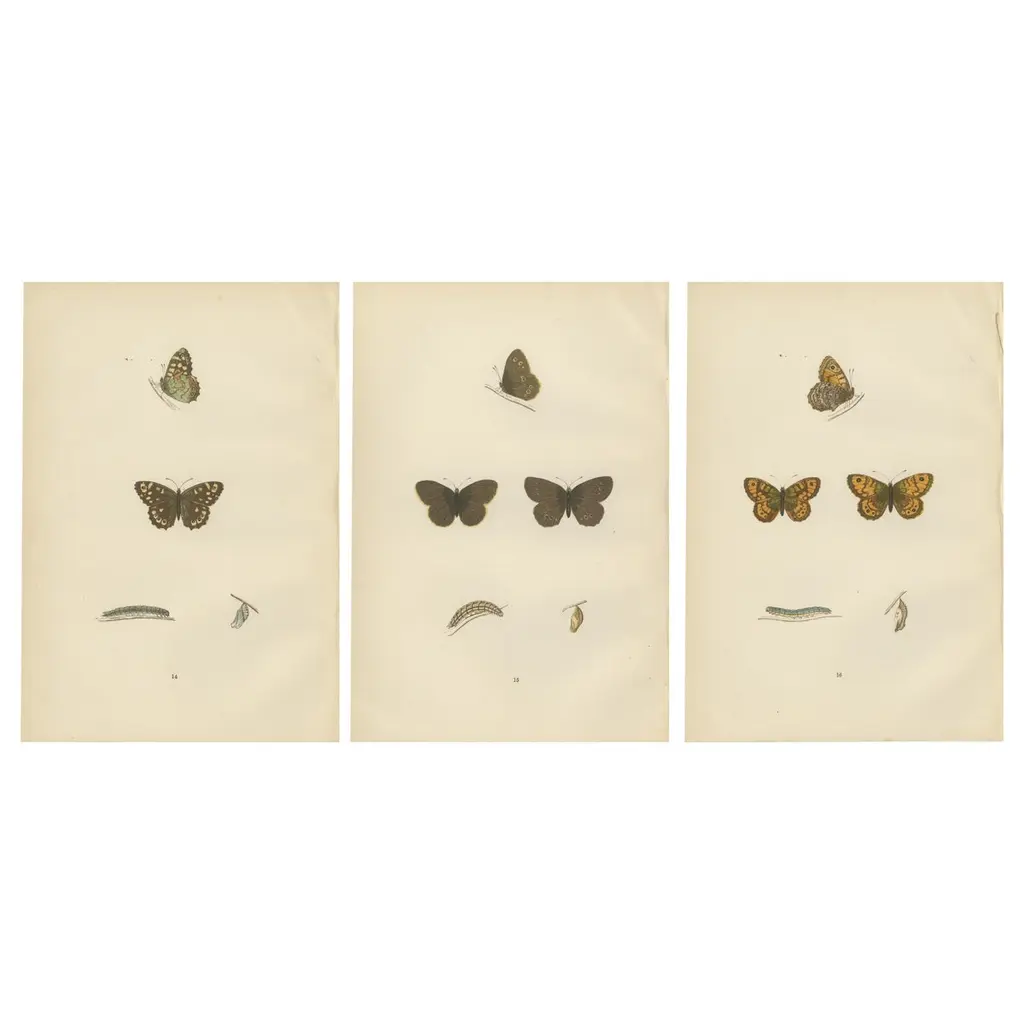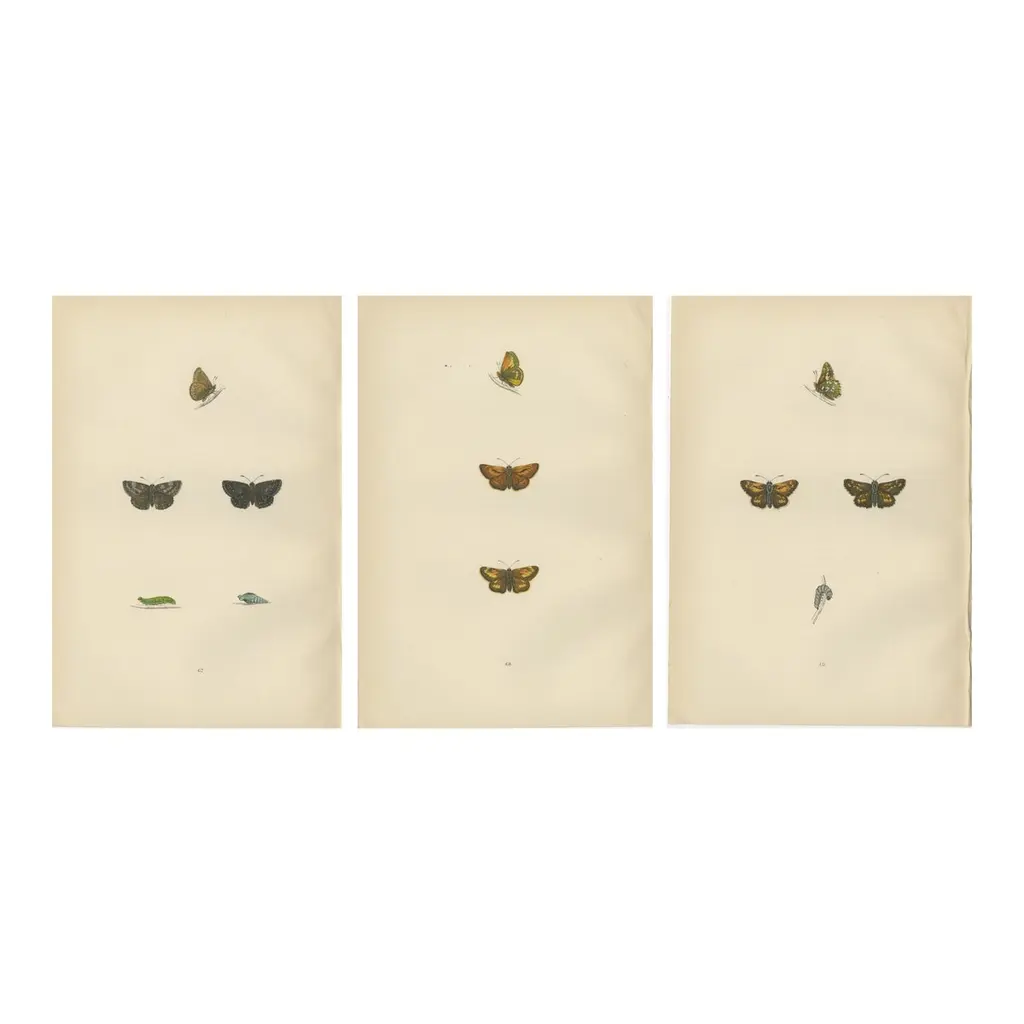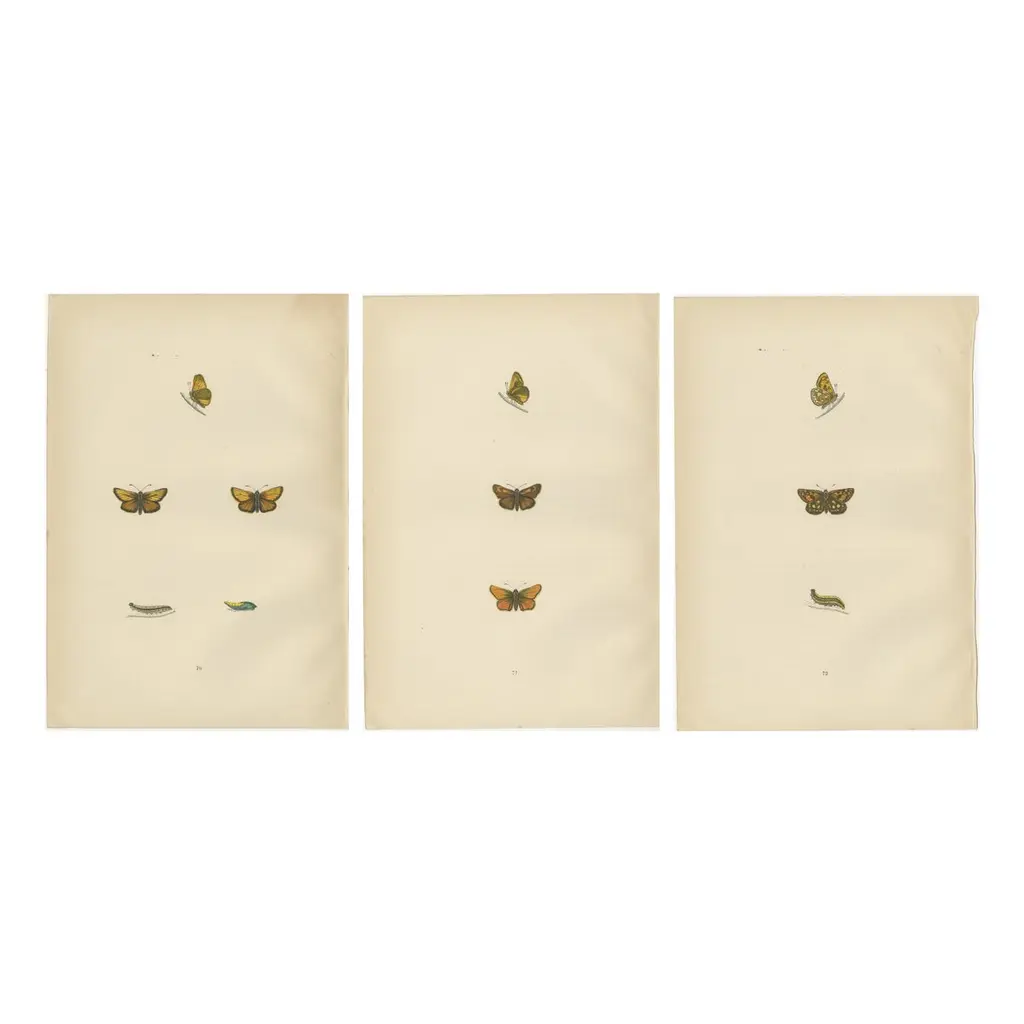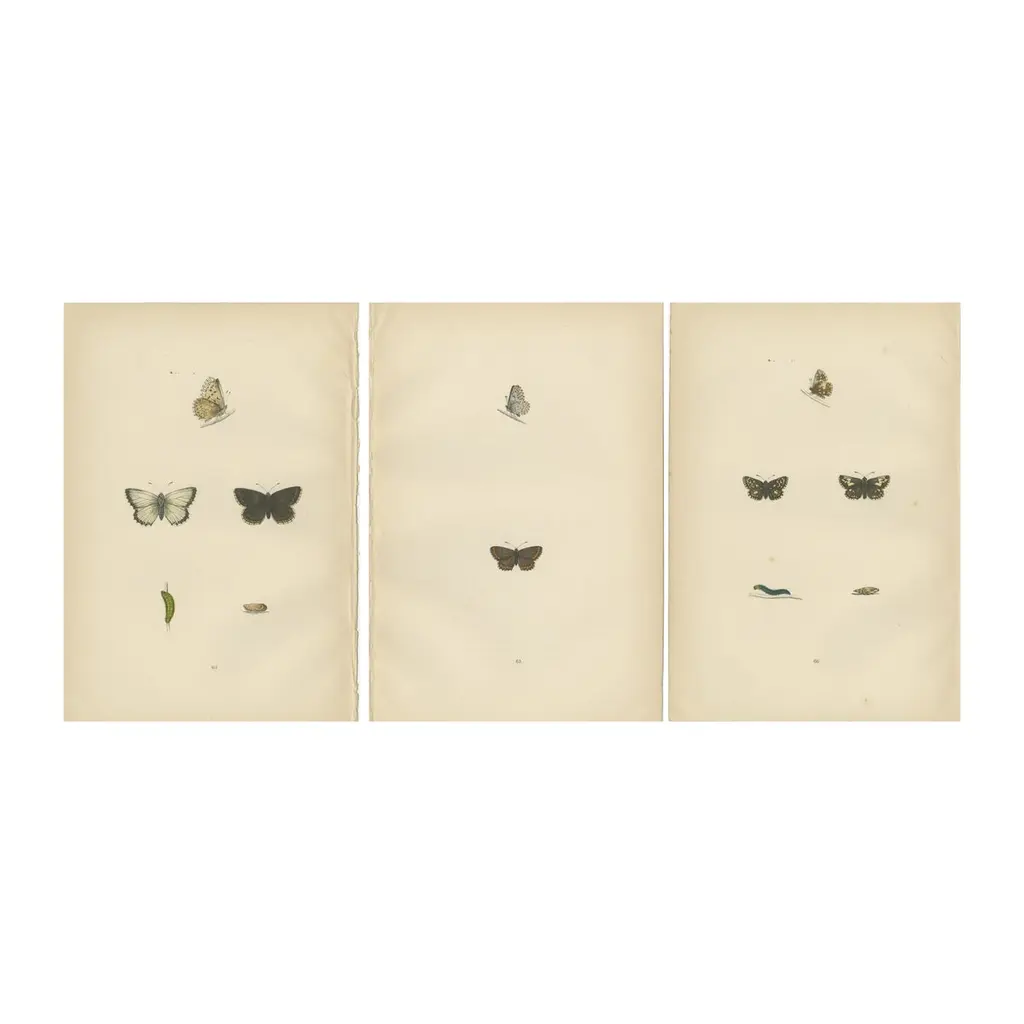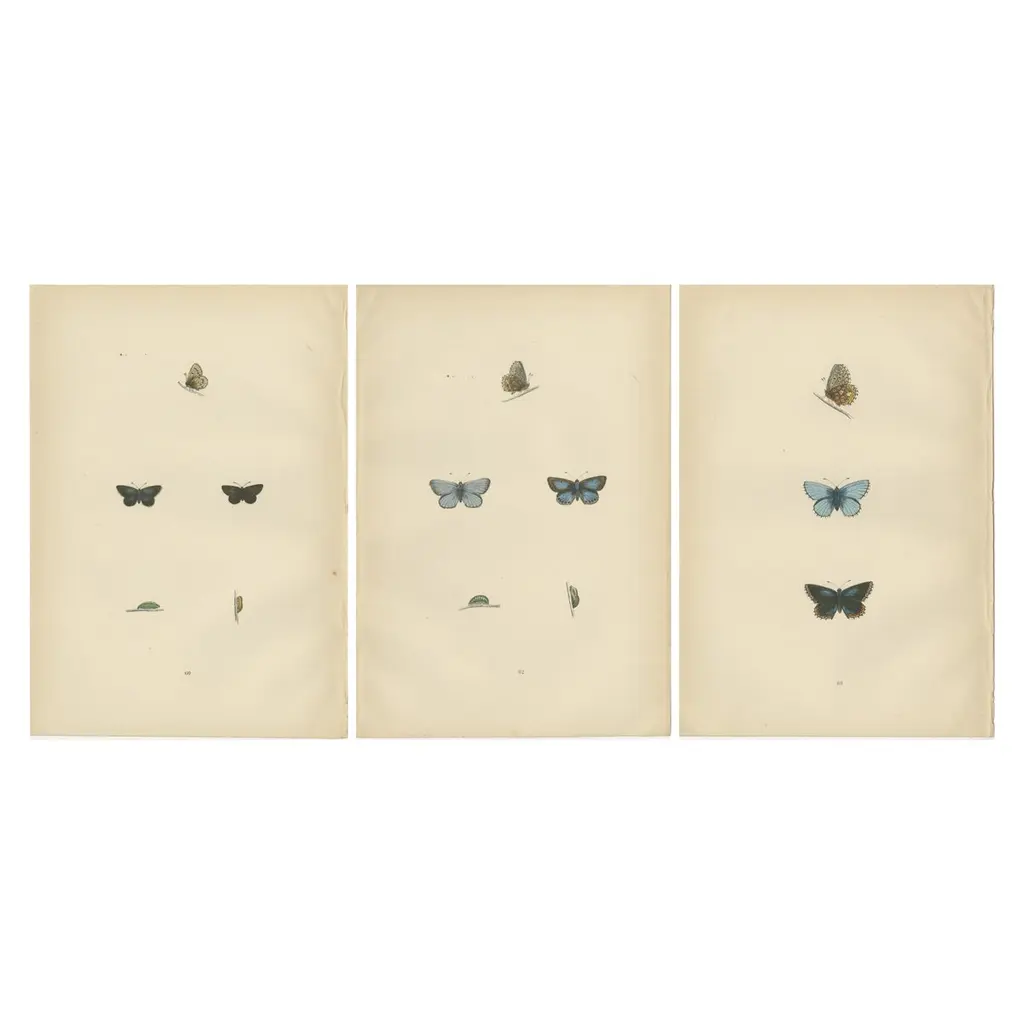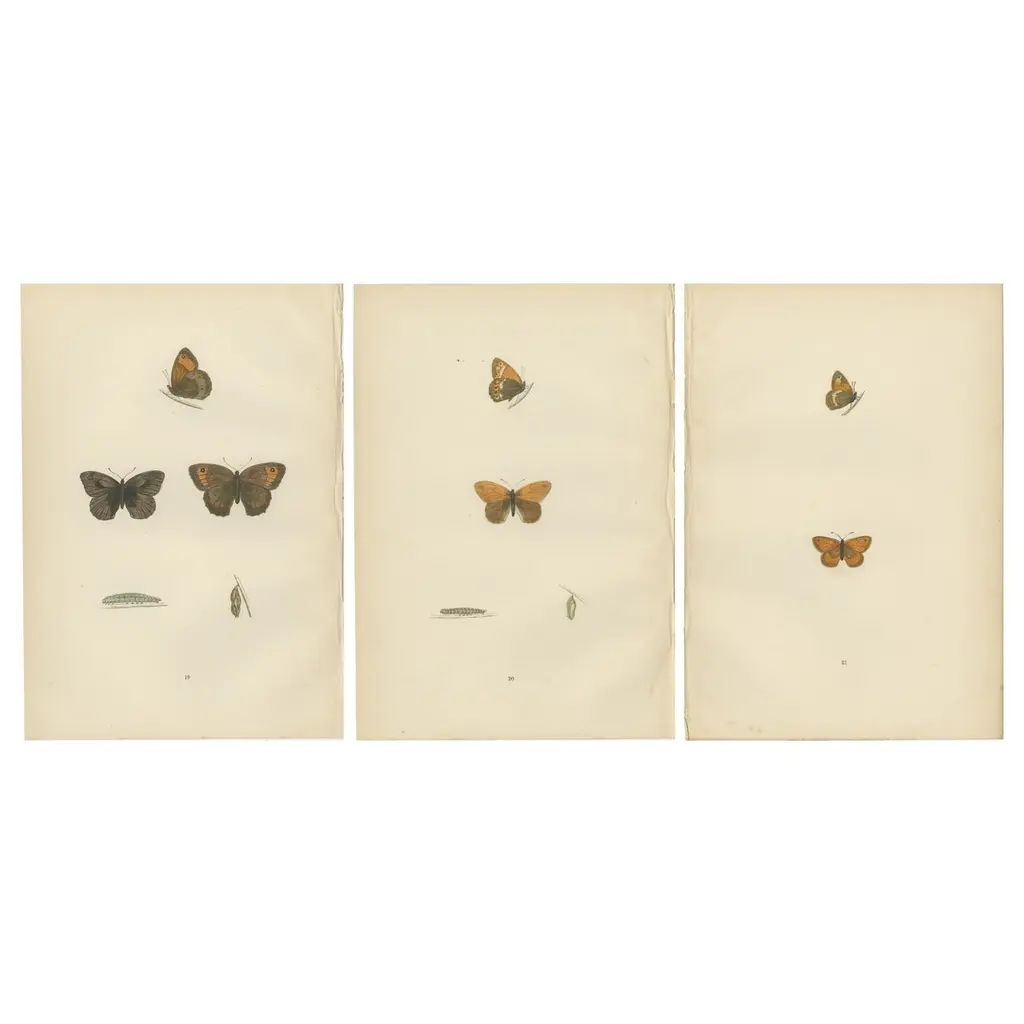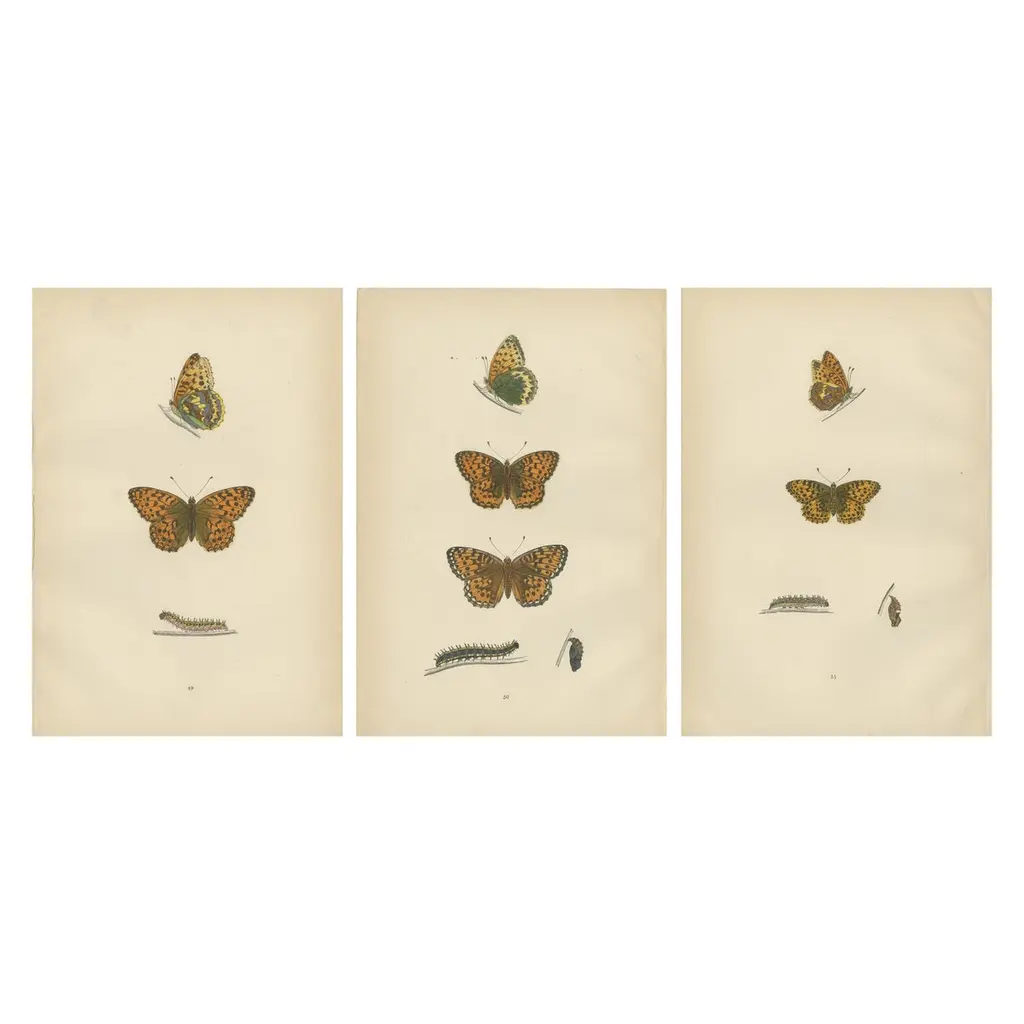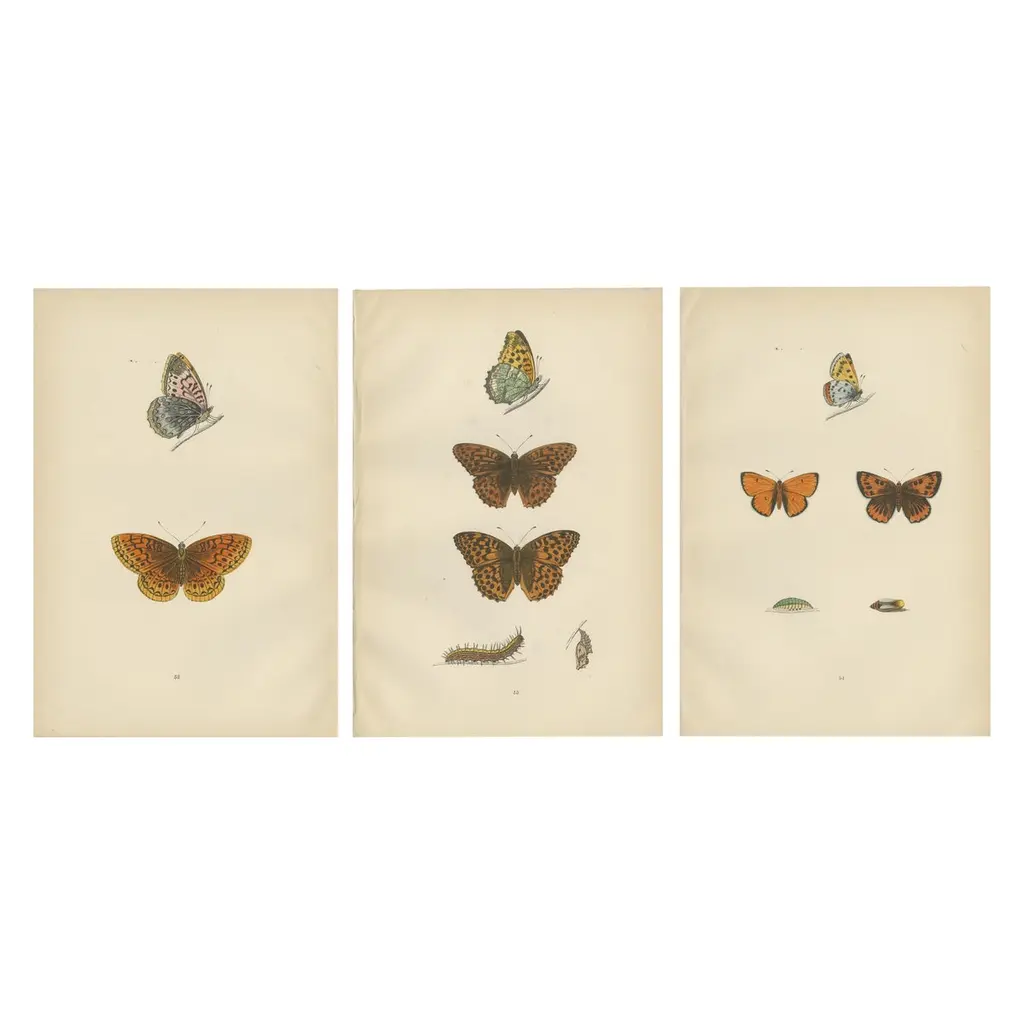
Metamorphosis In Repose: A Trio Of Butterfly Lifecycles
$180
1st Dibs
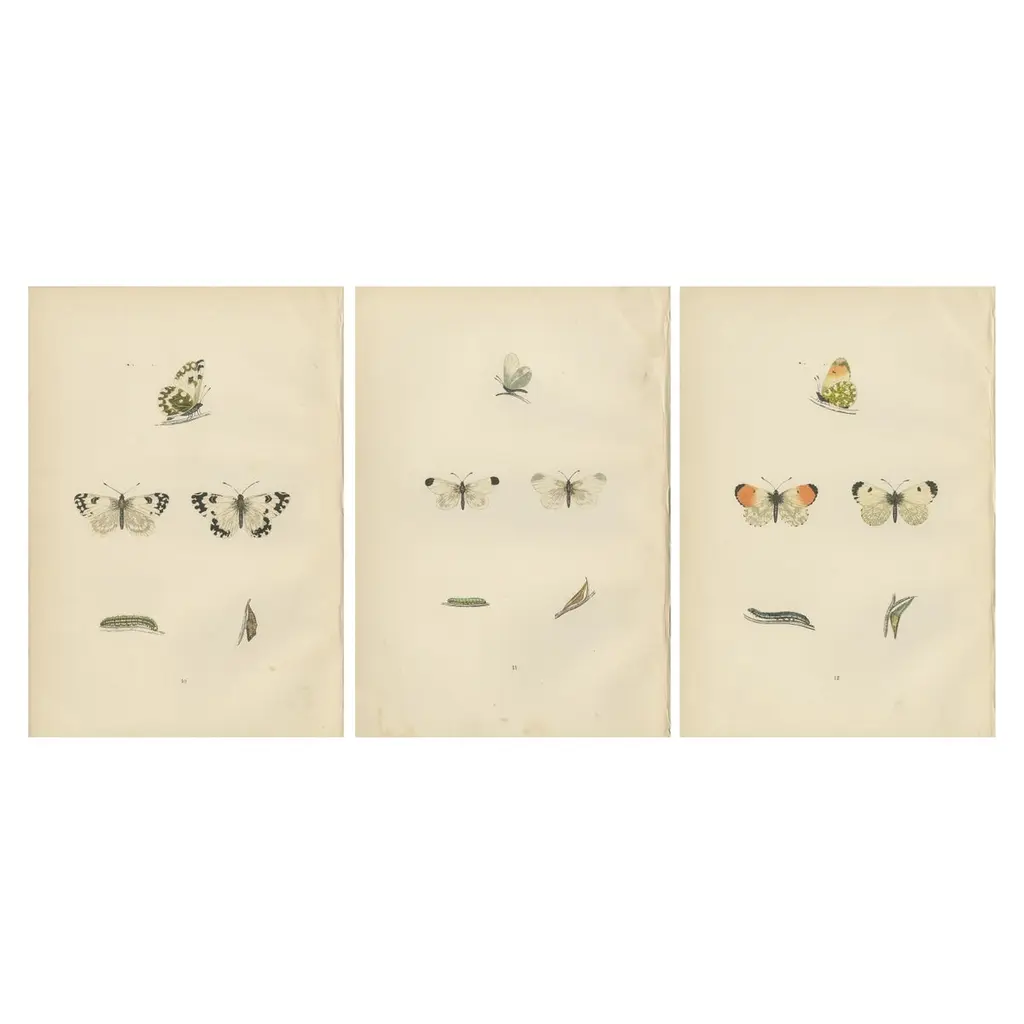
The original antique and hand-colored butterflies prints are a fascinating selection from the British Isles, each with distinctive features:1. Chequered White (Selenia tetralunaria) – Also known as the Comma, this butterfly is not typically known as the 'Chequered White', which may be a historic or alternate name. It is characterized by its unique wing edges that are scalloped with a series of markings that resemble commas. Its wings are predominantly white with a pattern of grey or brownish squares, giving it a checkered appearance. This butterfly is of interest not only for its beautiful wing pattern but also because of the way its wing shape and coloration provide camouflage against the backdrop of leaves and bark.2. Wood White (Leptidea sinapis) – The Wood White is a delicate butterfly with a wingspan of about 40mm. Its wings are predominantly white, with a subtle pattern of greyish-green veining on the undersides, which becomes more prominent towards the wing edges. This species is interesting because of its gentle, floating flight and the fact that it is considered to be an indicator of ancient woodlands and traditional meadows, often associated with specific plants that its caterpillars feed on.3. Orange Tip (Anthocharis cardamines) – The Orange Tip is one of the most recognizable British butterflies, famous for the bright orange tips on the male's forewings. The females lack the orange coloring and are often mistaken for other white butterflies. The undersides of the wings have a patterned green mottling which provides excellent camouflage when the butterfly is at rest on vegetation. This species is particularly interesting due to its relationship with specific host plants, like cuckooflower and garlic mustard, which the females selectively lay their eggs on.What makes these butterflies particularly interesting in the context of 'A History of British Butterflies' by Morris is the historical perspective they provide on the biodiversity of the time. The hand-colored plates from the 1890 edition would have been an essential resource for naturalists and enthusiasts, offering a visual guide to identification and an early form of spreading knowledge about species conservation. Their presence in a modern collection speaks to the enduring appeal and importance of studying and preserving butterfly species and their habitats.
Similar Items