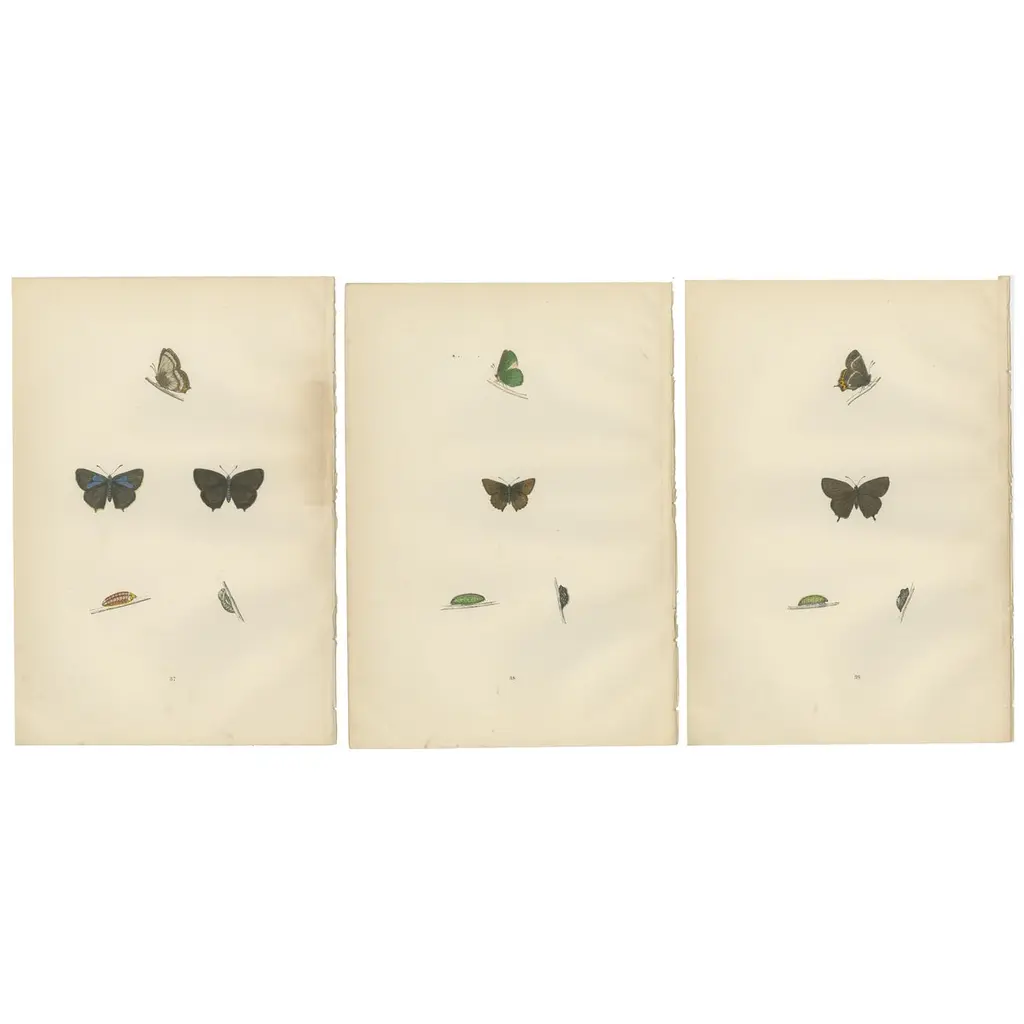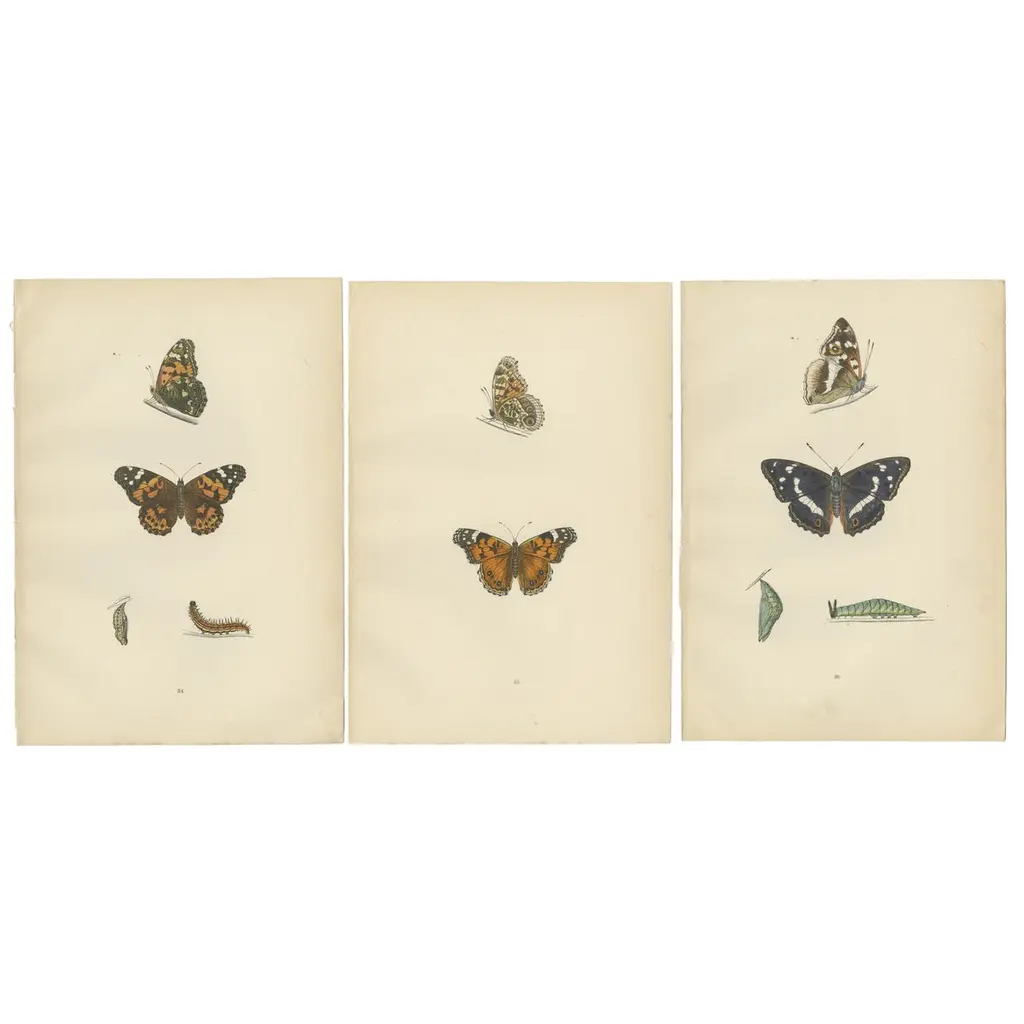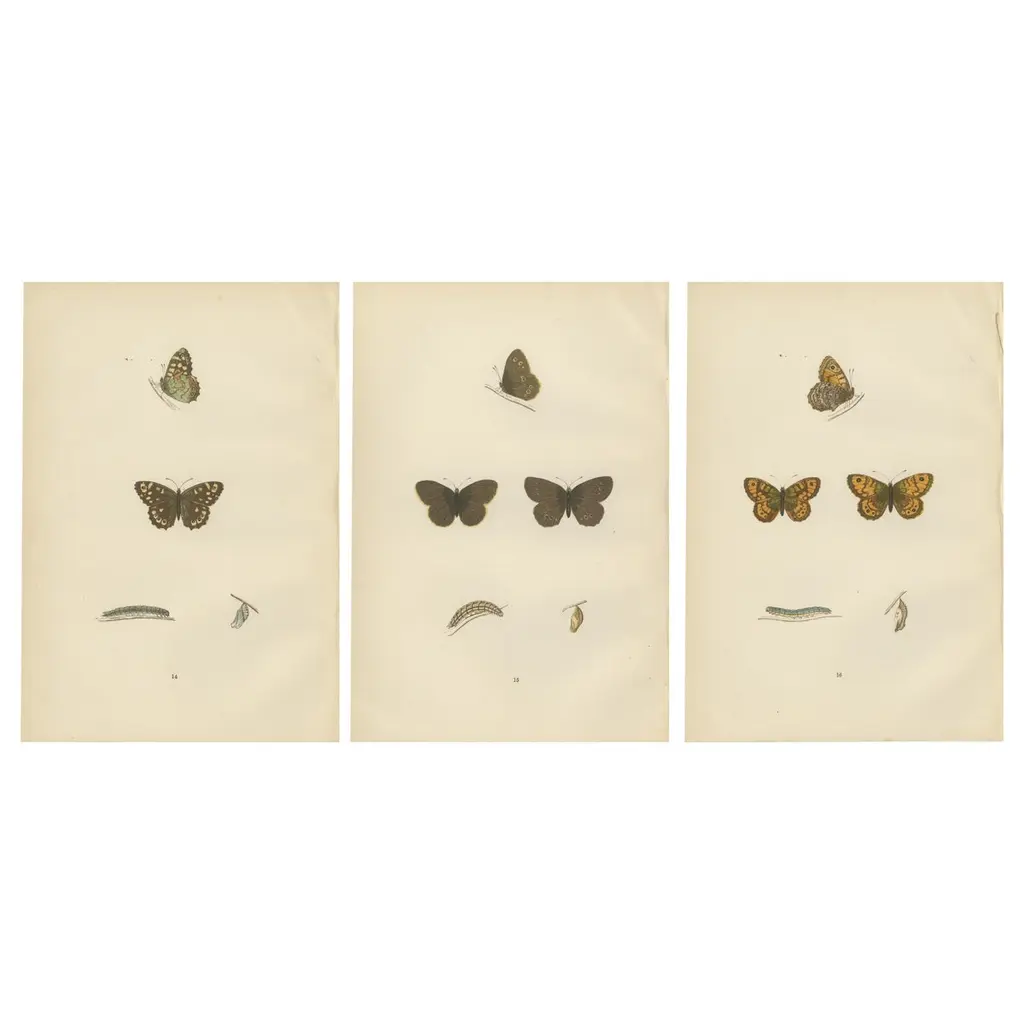
Lepidoptera Lifecycle: A Triptych Of Transformation, 1890
$180
1st Dibs
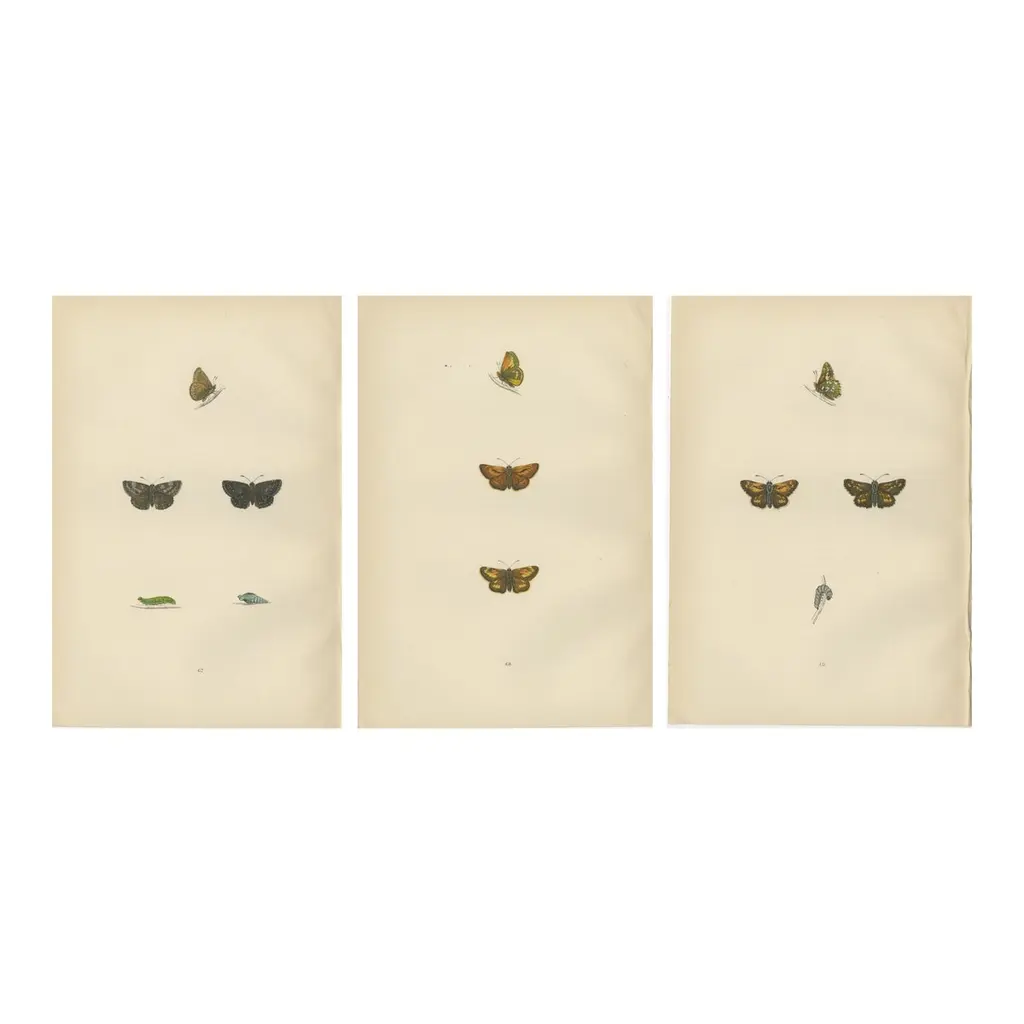
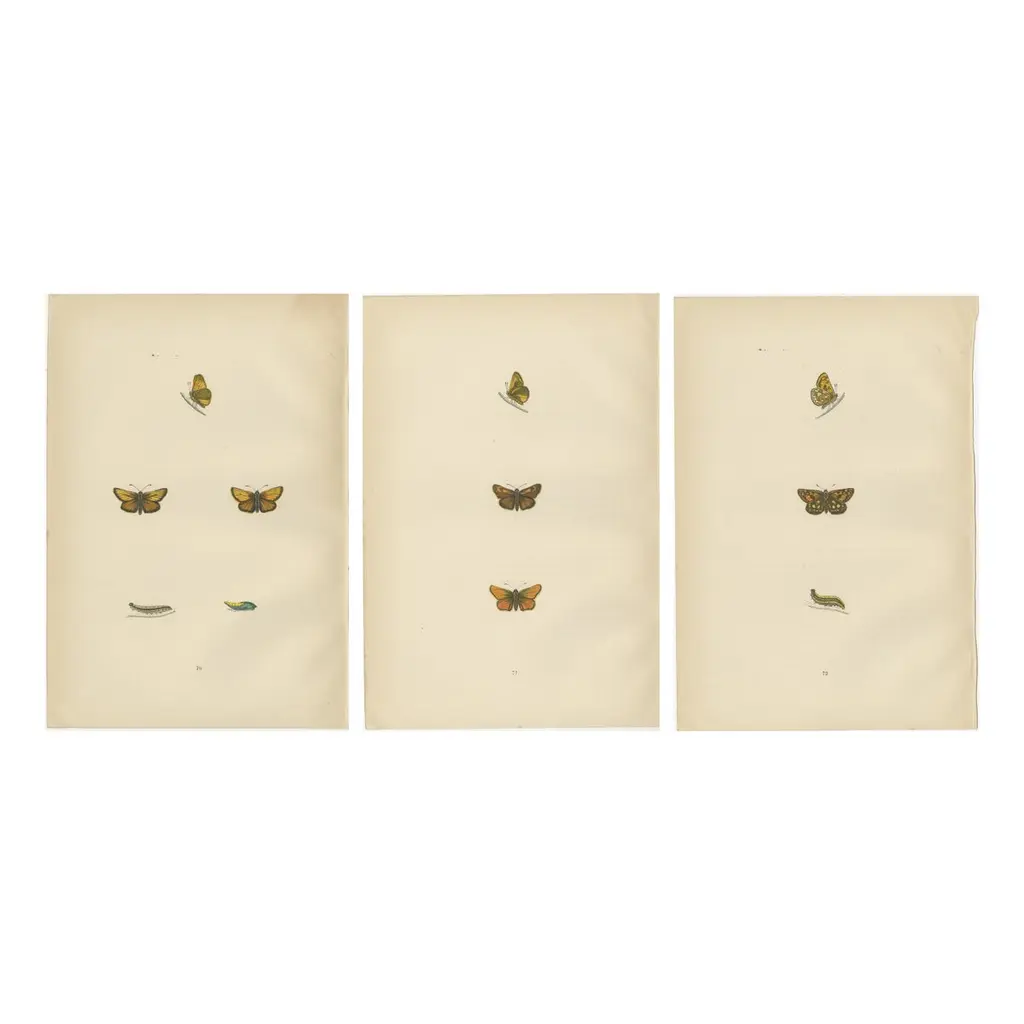
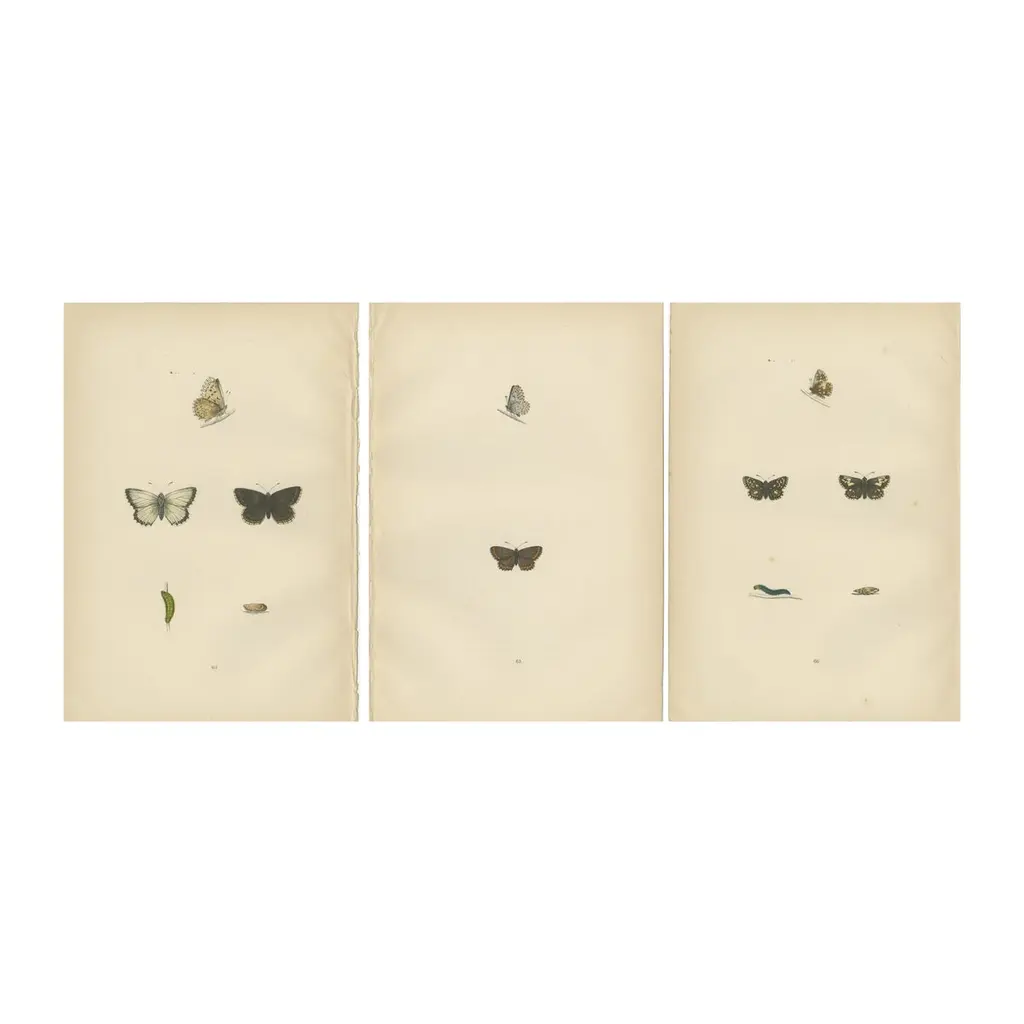
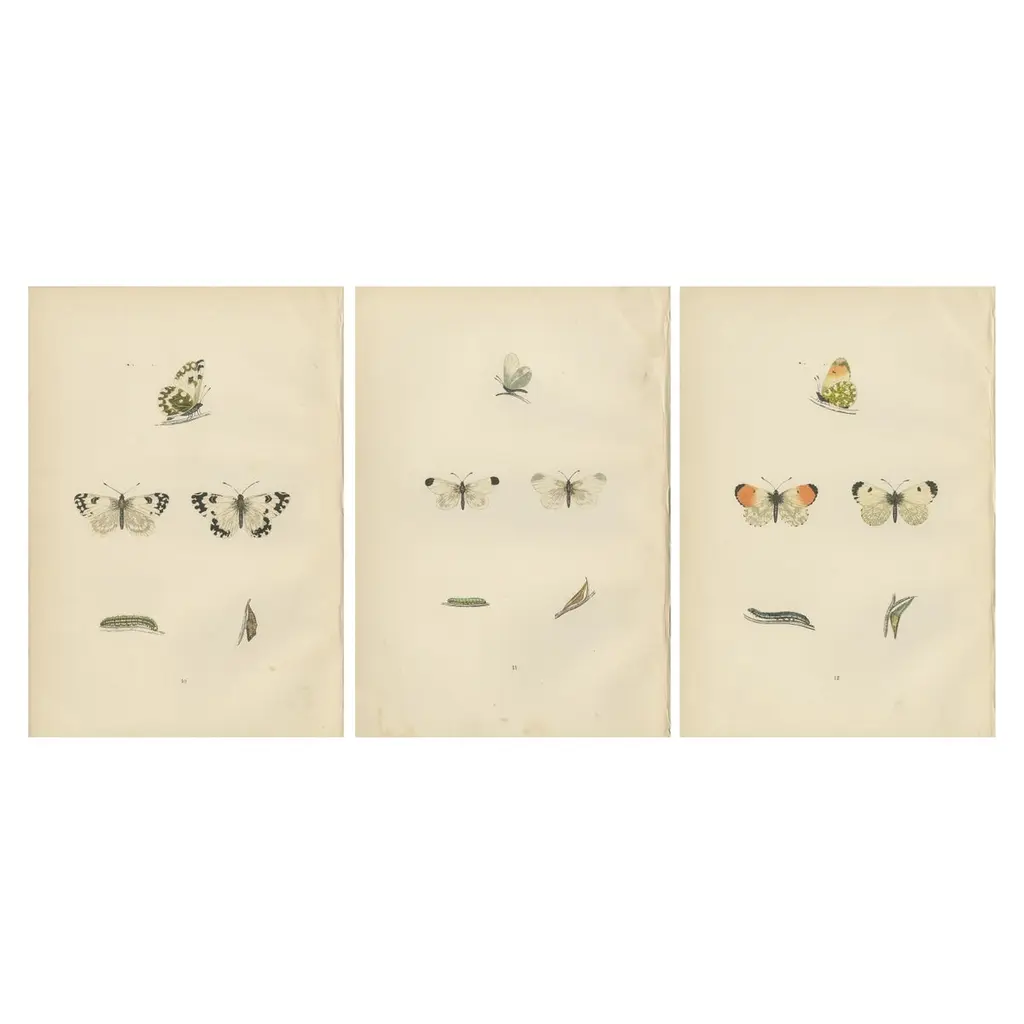
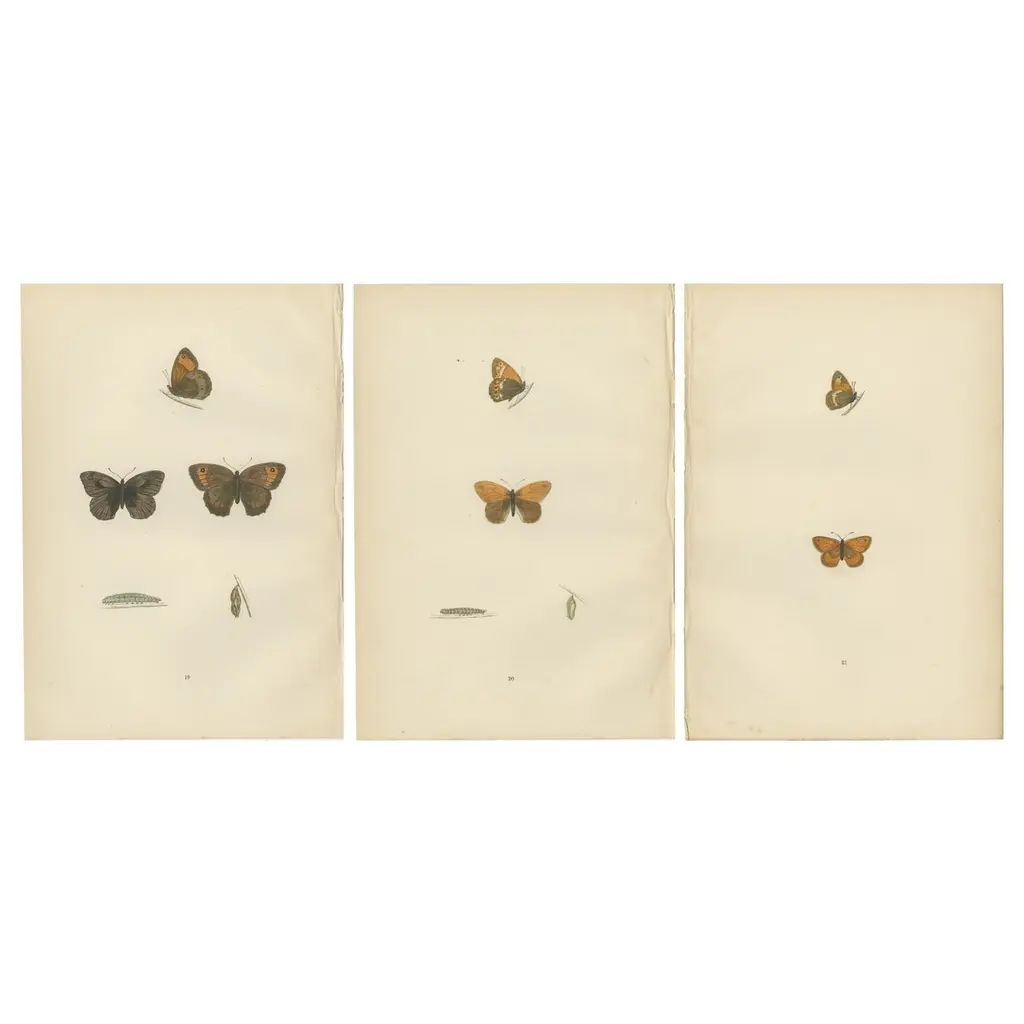
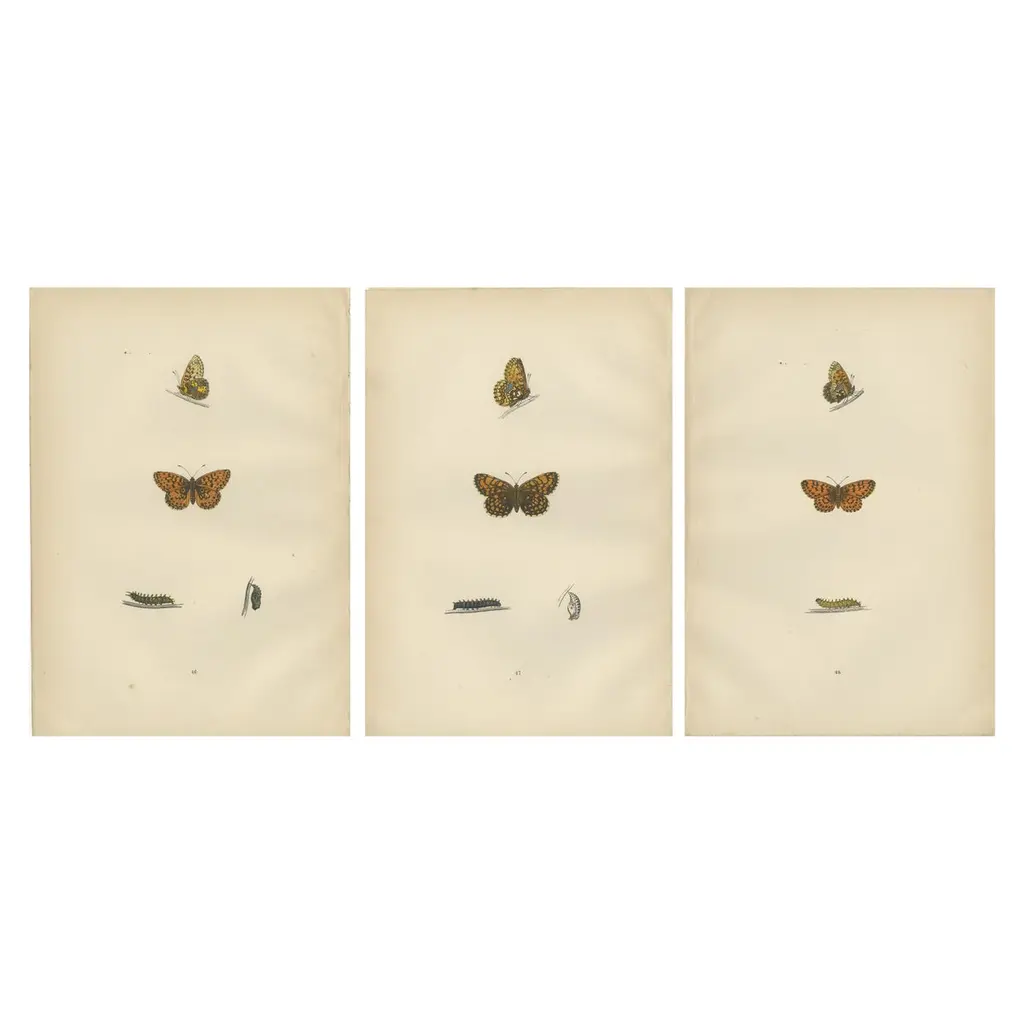
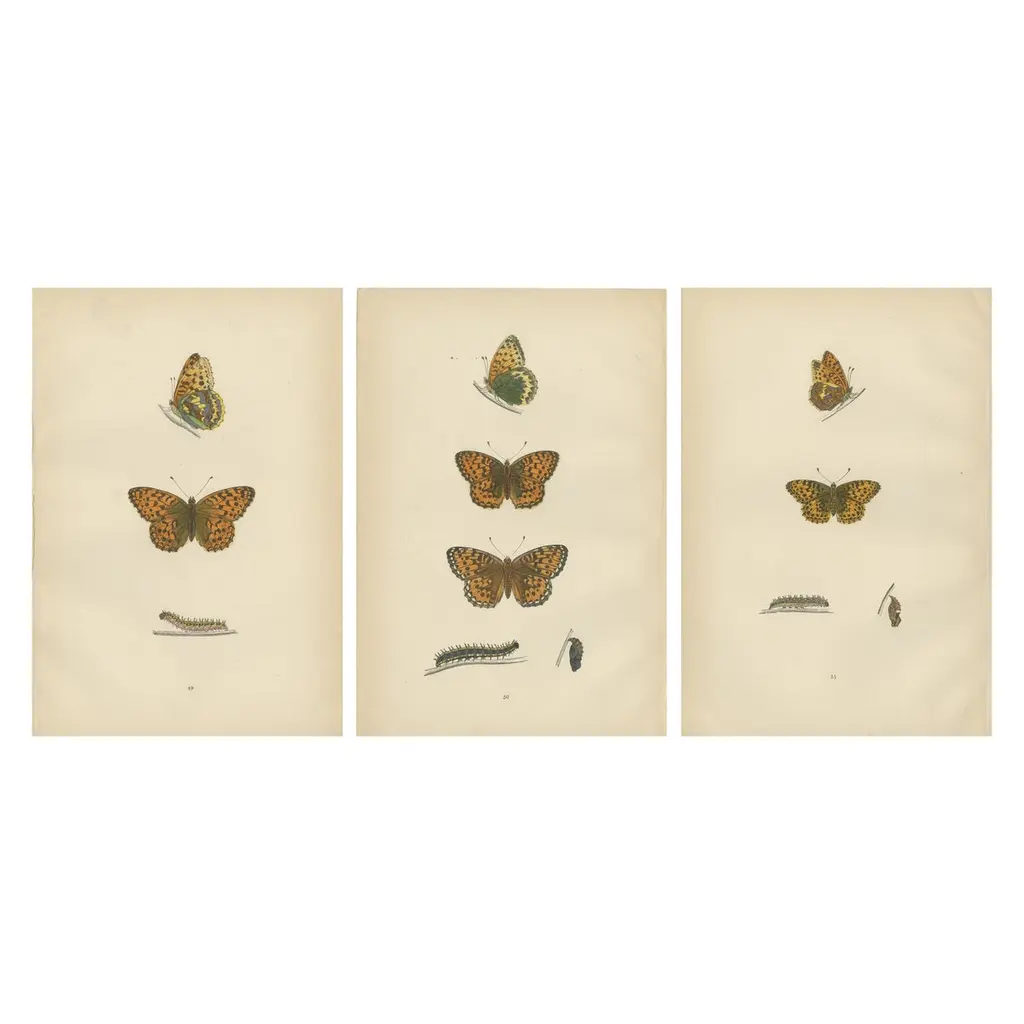
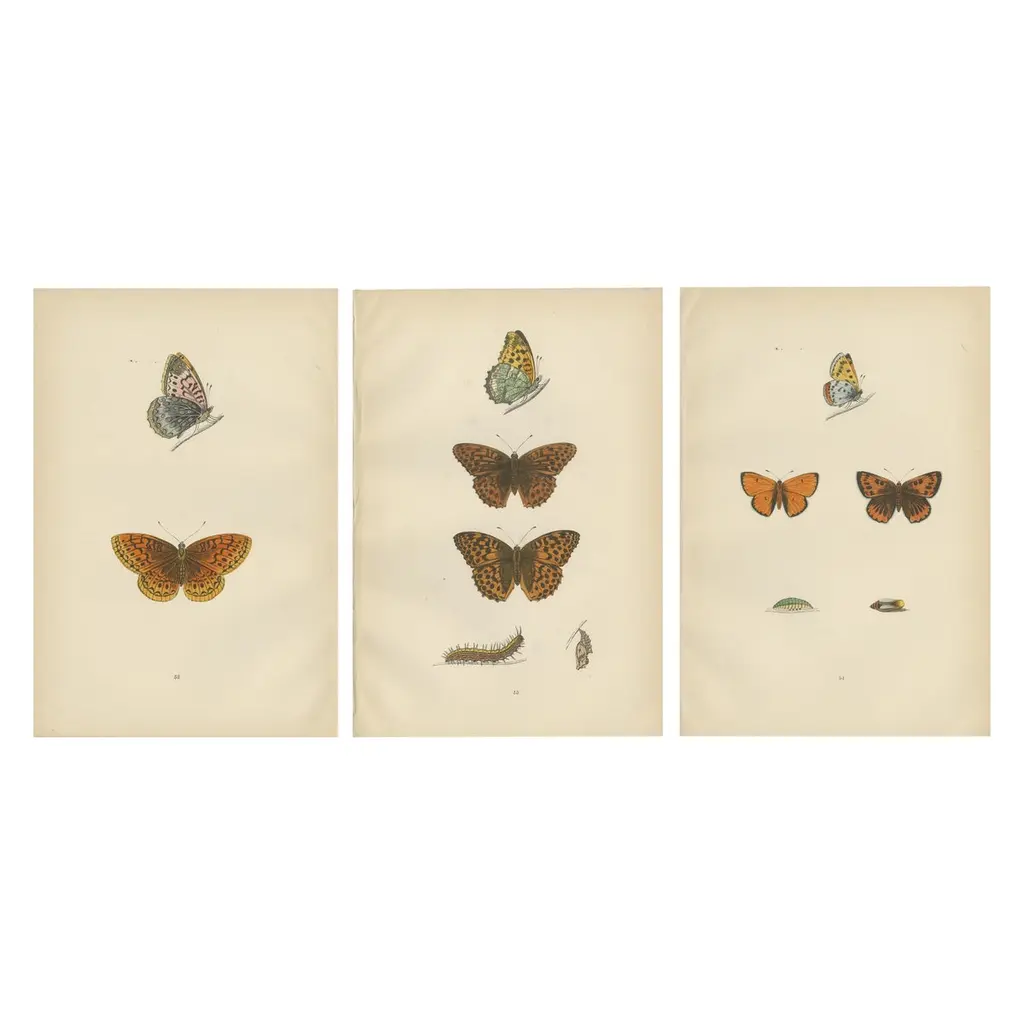
The images depict the life stages of three British butterfly species:1. Marbled White (Melanargia galathea): The Marbled White is known for its distinct checkerboard pattern on its wings, combining stark white with dark patches. It's particularly interesting because, despite its name, it's not a member of the white butterflies but rather a member of the browns, which is evident by the eyespots on the underside of its wings. The Marbled White is a grassland butterfly, and its presence is often a sign of a well-managed, unimproved grassland.2. Wood Argus (Lasiommata maera) or Large Wall Brown: Also known as the Large Wall, this butterfly is characterized by its brown wings with intricate eye-like spots. The eye spots serve as a defense mechanism to deter predators by mimicking the eyes of larger creatures. The Large Wall Brown is interesting because it’s adapted to various habitats, including woodland clearings, grassland, and even urban areas, but it has declined in recent years due to habitat loss.3. Wood Ringlet (Erebia medusa) or Small Mountain Ringlet: The Wood Ringlet is a species found in cooler climates and higher altitudes across Europe, including the British Isles. It has brown wings with small, eye-like ring markings, which can vary in number. It’s interesting because it tends to fly even in overcast and rainy weather, unlike many other butterflies, and has a very local and scattered distribution, making it a species of interest for conservation efforts due to its sensitivity to environmental changes.The sixth edition of 'A History of British Butterflies' by Morris is notable for its detailed, hand-colored plates which provide both an artistic and scientific record of these species at a time before color photography was widespread. This level of detail would have been invaluable for both amateur naturalists and professional entomologists of the era. These hand-colored plates are a beautiful example of the blend between art and science during the Victorian era, contributing to the documentation and appreciation of biodiversity.
Similar Items