Vintage Wings: The Fritillary And Copper Of Morris's 1890 Enchantment
$180
1st Dibs
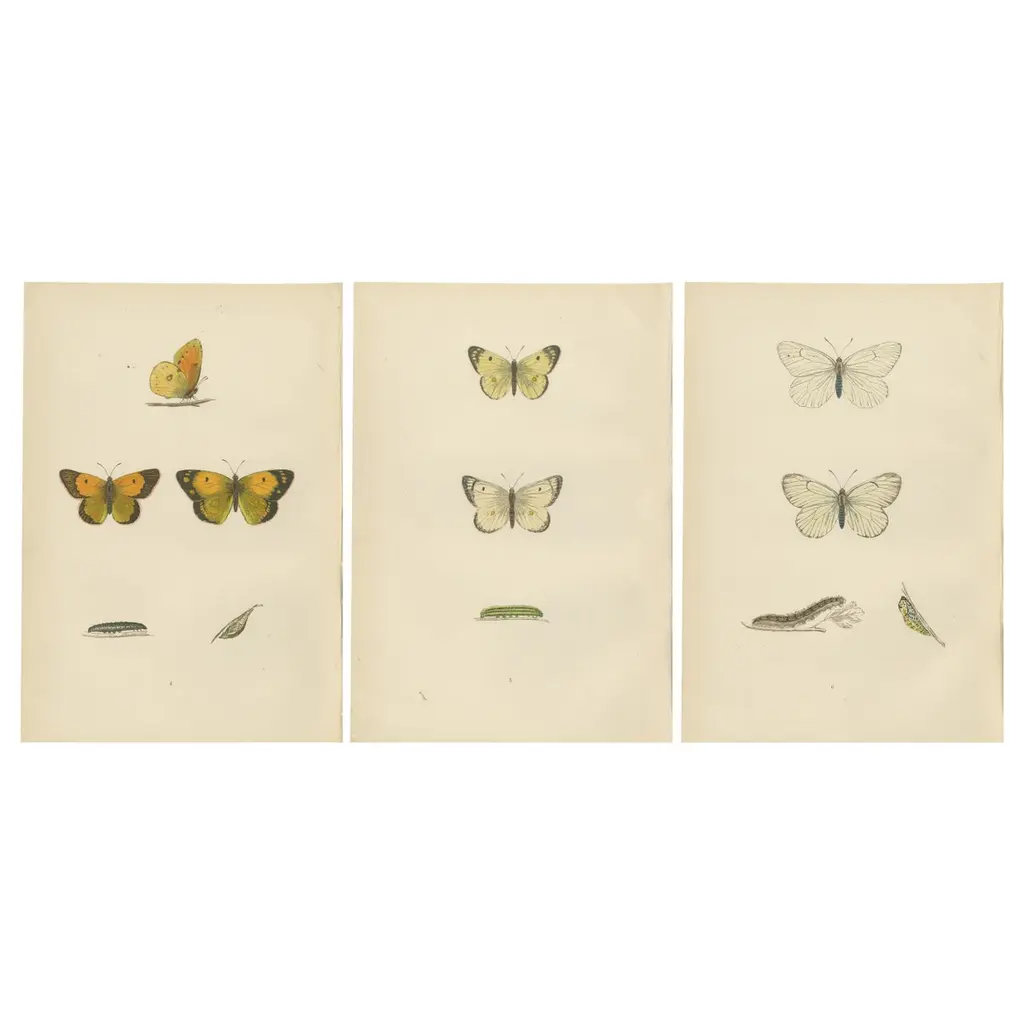
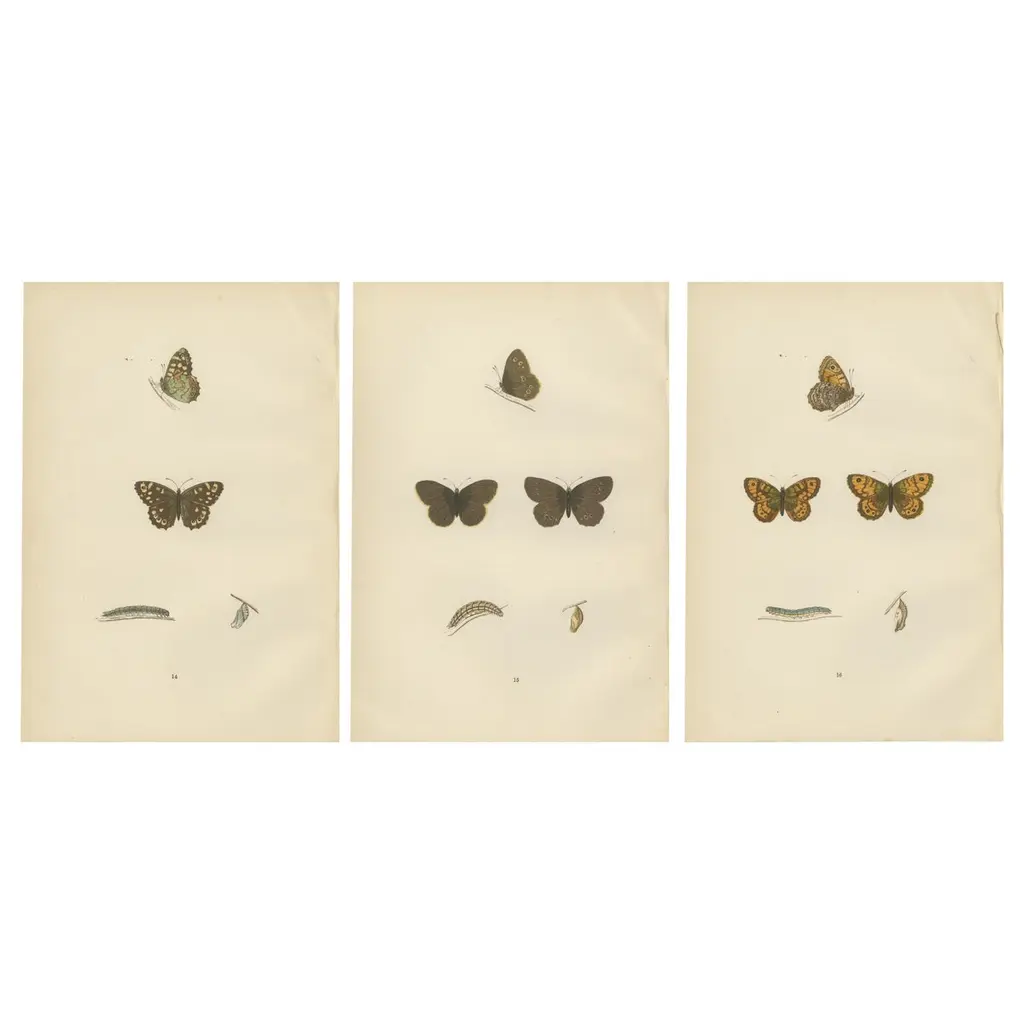
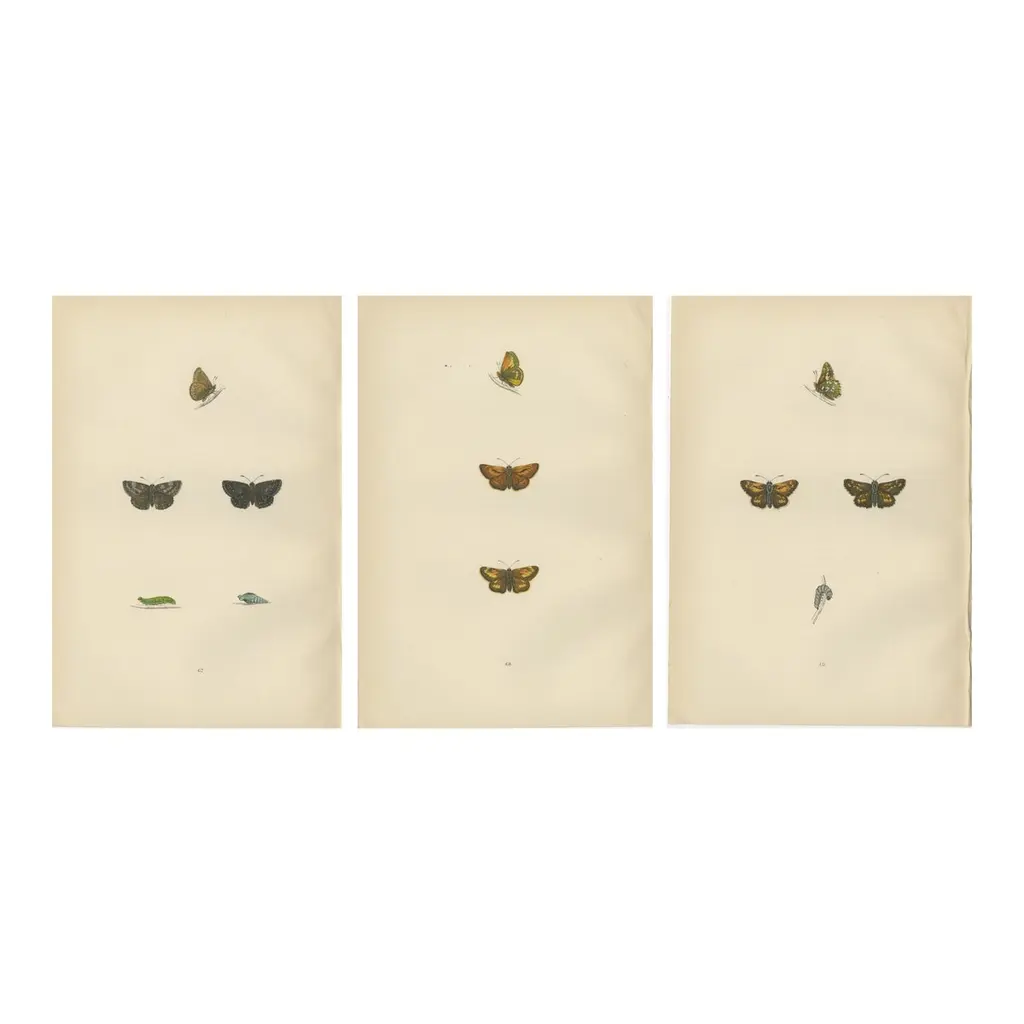
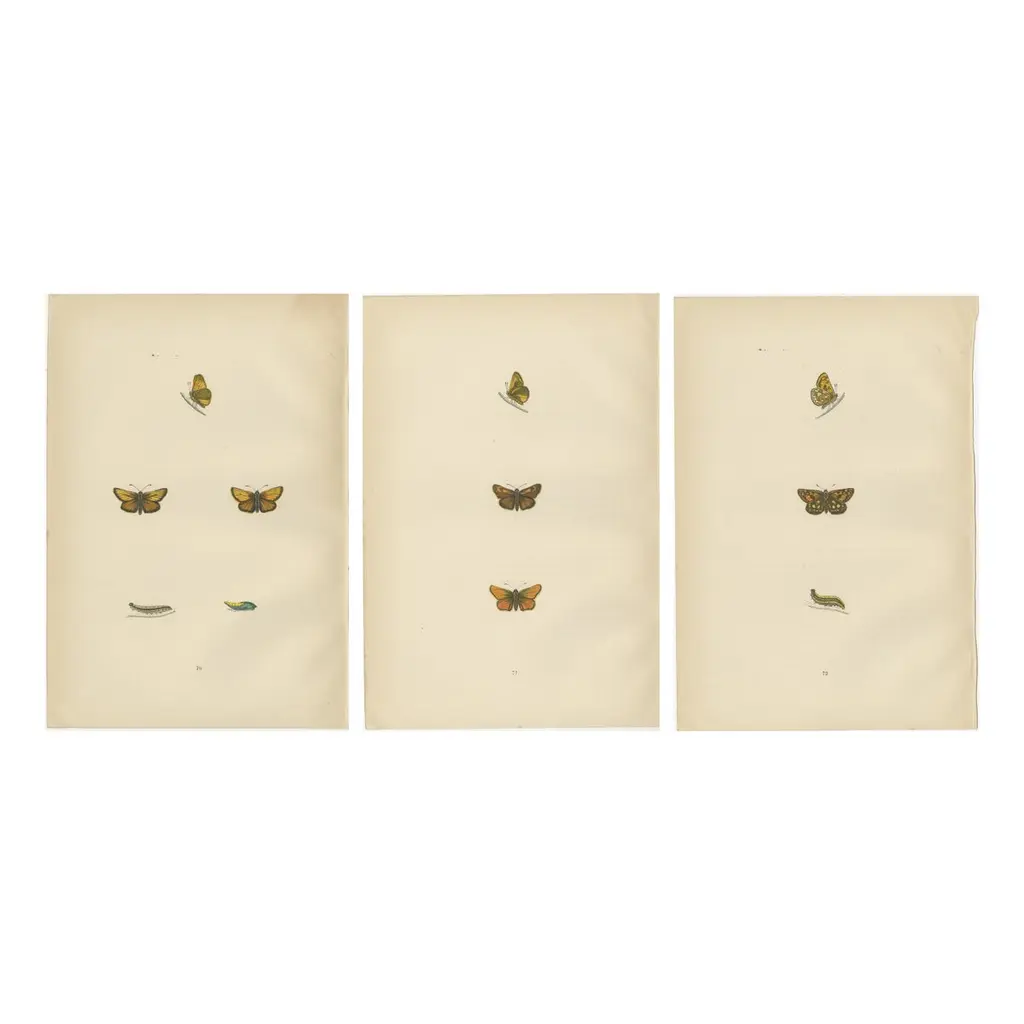
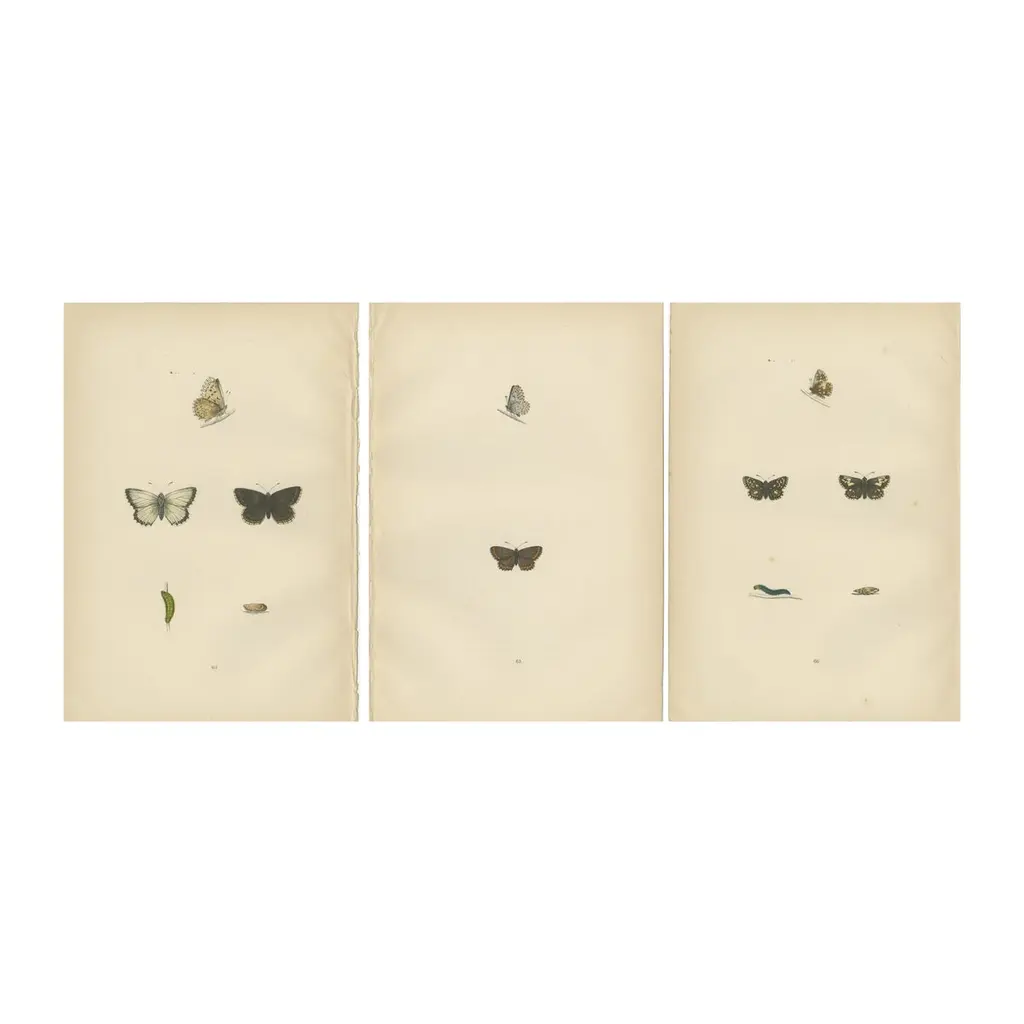
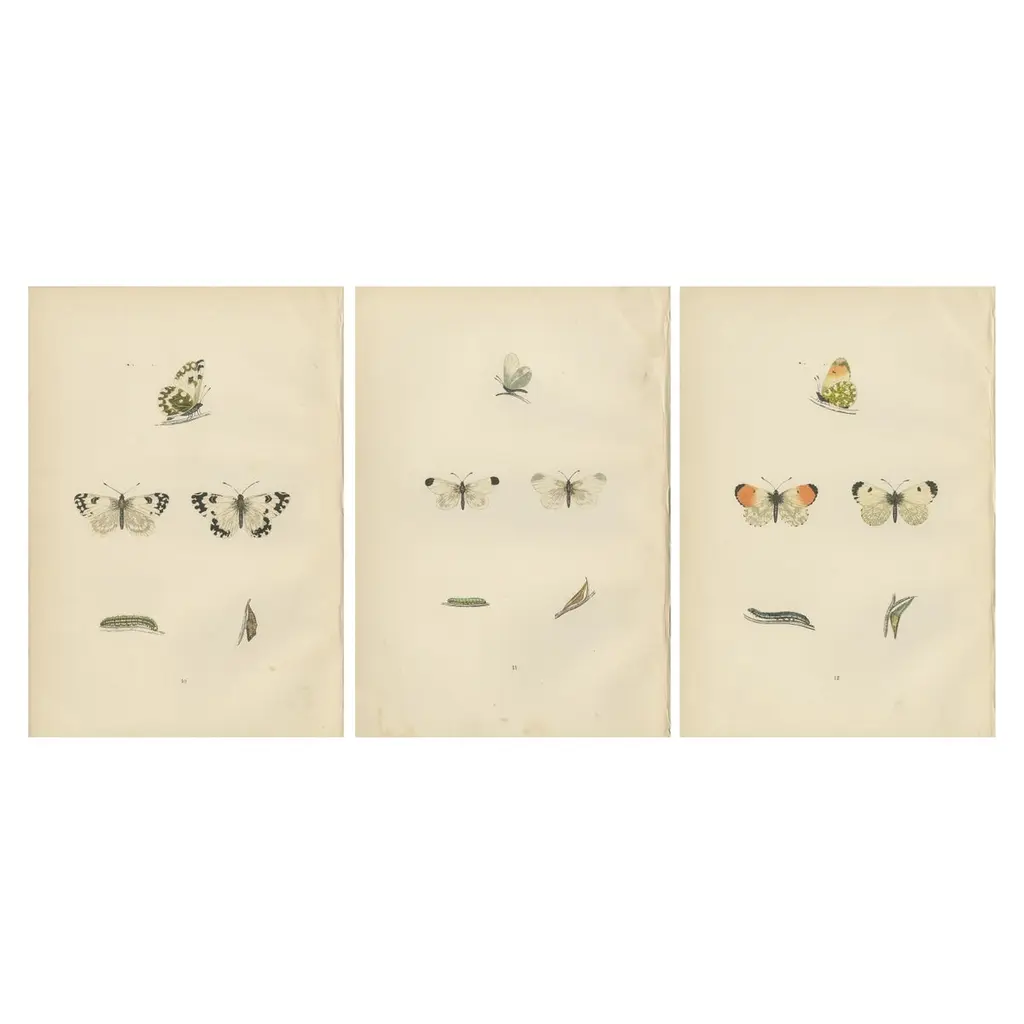
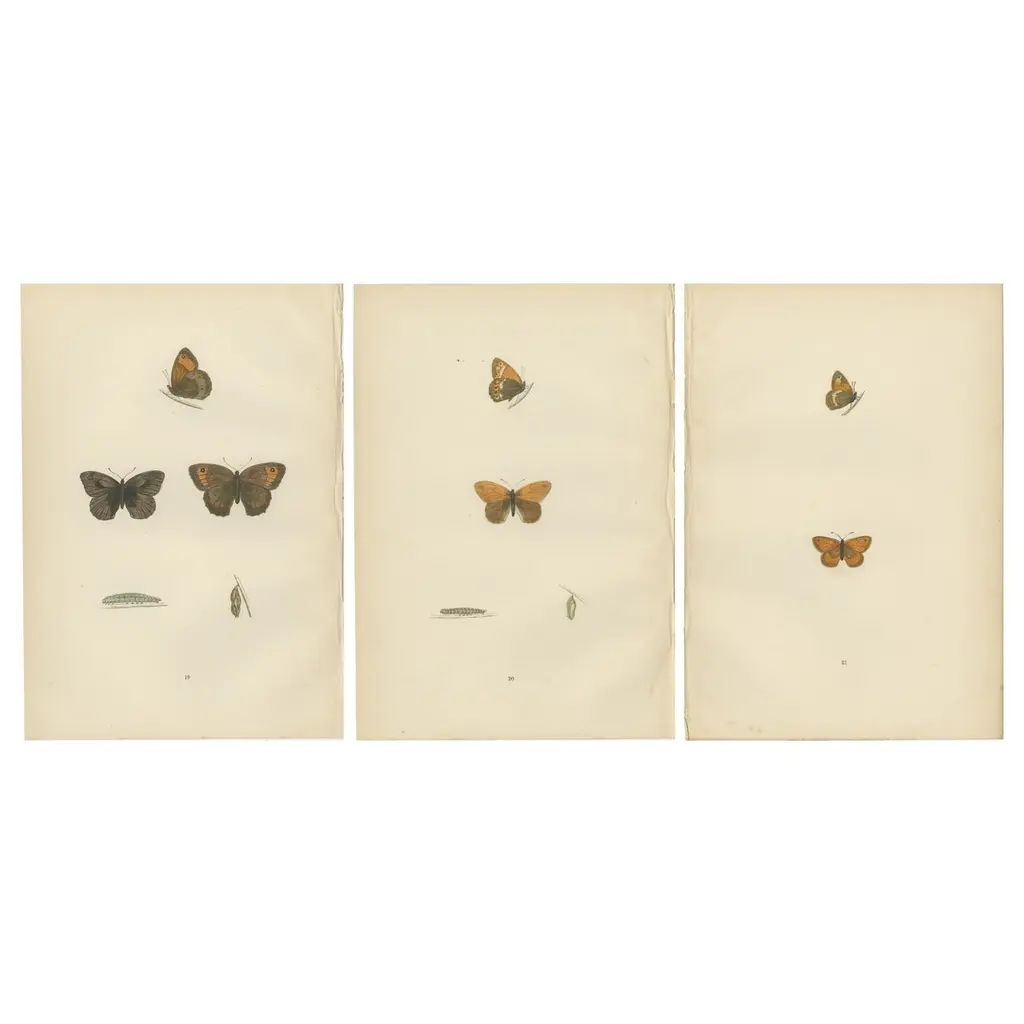
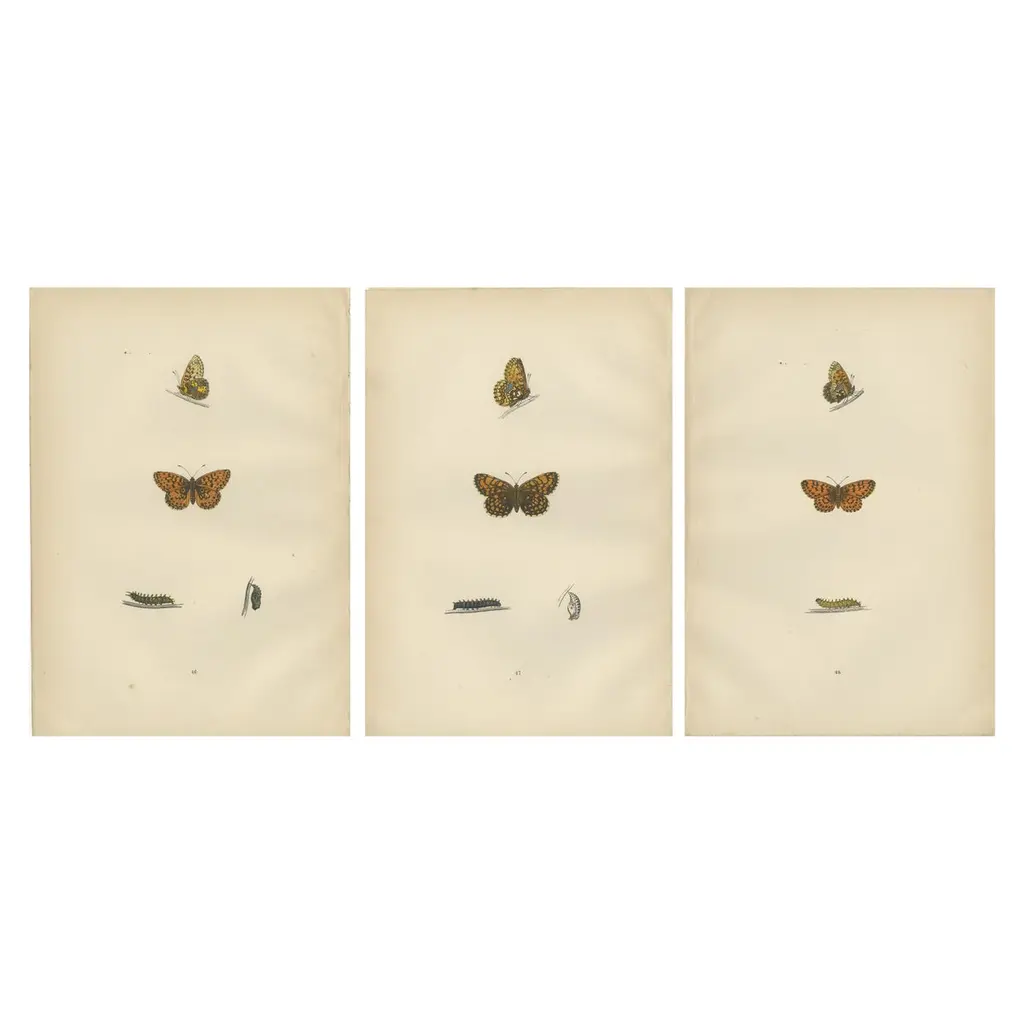
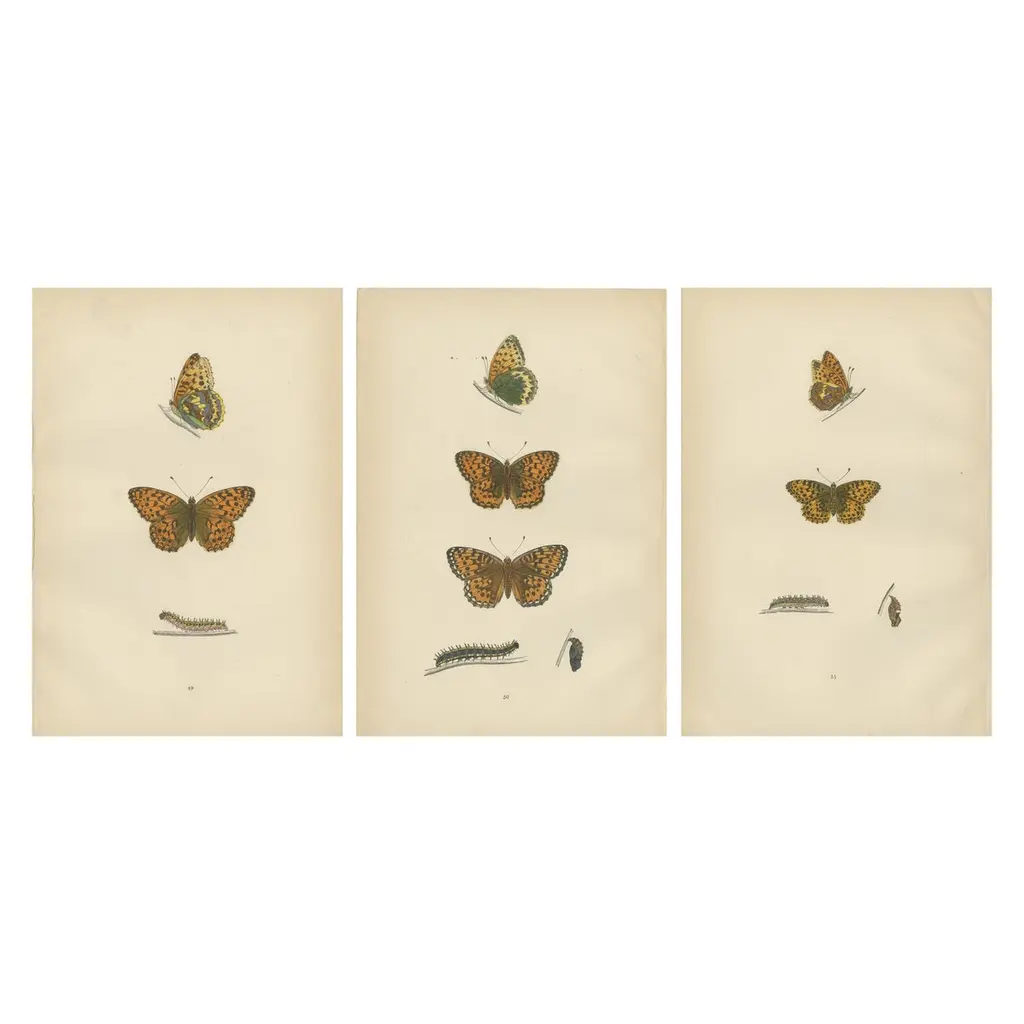
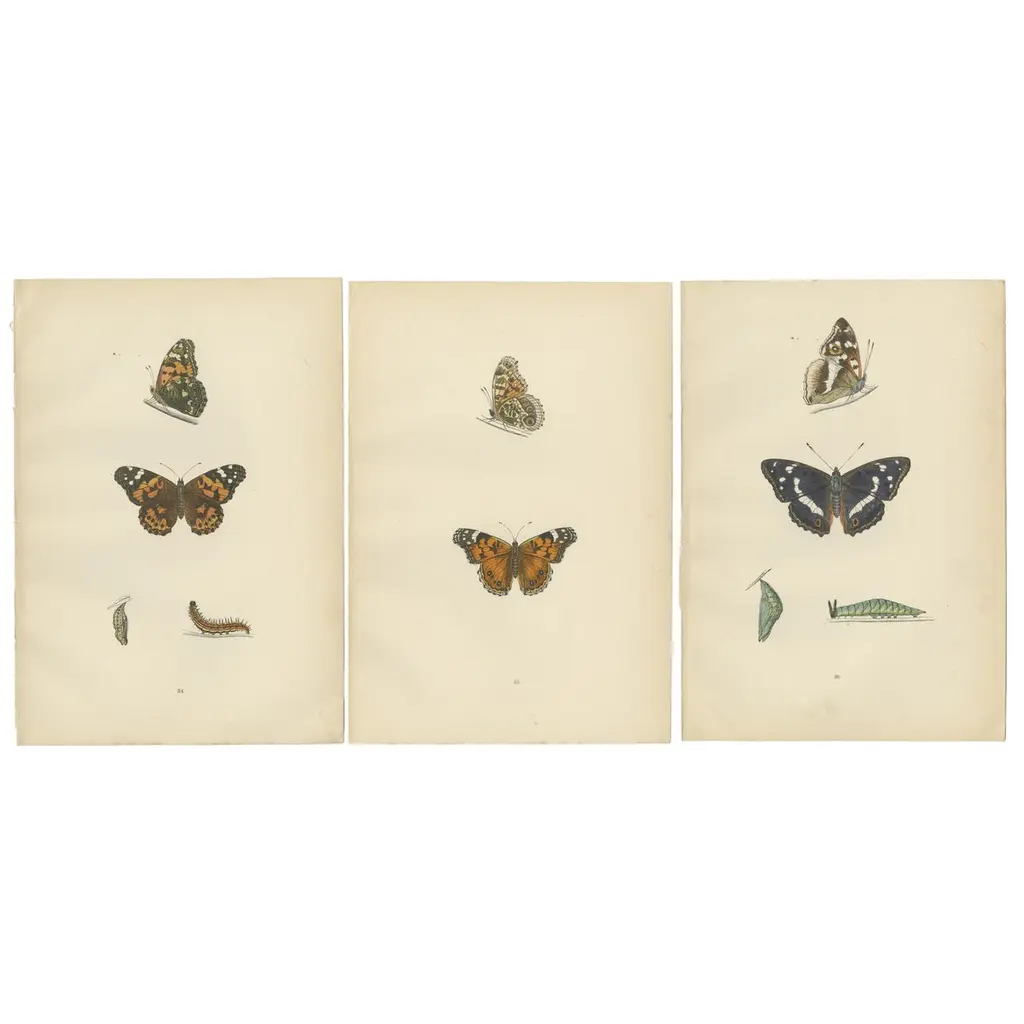
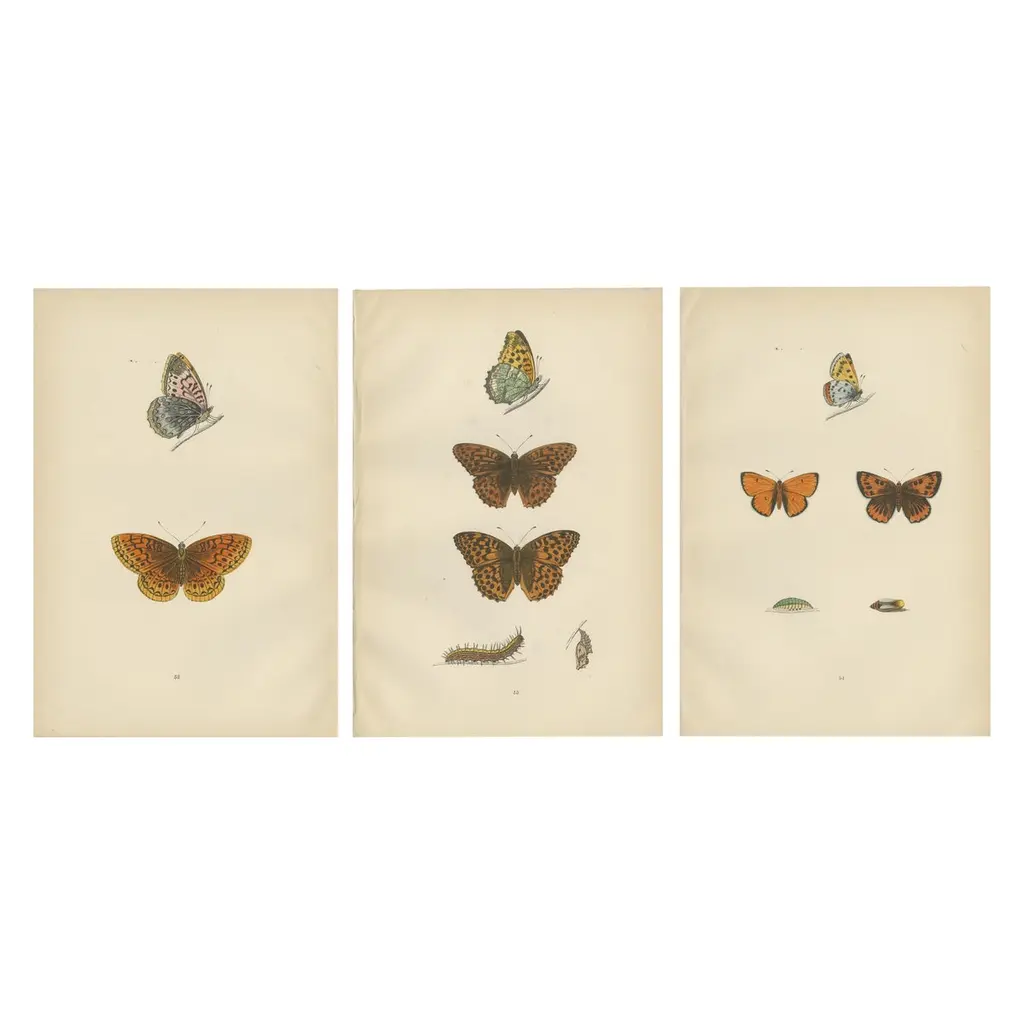
Original Antique prints of butterflies that are hand-colored in the late 19th century. More details about the butterflies:1. Venus Fritillary (Argynnis pandora): This is not a British species but is found in Southern Europe and across the Mediterranean. It's characterized by a beautiful array of colors with a base of orange-brown and marked with black spots. The underside is a softer hue with silver streaks. They are interesting due to their fast and powerful flight, and the males have distinctive silver streaks on the upper side of their wings that reflect sunlight, making them a stunning sight in their natural habitat.2. Silver-Washed Fritillary (Argynnis paphia): This is the largest Fritillary found in Britain and gets its name from the silver streaks on the underside of its wings that resemble washes of silver. They are bright orange with black spots on the upper side and have a graceful flight. These butterflies are interesting because they exhibit a behavior known as 'territoriality', where males will defend areas of sunlight in the forest against rivals.3. Large Copper (Lycaena dispar): Once native to the fens of Britain, this butterfly is now extinct in the UK. It had a vibrant copper color on the upper side of its wings, with the males being a bright fiery orange and the females having darker markings. The Large Copper is of particular interest due to its conservation history and the efforts to reintroduce it to its native habitats.Each butterfly not only adds to the biodiversity and beauty of their environments but also tells a story of adaptation, survival, and in the case of the Large Copper, the importance of conservation efforts to maintain butterfly populations. The hand-colored plates from Morris's "A History of British Butterflies" are not just scientific illustrations; they are historic documents and a reminder of the diversity that was once more prevalent in the British Isles.
Similar Items