Flight Of Patterns: The Fritillary Trilogy From Morris's 1890 Masterpiece
$180
1st Dibs
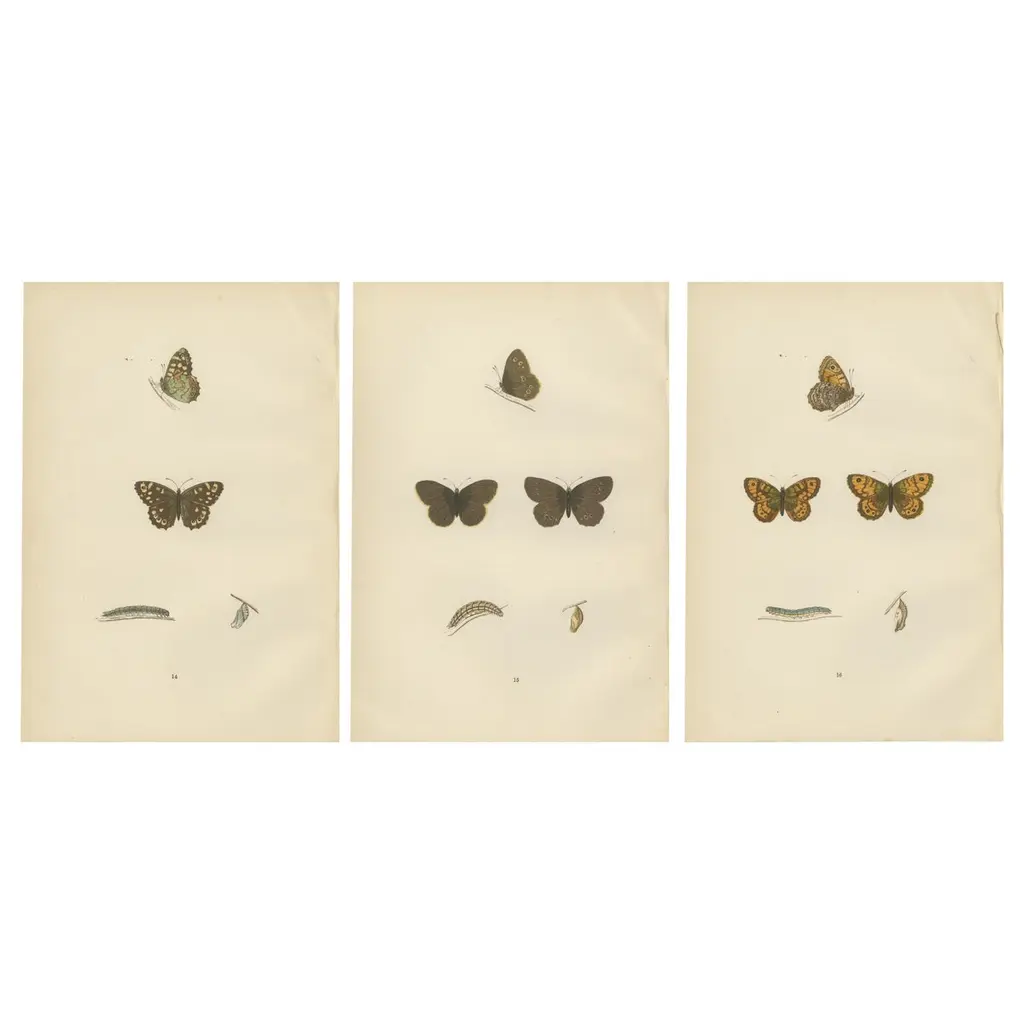
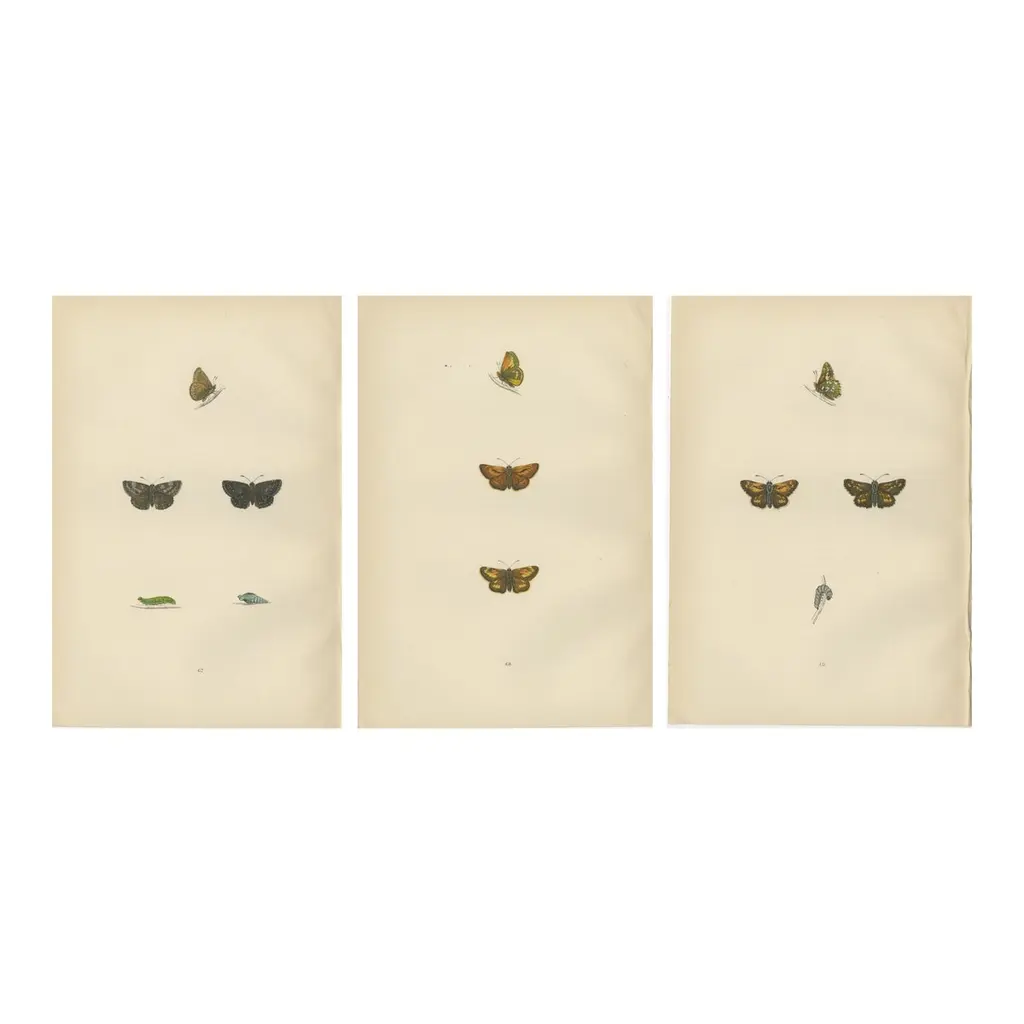
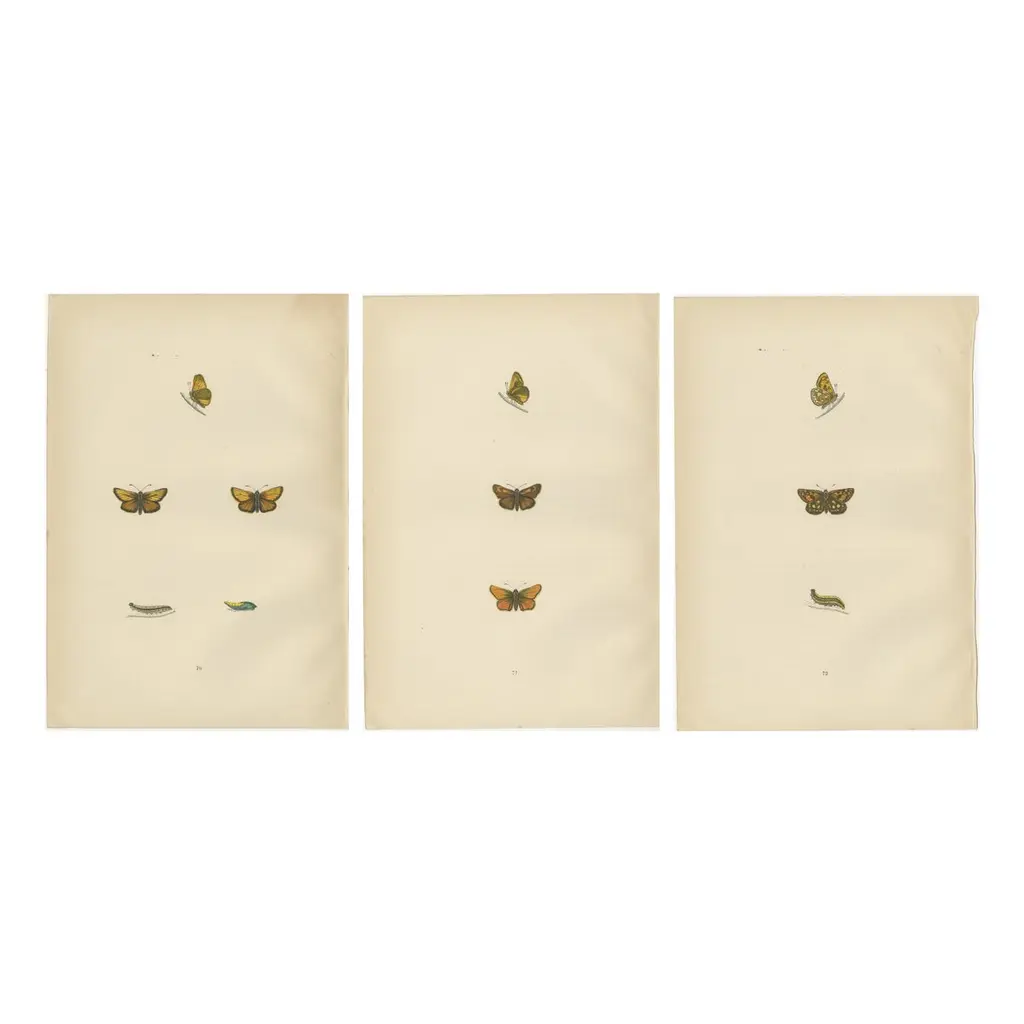
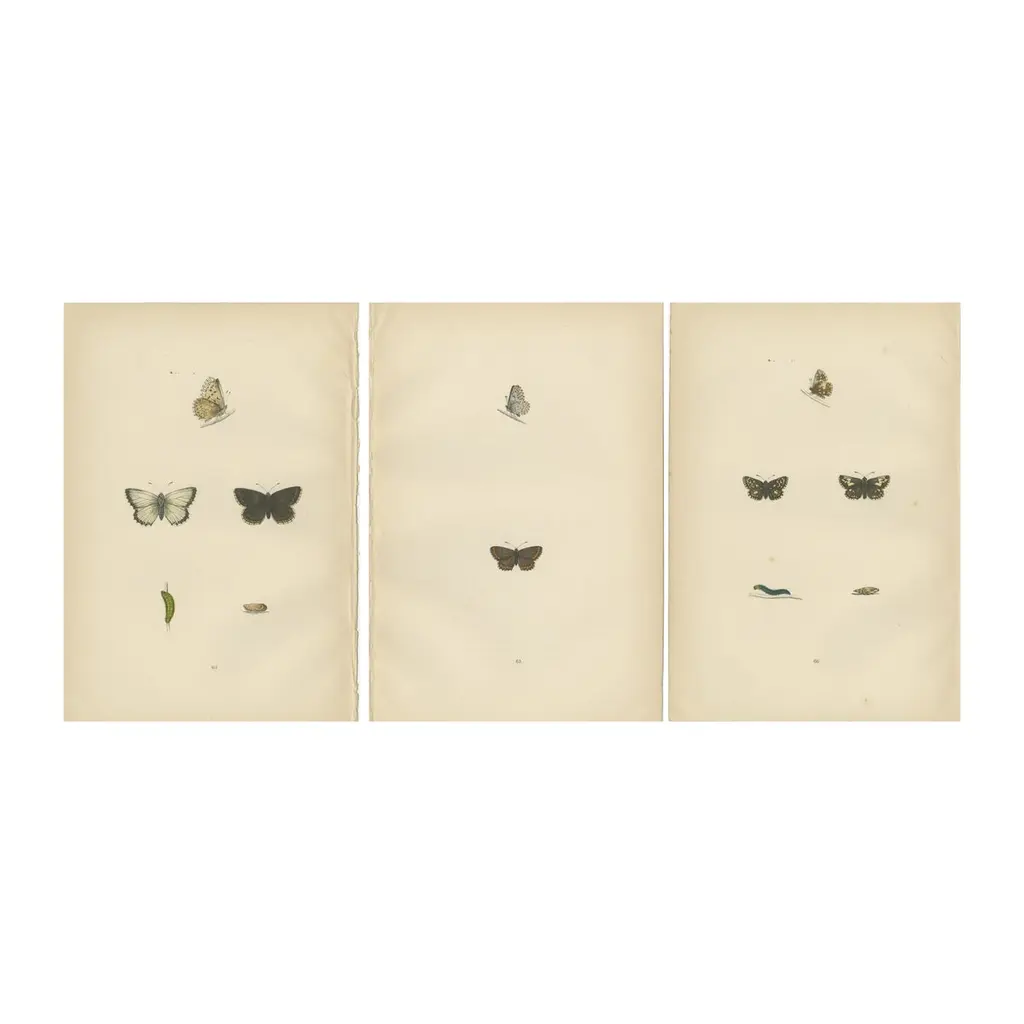
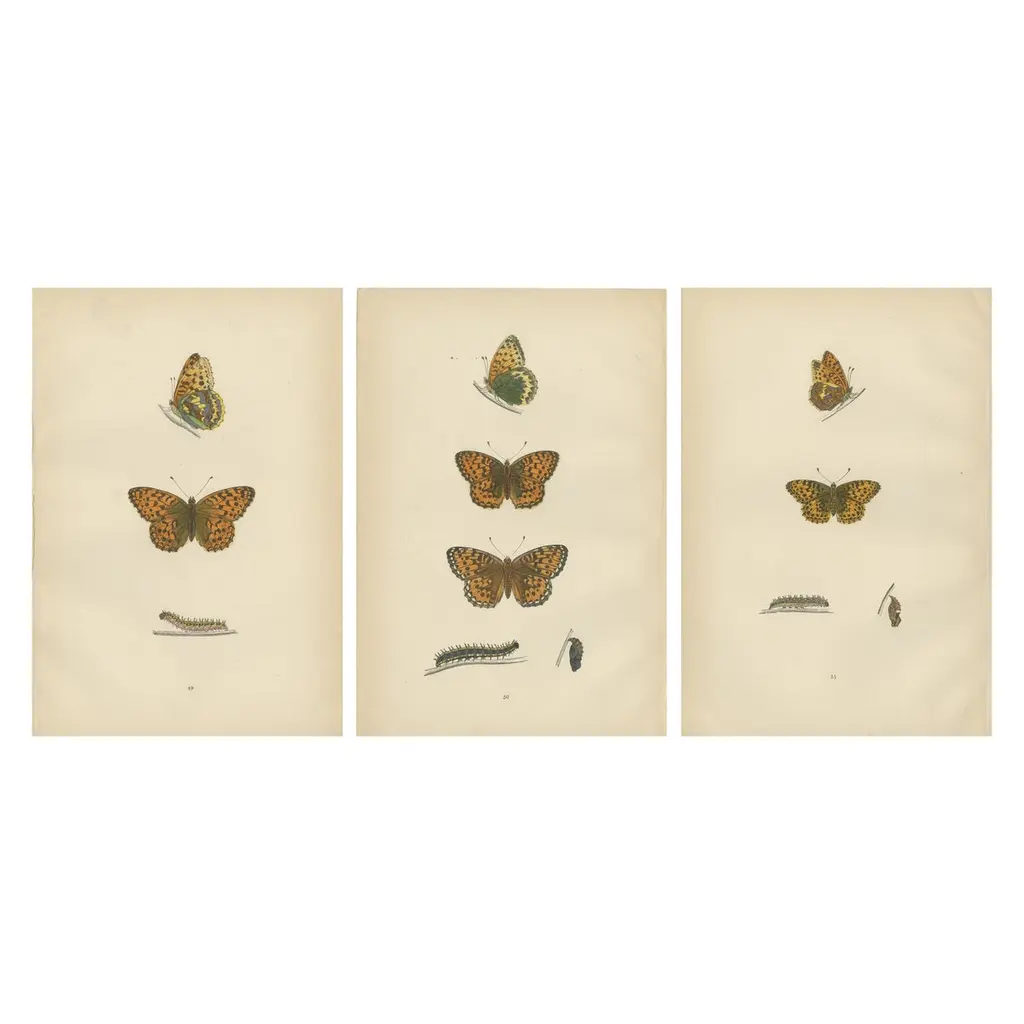
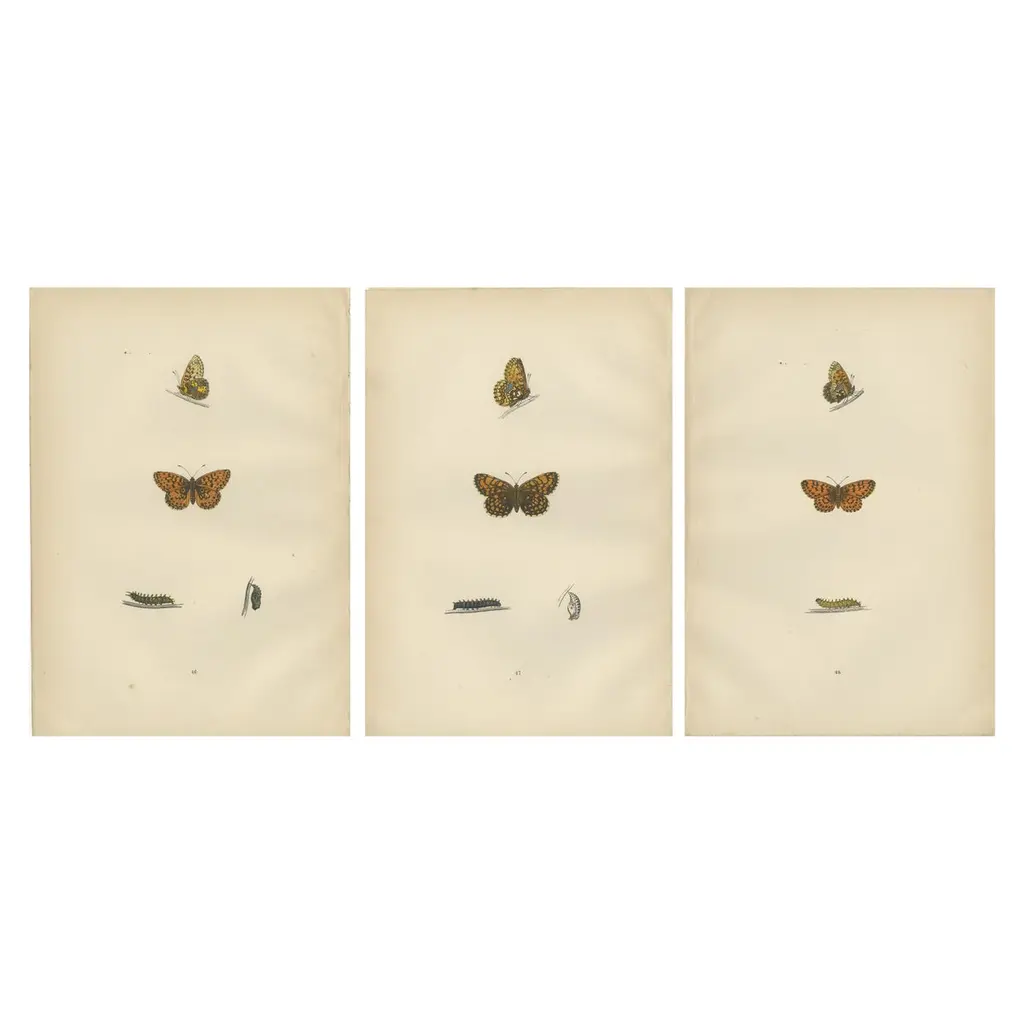
The three butterflies - the Small Pearl-Bordered Fritillary, Pearl-Bordered Fritillary, and Weaver's Fritillary - are all part of the Fritillary family, known for their distinctive orange-brown wings with black or dark brown spots. Here's a brief description of each:1. Small Pearl-Bordered Fritillary (Boloria selene): This butterfly is characterized by its orange-brown wings with black spots and a series of small white 'pearls' on the outer edges, which gives it its name. The undersides of the wings have additional intricate patterns with more prominent white pearls and a metallic sheen. It's found in damp grasslands and woodlands and is fascinating because of its close resemblance to the Pearl-Bordered Fritillary, which can make it quite challenging to identify.2. Pearl-Bordered Fritillary (Boloria euphrosyne): Similar to the Small Pearl-Bordered Fritillary but generally larger, the Pearl-Bordered Fritillary has a more pronounced row of white 'pearls' along the outer edge of its hindwings, from which it gets its name. The spaces between the black spots on the upper wings are brighter, and the black borders are usually thinner. This species prefers woodland clearings and is interesting because it's one of the earliest fritillaries to emerge in spring.3. Weaver's Fritillary (Boloria dia): Also known as the Violet Fritillary, it is less common in the UK. The Weaver's Fritillary has more subdued coloring, with less contrast in the spots and a less distinct pearl border. This species prefers flowery grasslands and can be found in Europe, primarily in the southern regions, making it less common and therefore quite intriguing to butterfly enthusiasts in the UK.What makes these butterflies particularly interesting is their survival and adaptation strategies; they have specific habitat requirements and are sensitive to environmental changes. Their presence and numbers can indicate the health of an ecosystem. Additionally, their lifecycle, which includes transformation from caterpillar to the adult butterfly stage, is a beautiful representation of metamorphosis, making them a subject of fascination for both scientists and nature lovers. These hand-colored plates from Morris's "A History of British Butterflies" capture not only the beauty but also the scientific detail that aids in their study and conservation.
Similar Items