British Handcolored Lepidoptera: Treasures From A History Of British Butterflies
$180
1st Dibs
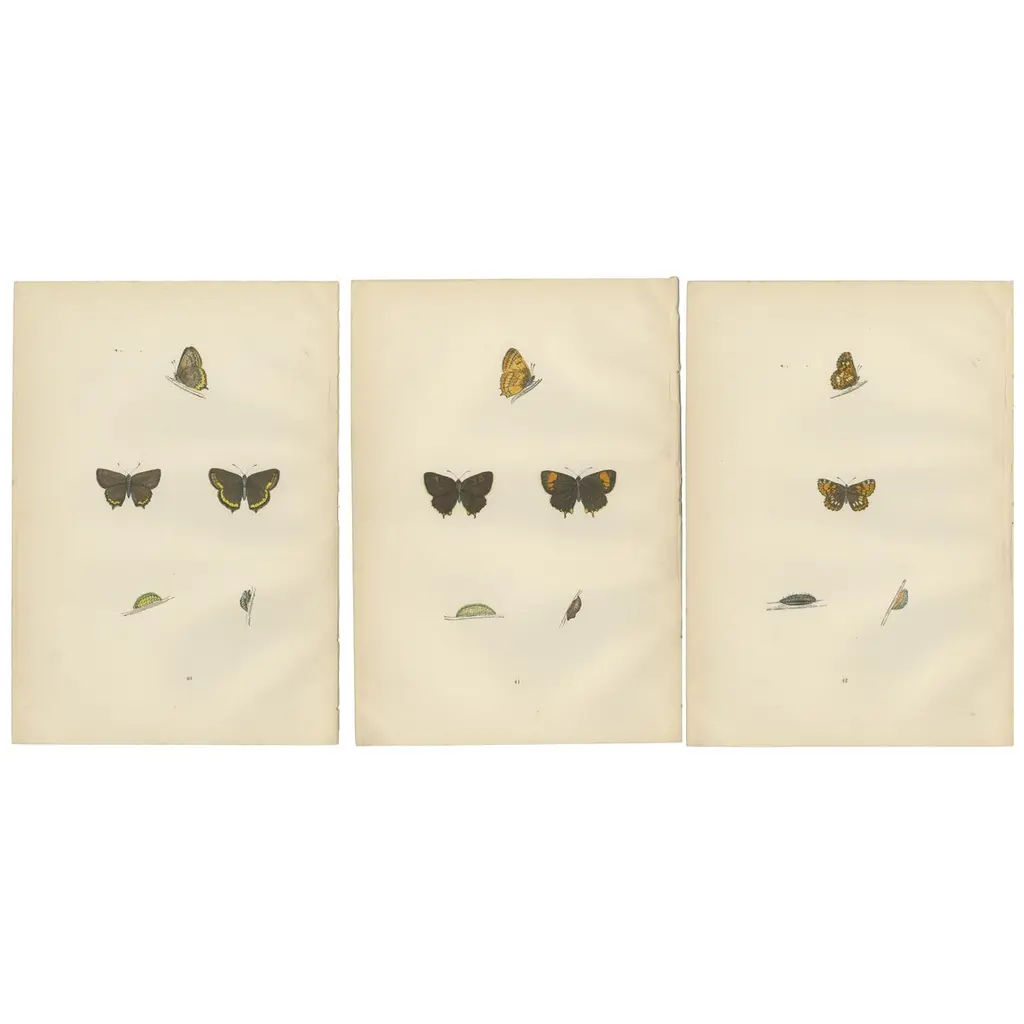
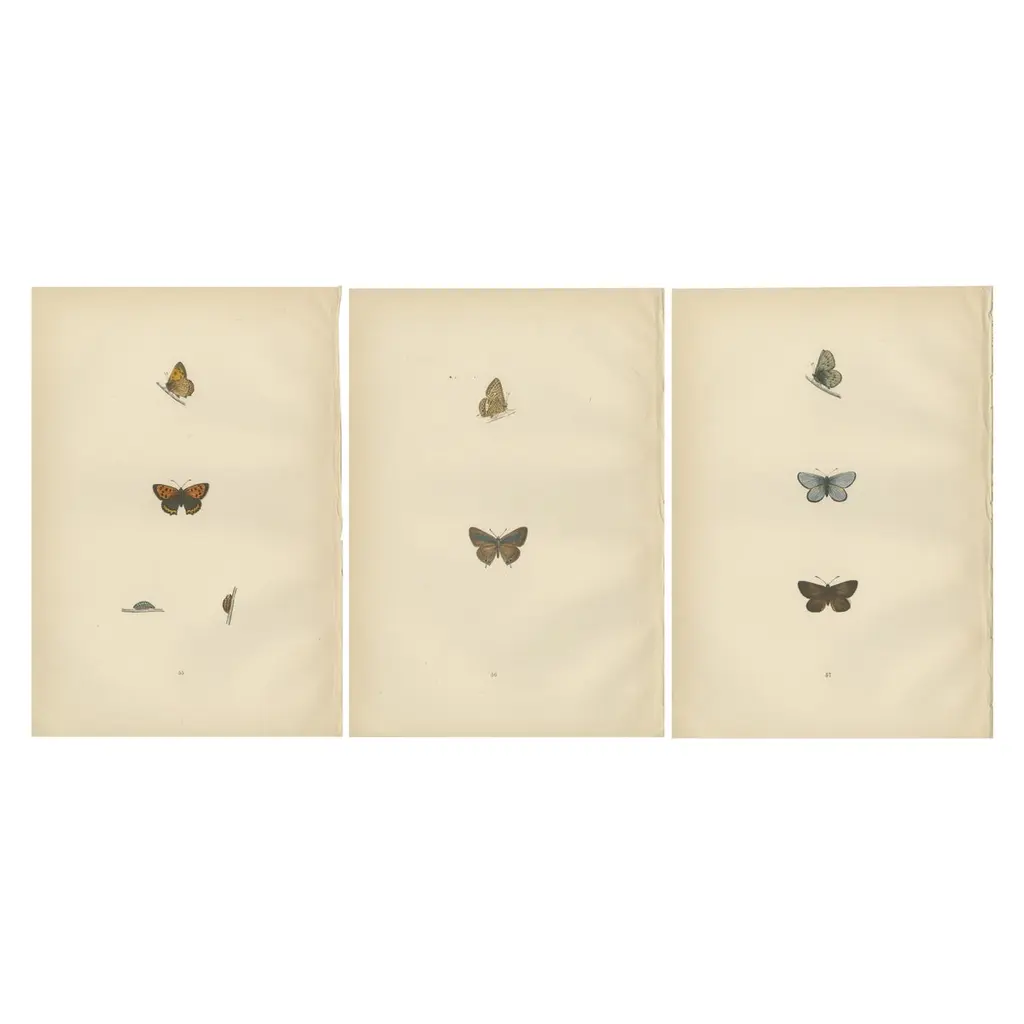
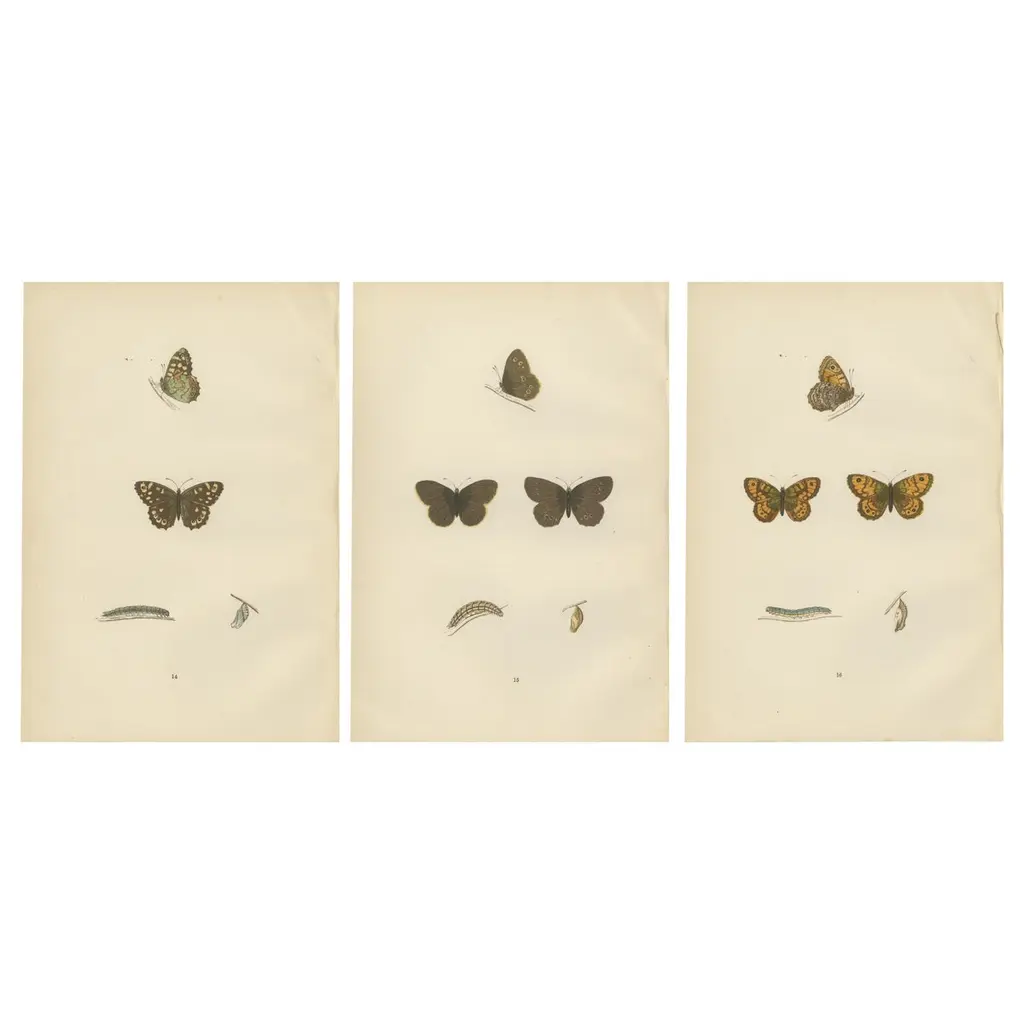
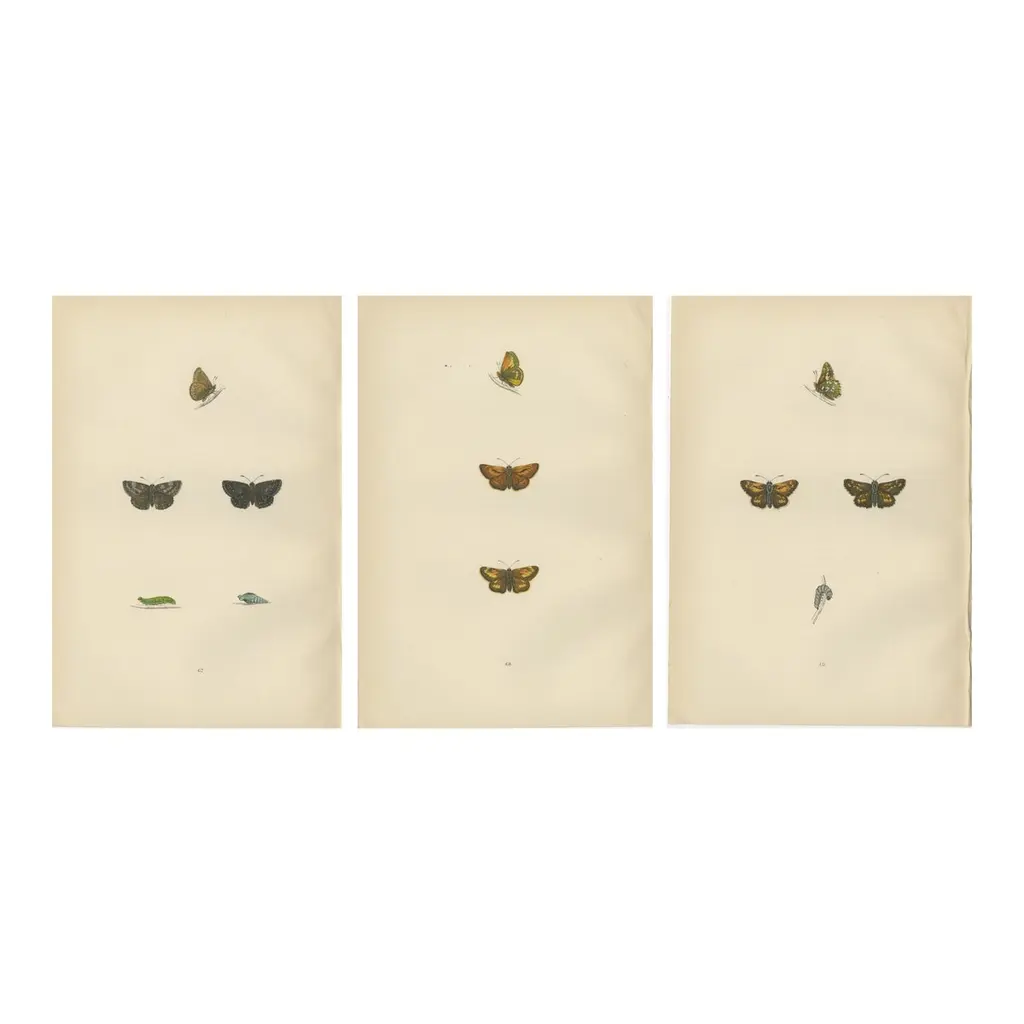
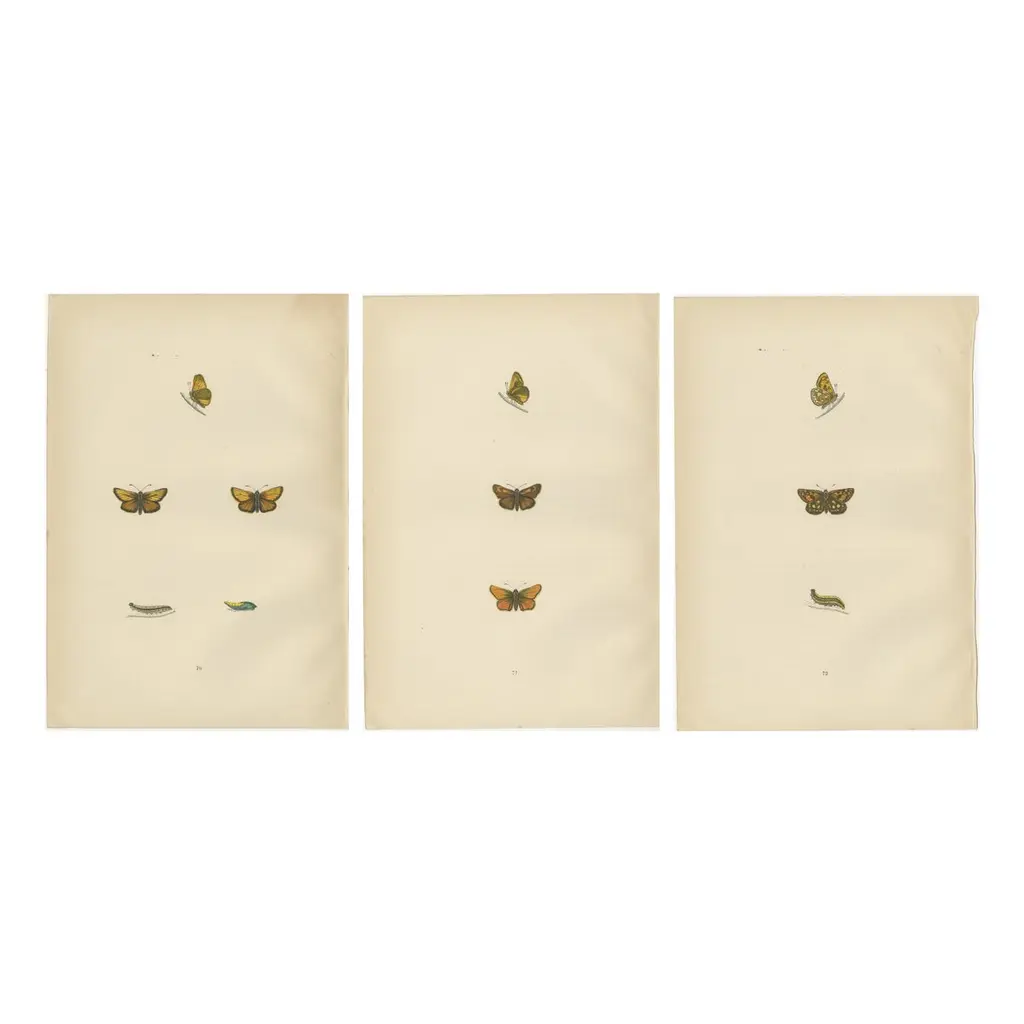
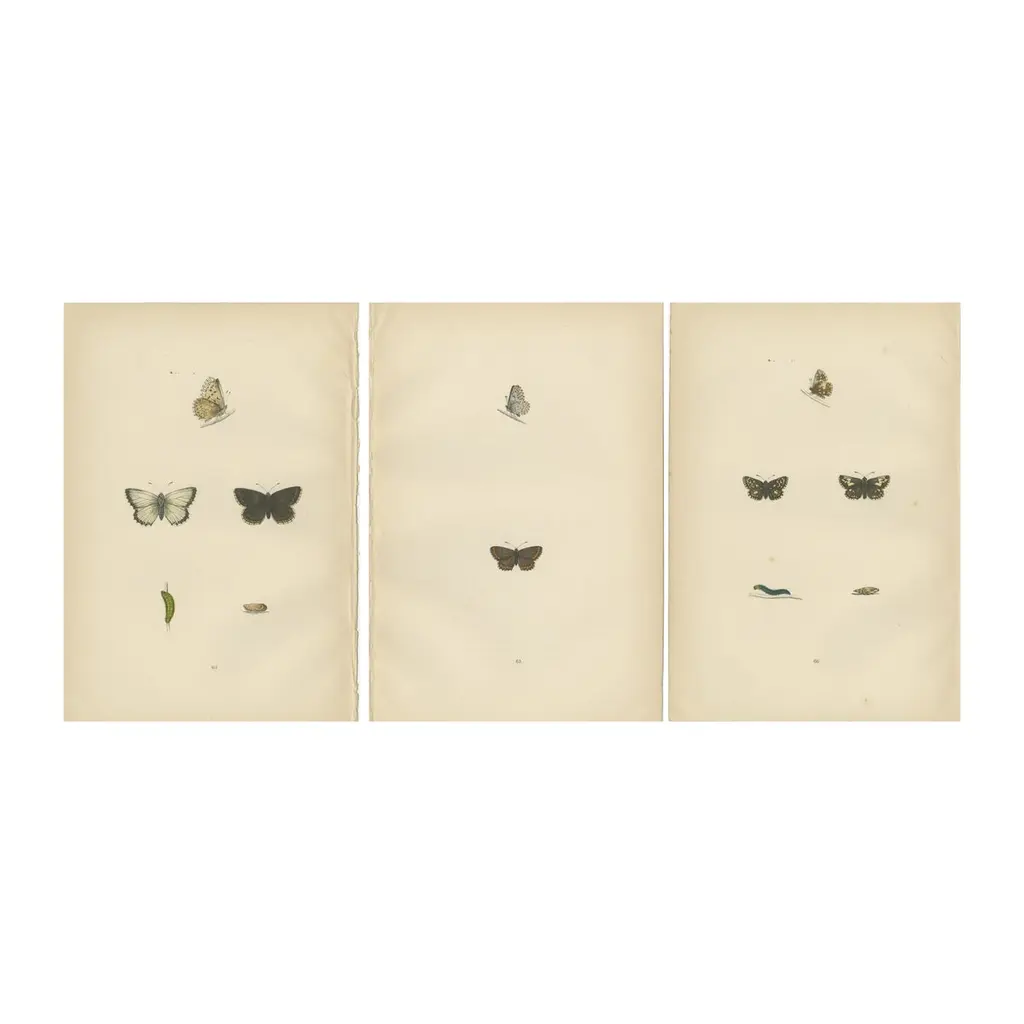
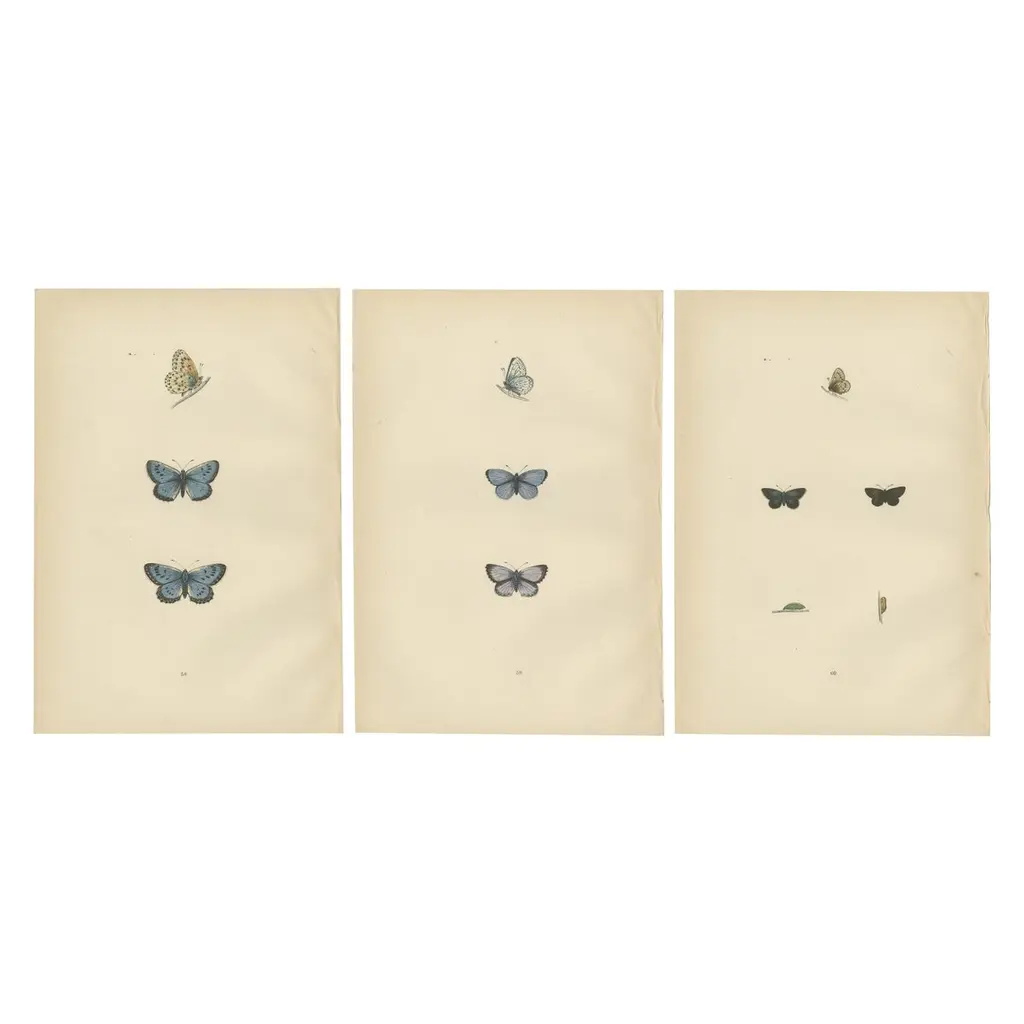
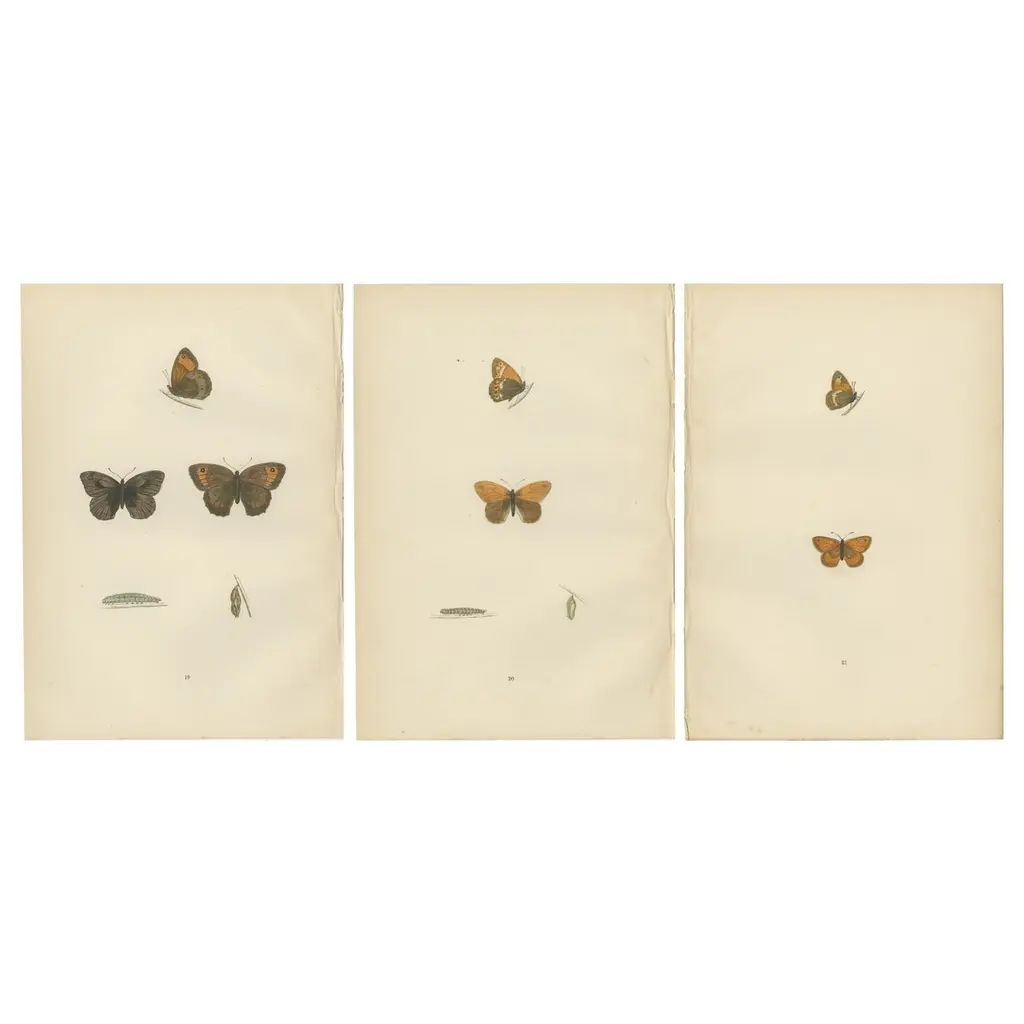
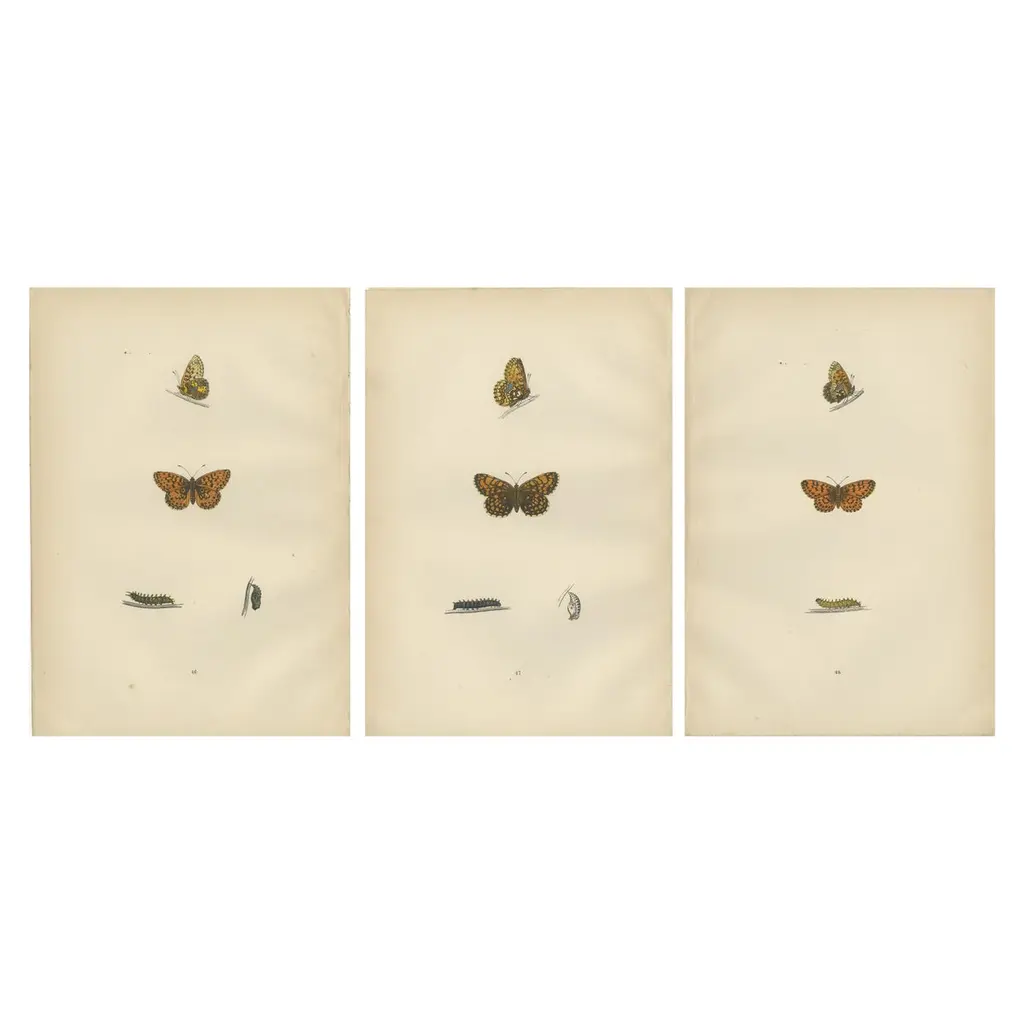
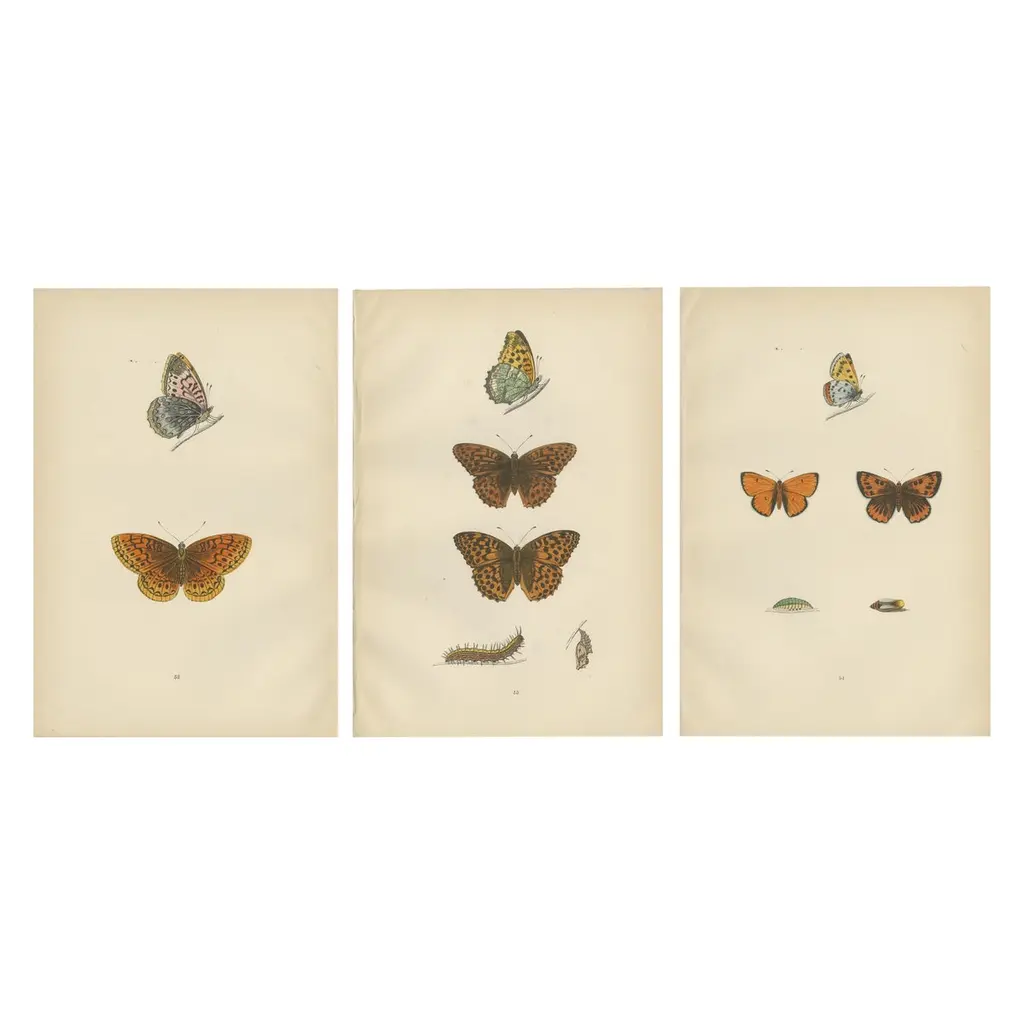
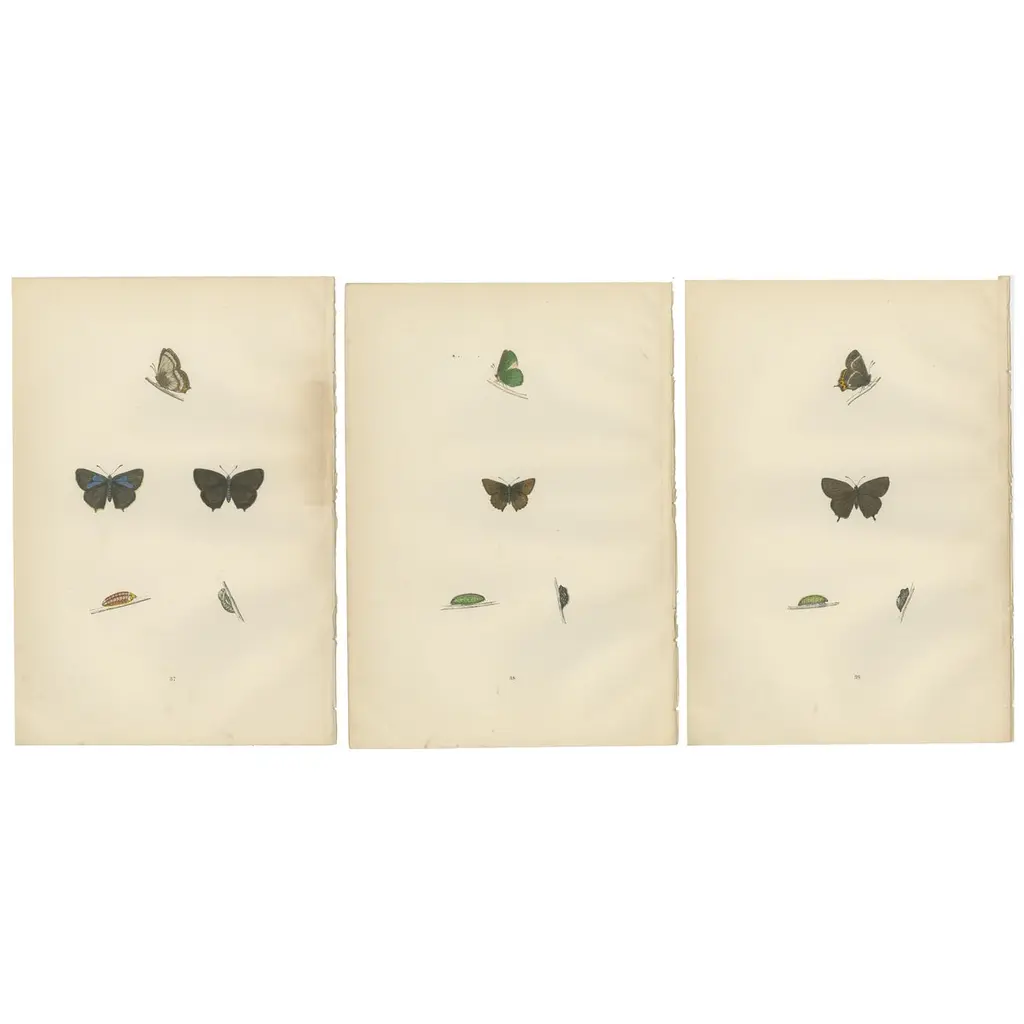
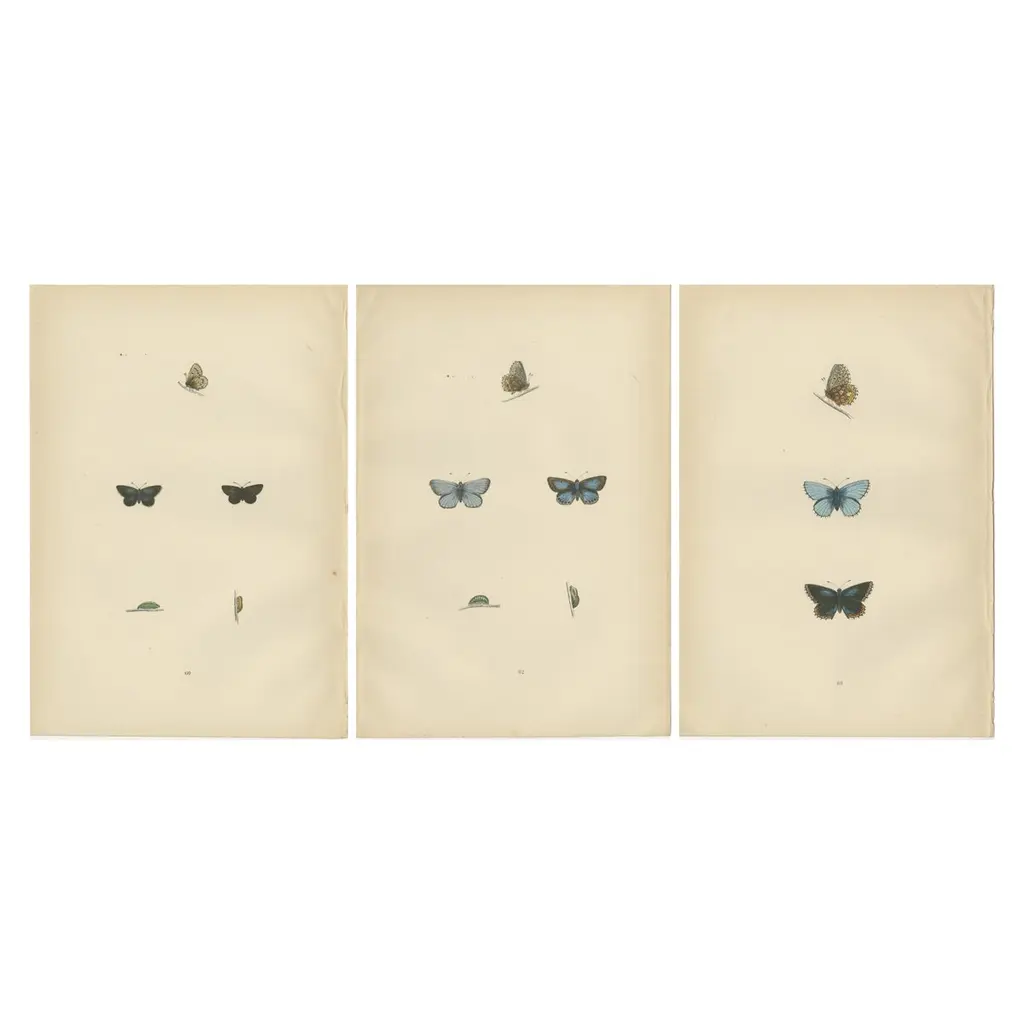
The hand-colored plates from the sixth edition of "A History of British Butterflies" by Morris are exquisite examples of Victorian natural history illustration. Here's a description of the butterflies named:1. Silver-Studded Blue (Plebejus argus): This butterfly is most likely depicted with a blue ground color speckled with silver studs or spots on the underside of the hindwings, which resemble droplets of dew - a feature that gives the butterfly its name. These spots are metallic and reflect light, which is quite unusual and attractive. The Silver-Studded Blue is a species of conservation interest because it requires specific habitats, usually heathland, and has declined in some areas due to habitat loss.2. Common Blue (Polyommatus icarus): The Common Blue is often depicted with vibrant blue upper wings with a white fringe and black edges. The males are typically more brightly colored than the females. This species is widespread and is the most common and widespread blue butterfly in the UK. What makes the Common Blue interesting is its adaptability to a wide range of habitats, including grasslands, woodland clearings, and even urban areas, and it can have several broods in a year depending on the climate.3. Chalkhill Blue (Lysandra coridon), which might be referred to as the Clifton Blue in some historical texts: This butterfly has pale blue, almost powdery wings with black-bordered white margins. The Chalkhill Blue is noteworthy for its specific habitat requirements - it typically resides in chalk downlands. The caterpillars feed on horseshoe vetch, and the adults are often seen absorbing minerals from the ground. This species has been affected by changes in agricultural practices, making its conservation important.These illustrations not only serve scientific purposes in identifying and documenting species but also are beautiful works of art in their own right. The fact that they are hand-colored adds a personal touch that is often missing from modern printed works. Morris's publication is valuable for understanding the biodiversity of the era and the historical context of natural history study.
Similar Items