Triptych Of Lepidoptera Elegance: Hand-Coloured Butterflies Published In 1890
$180
1st Dibs
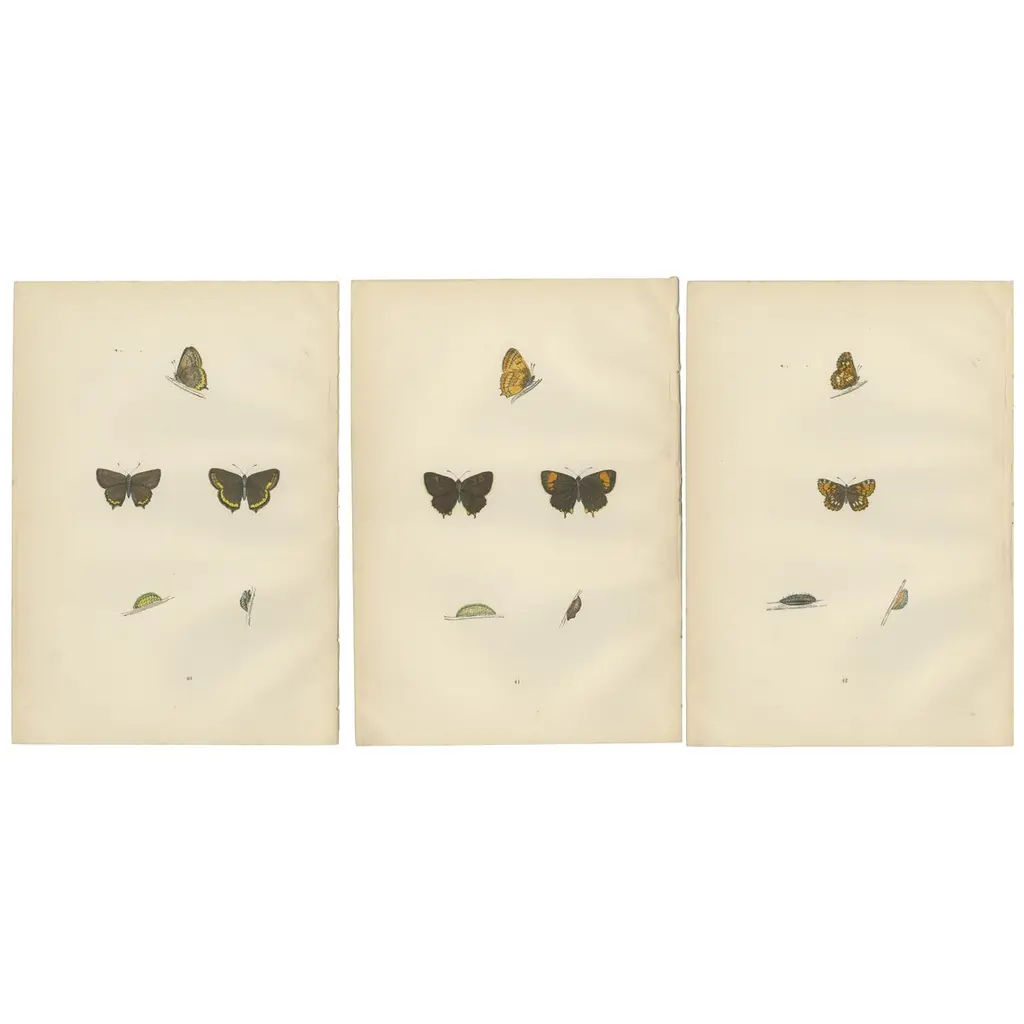
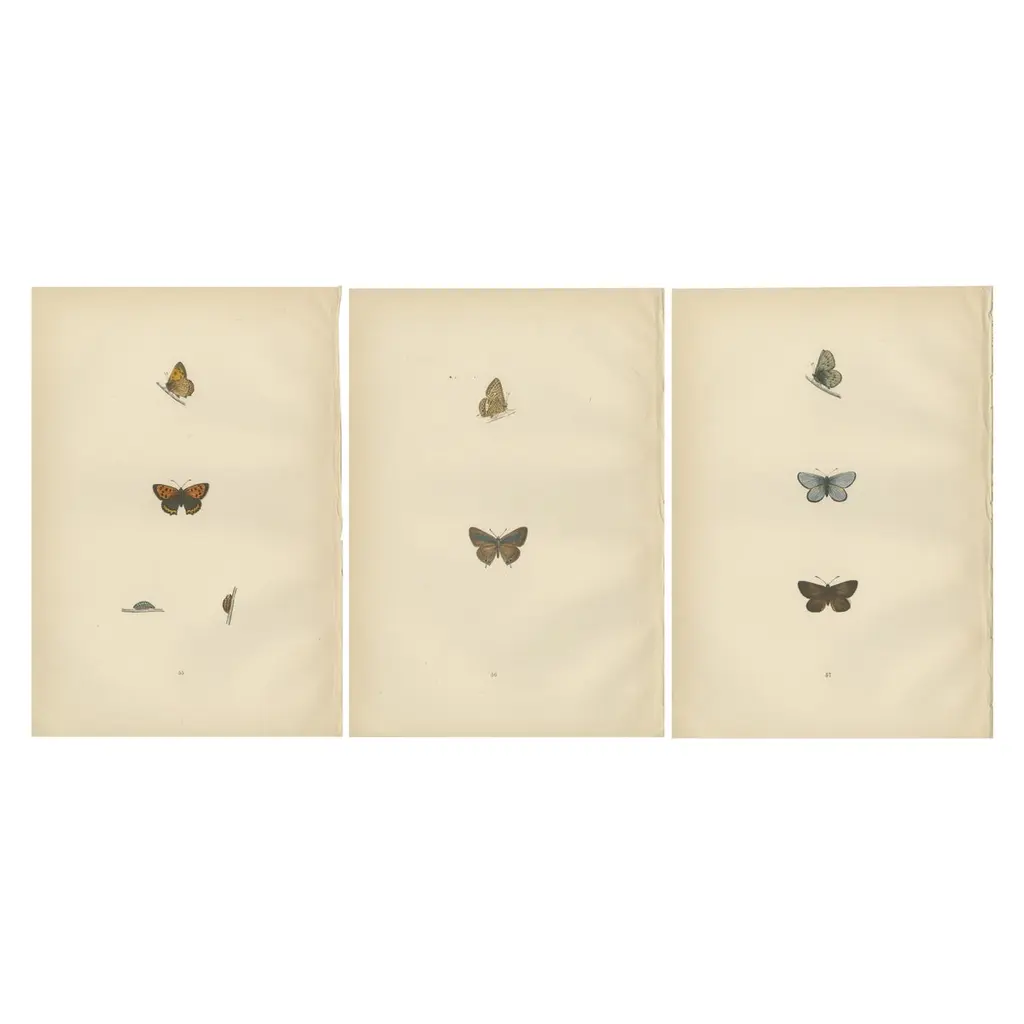
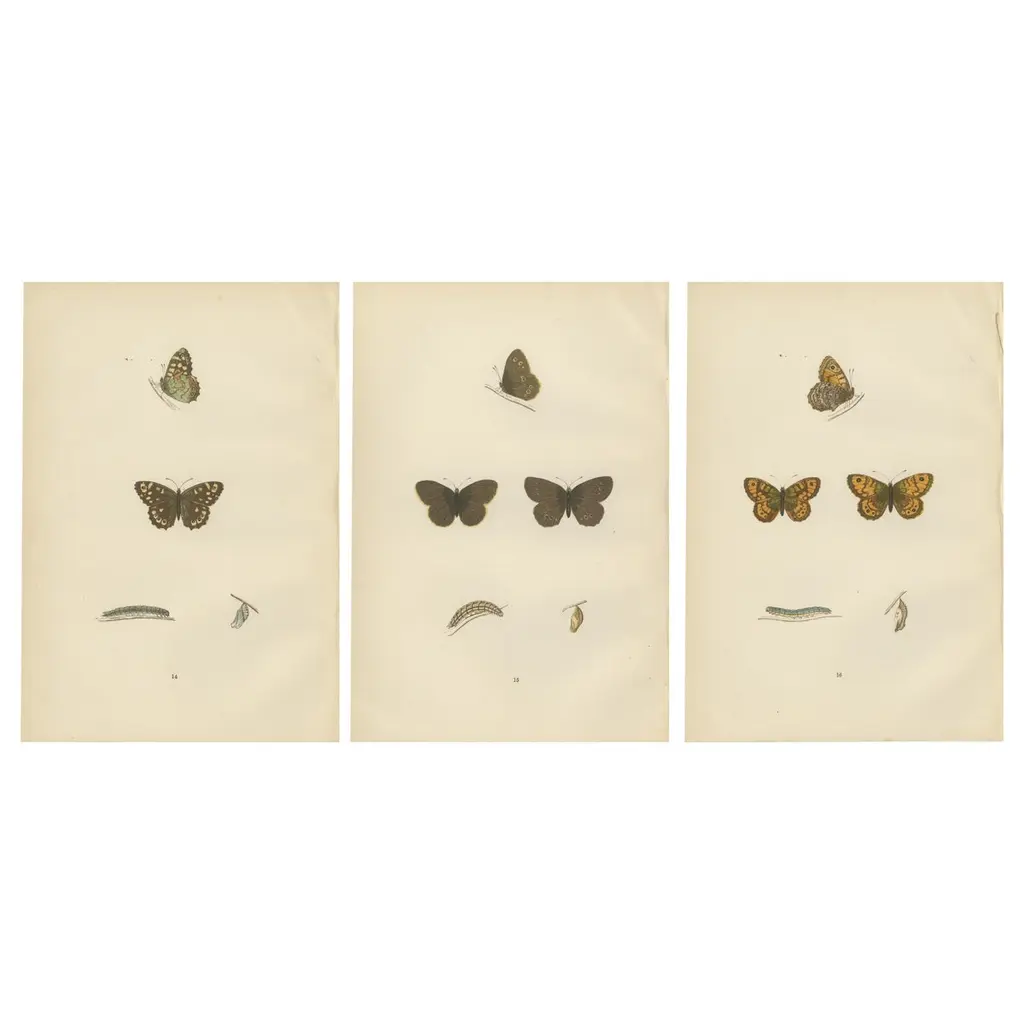
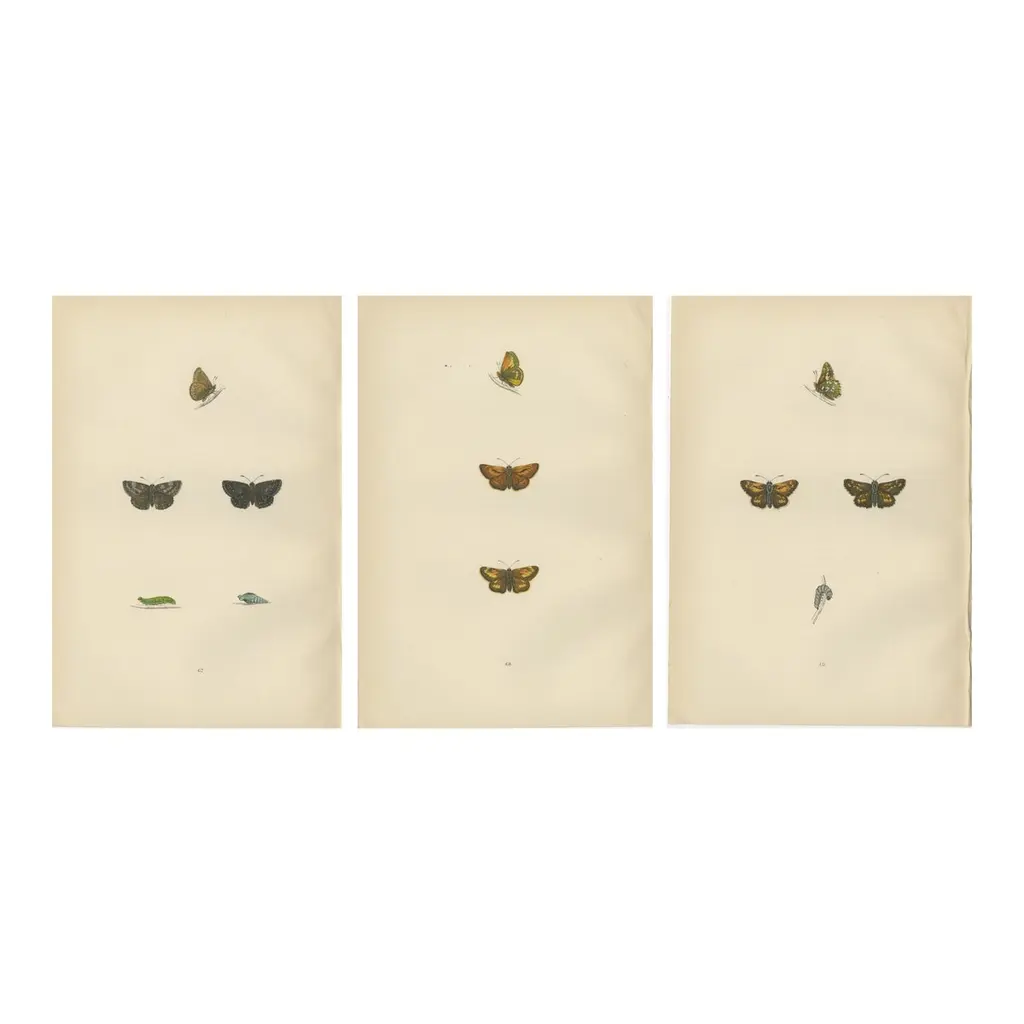
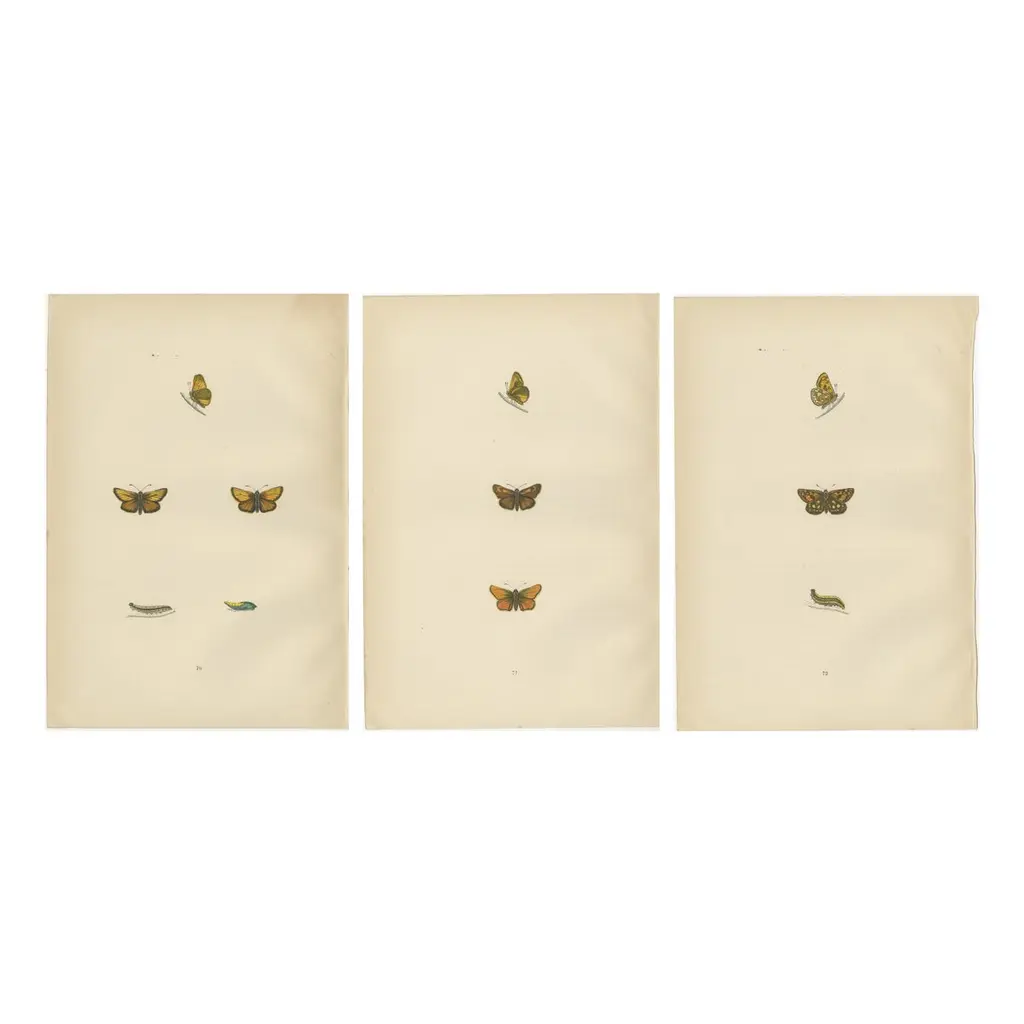
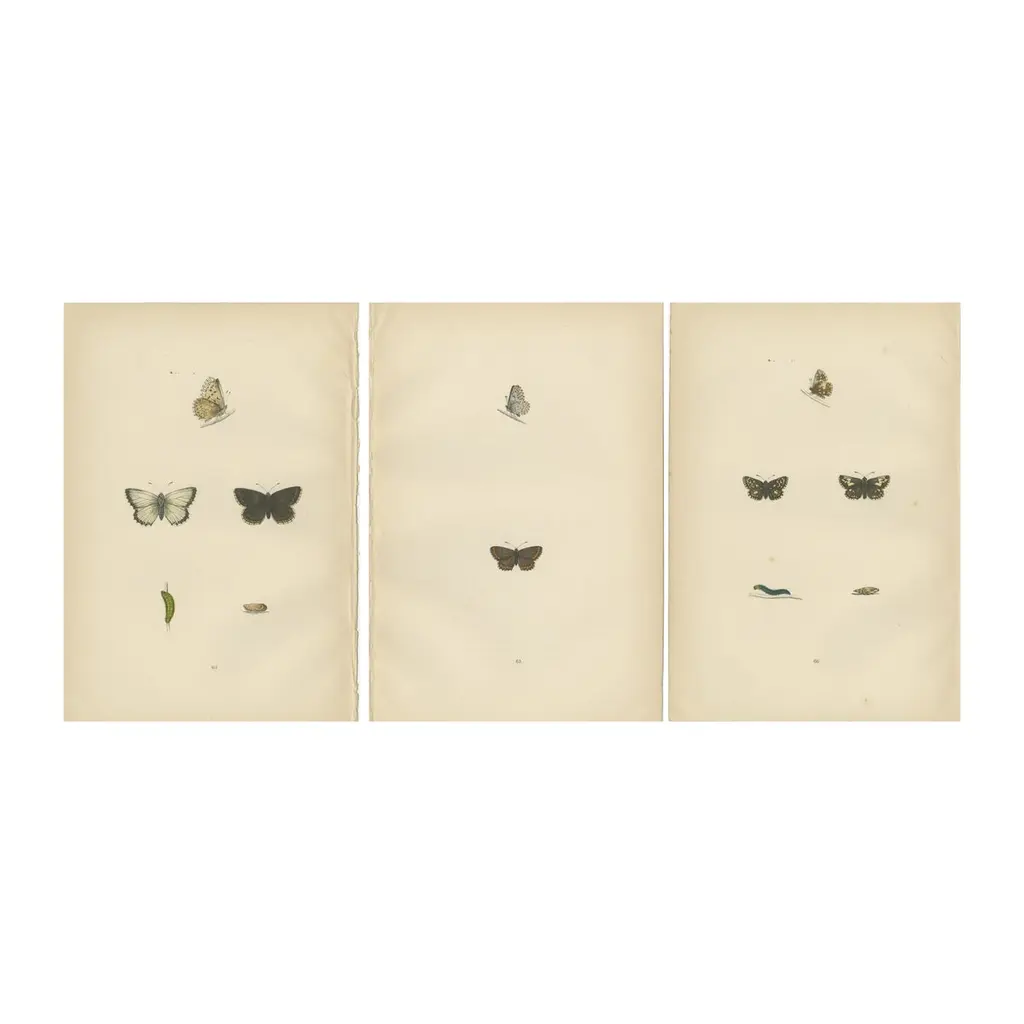
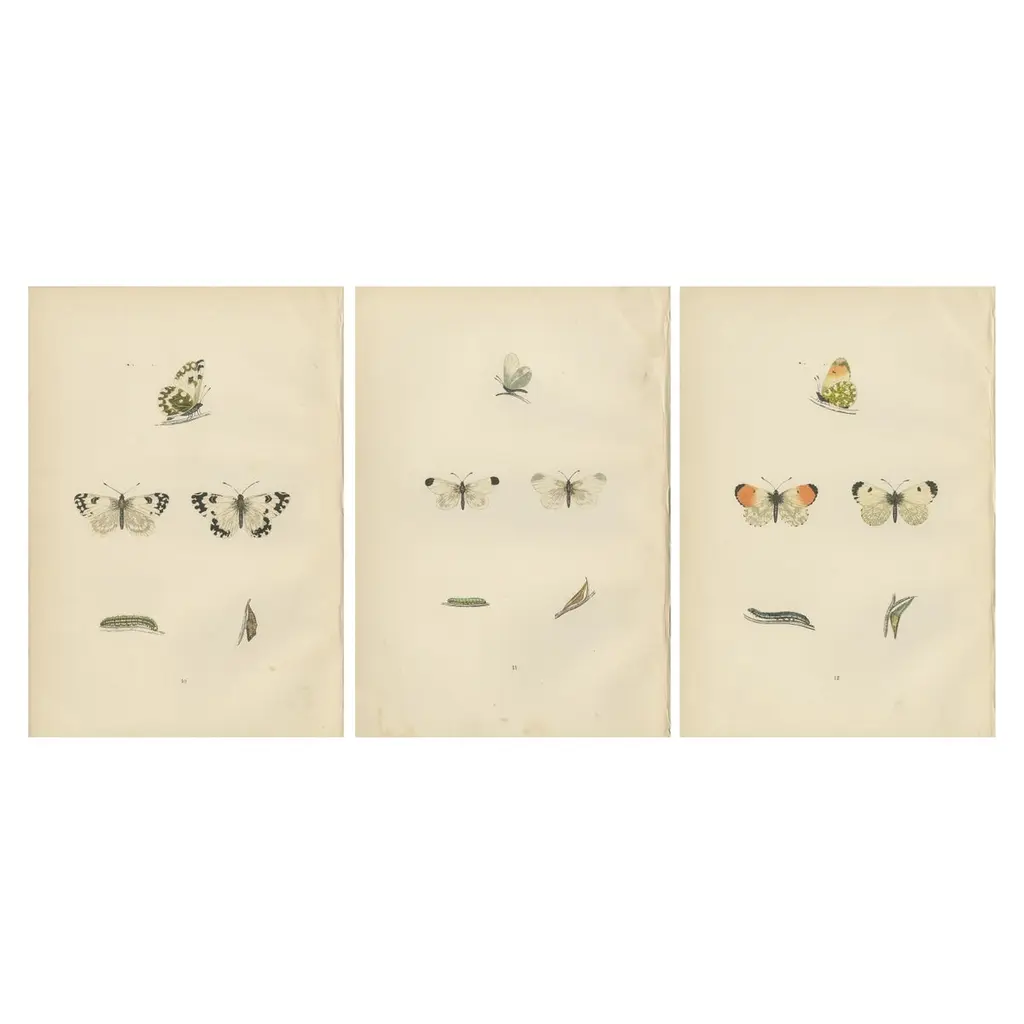
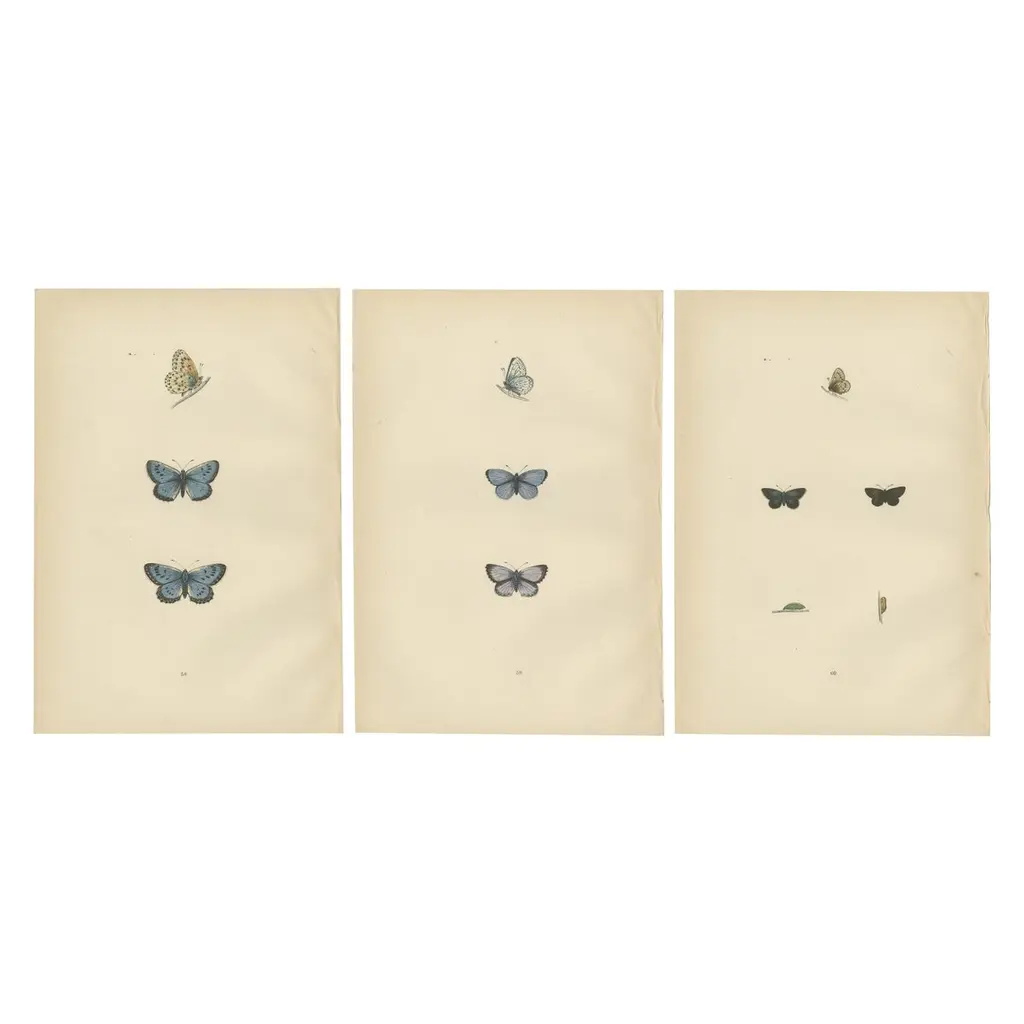
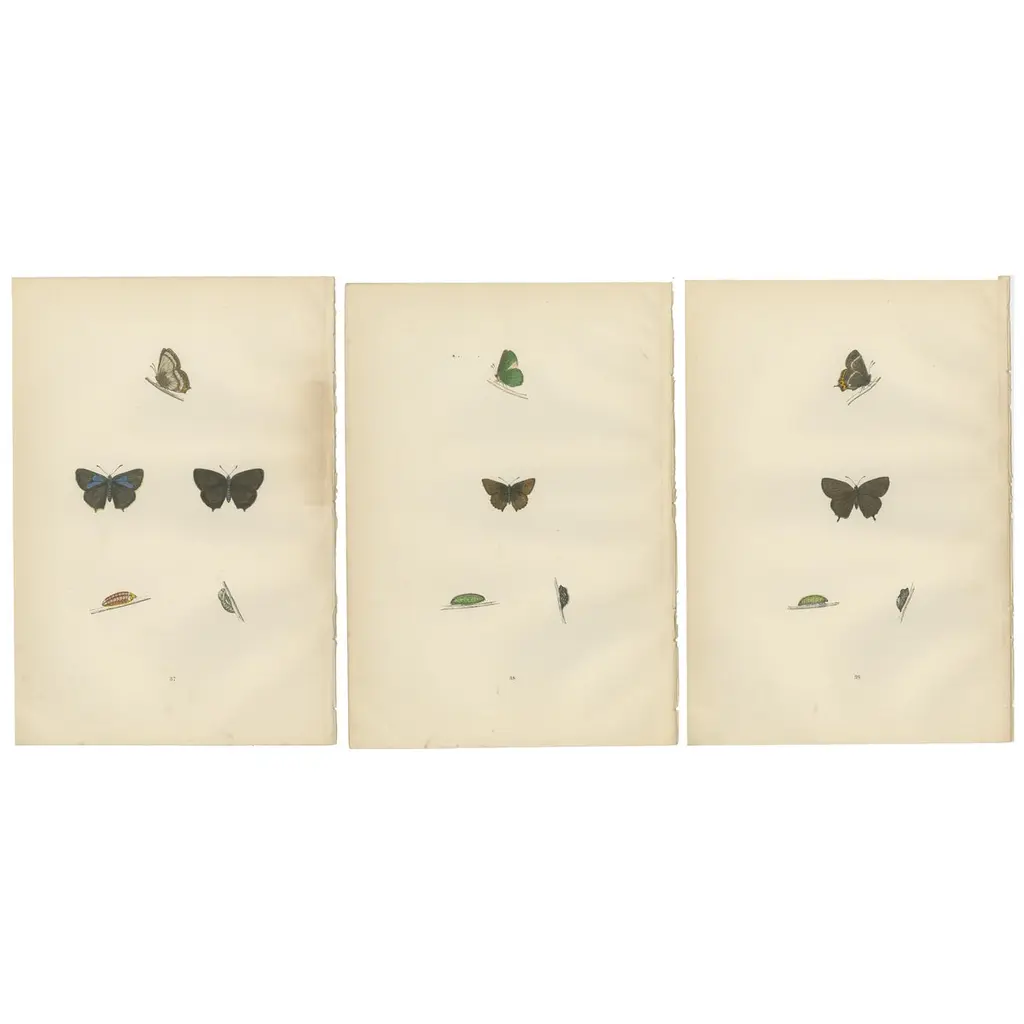
Given the historical significance and the artistic presentation of these illustrations, an alternative fitting title for the combined image could be "Vintage Lepidoptera Elegance: Hand-Colored British Hairstreaks of 1890." This title reflects the nature of the prints as well as their origin and the specific butterfly species depicted.As for identifying and describing the butterflies:1. Purple Hairstreak (Favonius quercus): This butterfly is modest in size and displays a subtle beauty, often overlooked because of its preference for the canopies of oak trees, which is also reflected in its species name, quercus. The uppersides of the wings are a striking iridescent purple, visible only when the wings are open, which is a rare sight as they usually rest with their wings closed. The undersides are a grey-brown with small white streaks and spots, which help to camouflage them against the tree bark.2. Green Hairstreak (Callophrys rubi): This small butterfly has a bright, jewel-like appearance thanks to its green underwings, which blend seamlessly with the foliage it rests upon. This camouflage is vital for survival, as it often sits motionless for long periods. It's one of the few butterflies in the British Isles with such a vibrant green coloration, making it quite distinctive. The uppersides are brown, which they rarely show.3. White-letter Hairstreak (Satyrium w-album): Named after the white 'W' mark on the underside of its hindwings, the White-letter Hairstreak is an elusive butterfly, favoring the tops of elm trees. It has dark brown upper wings with a small orange corner on the hindwings, but it is the characteristic lettering on the underside that makes it interesting and gives it its name.What makes these butterflies particularly interesting is their unique adaptations and behaviors, such as their preference for living and feeding at high altitudes in the trees, which makes them less seen and studied than other species. These adaptations include their coloring and patterns, which serve as camouflage within their preferred habitats. The hand-colored plates of these species capture both the scientific interest and the intricate beauty of these creatures, serving as both an educational tool and an artistic piece, and reflecting a time when such illustrations were the primary means of studying and sharing knowledge about the natural world.The butterflies are from the sixth edition of "A History of British Butterflies" by the Reverend F. O. Morris. This publication is well-known among entomologists and collectors for its detailed descriptions and illustrations of British butterfly species. It was published in London in 1890.F. O. Morris's works were an important contribution to the natural history literature of the Victorian era. They were particularly valued for their hand-colored plates, which brought the details of these species to life for both the scientific community and amateur naturalists at a time when color photography was not yet available. The plates served an important role in the identification and appreciation of British butterflies, adding to the richness of natural history and aiding in the spread of knowledge about biodiversity during that period.
Similar Items