Winged Elegance: Stages Of Lepidopteran Grace, Published In 1890
$180
1st Dibs
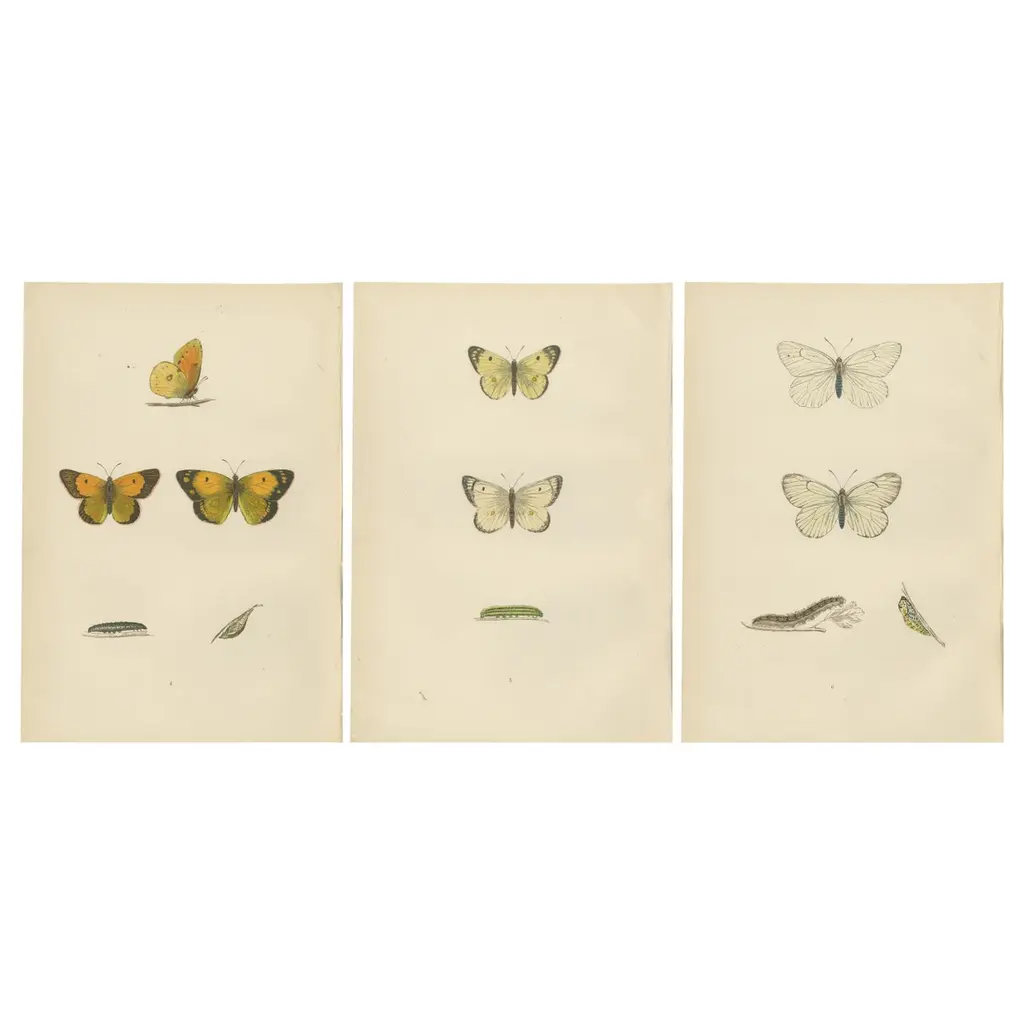
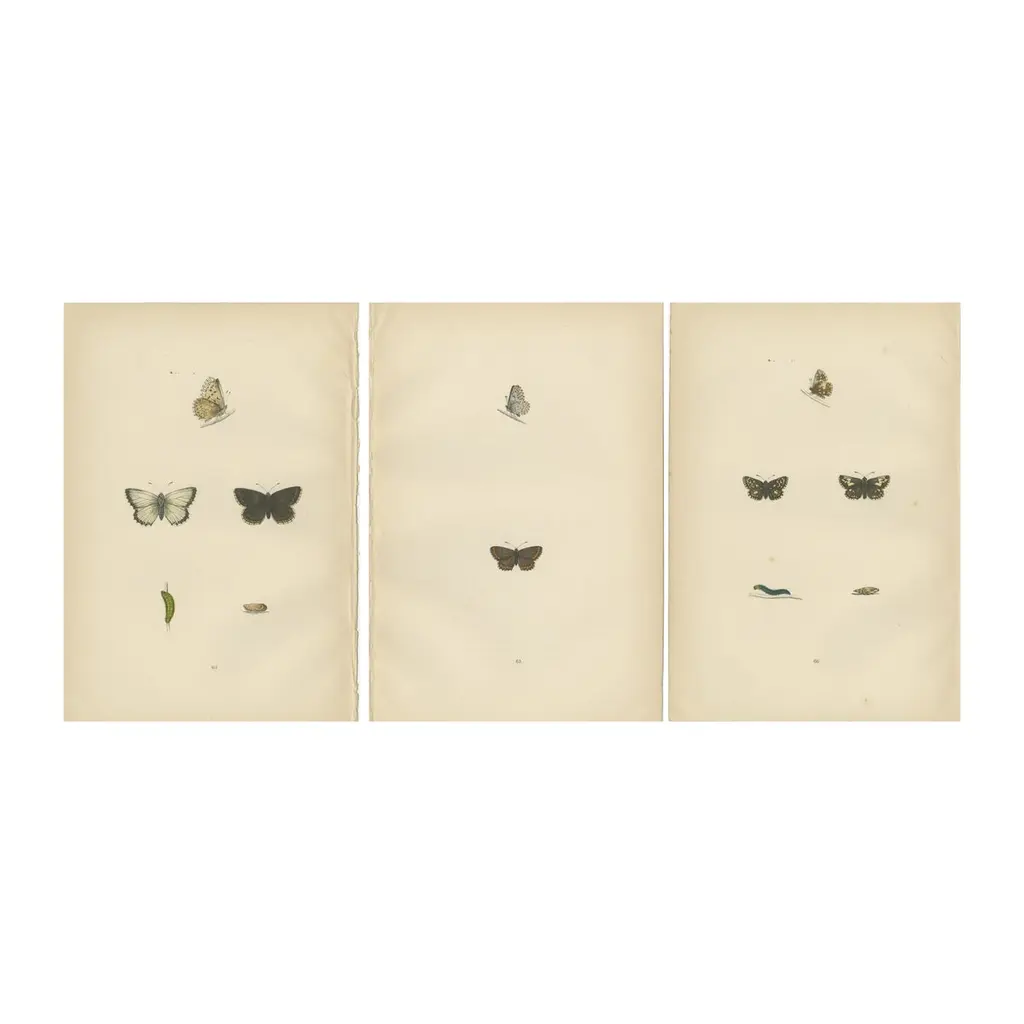
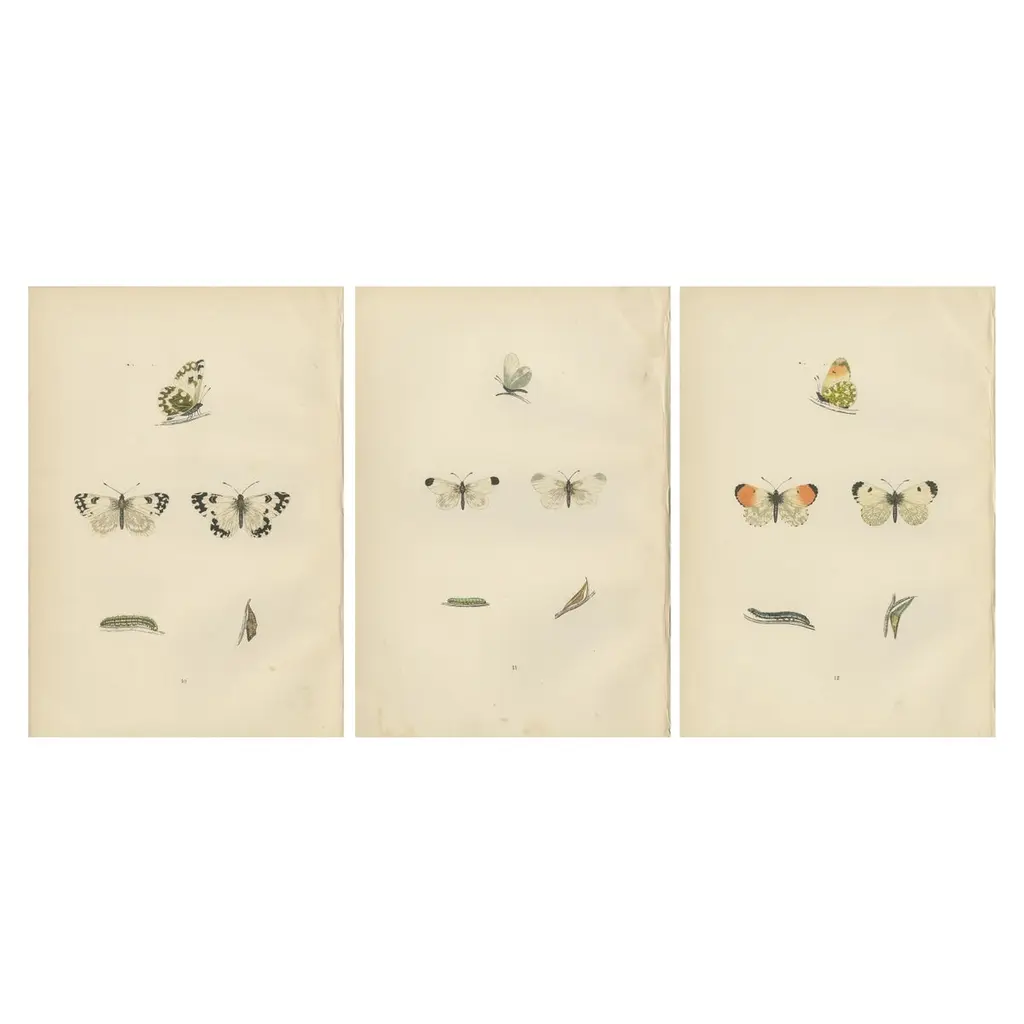
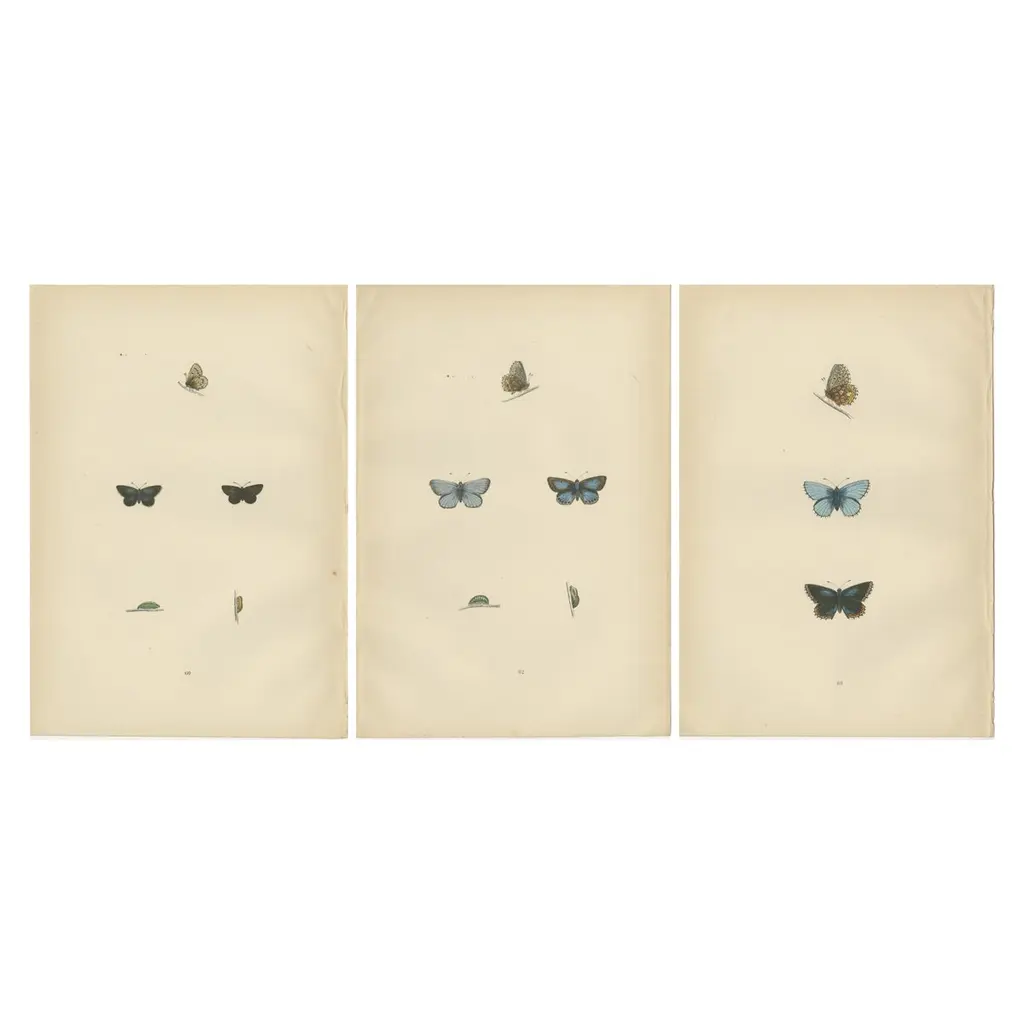
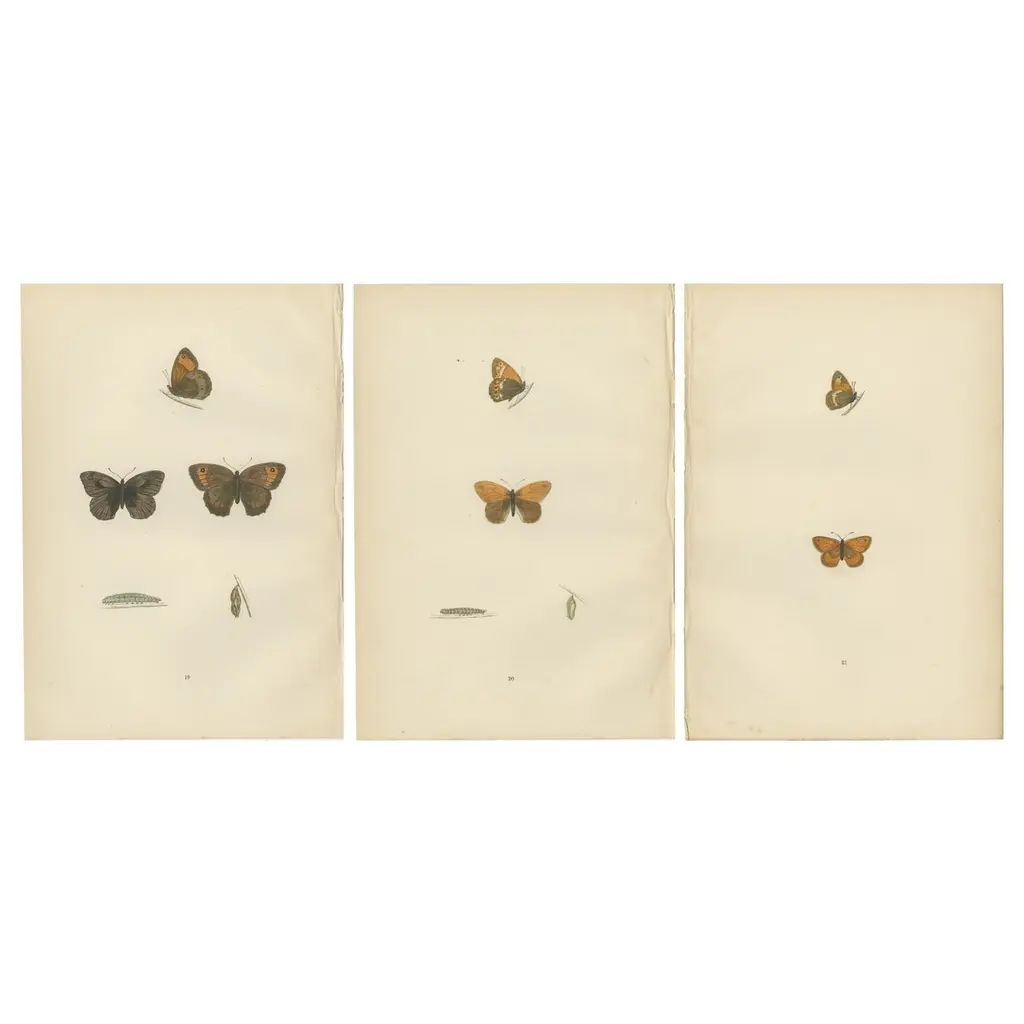
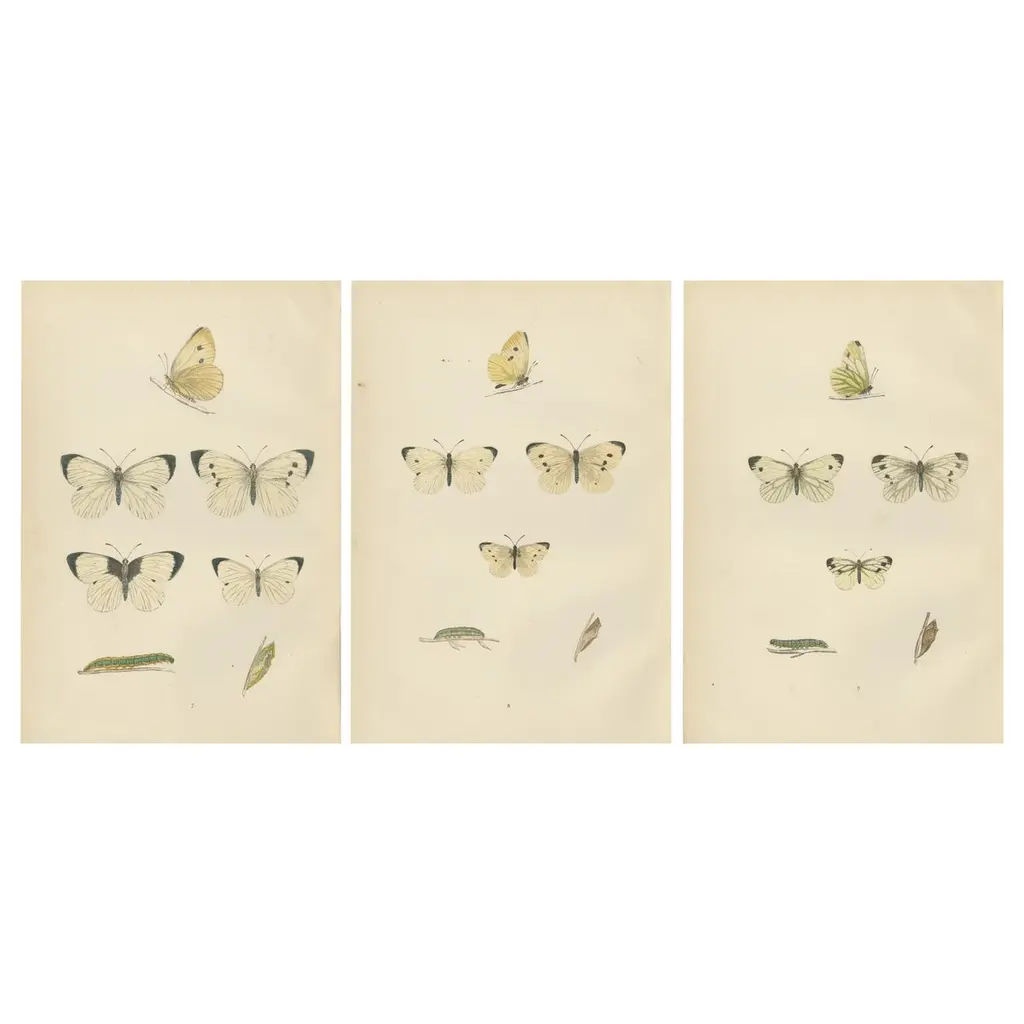
These are original plates coloured by hand from the sixth edition of the publication with title: 'A History of British Butterflies' by Morris. Published in London in 1890. .These illustrations depict three distinct species of British butterflies, which are: The Large White, The Small White and The Green Veined.1. Large White (Pieris brassicae): The Large White, also known as the Cabbage Butterfly, is one of the more common butterflies found across Europe and Asia. It's characterized by its relatively large size and the prominent black tips on its forewings, which also feature a black spot or two. The female typically has two spots on each forewing, while the male has one. Their underwings are a pale yellow with faint black speckling. These butterflies are known for their strong flight and the remarkable migratory habits of some populations.2. Small White (Pieris rapae): This butterfly is similar in appearance to the Large White but is smaller in size. The Small White also has black tips on its forewings, but the black is less extensive than on the Large White. It usually has one spot on the forewing, and its underwings are more of a creamy white with light speckling. Known colloquially as the "Small Cabbage White," it can be found in a variety of habitats and, like the Large White, is associated with brassicas, on which its larvae feed.3. Green-veined White (Pieris napi): The Green-veined White is distinguishable by the greenish vein markings on the undersides of its wings, which provide excellent camouflage when the butterfly is at rest among foliage. The upperside is white with black tips on the forewings, though the black is not as pronounced as in the Large and Small Whites. This species is widespread and has several generations per year, commonly seen in damp, grassy places where its caterpillar host plants grow.What makes these butterflies interesting is their adaptability and the role they play in ecosystems. As caterpillars, they are herbivorous and feed on plants from the cabbage family, making them important in the context of agriculture as both pests and indicators of ecological health. Their presence in a wide range of habitats, from gardens to open fields, makes them familiar and accessible subjects of study for both amateur naturalists and professional entomologists.The fact that these plates are hand-colored adds a layer of historical and artistic value to them. The skill and attention to detail required for hand-coloring prints in 1890 showcase the craftsmanship of the time and provide a unique and authentic look at these species that differ from the precise but sometimes sterile images produced by modern digital printing methods.
Similar Items